
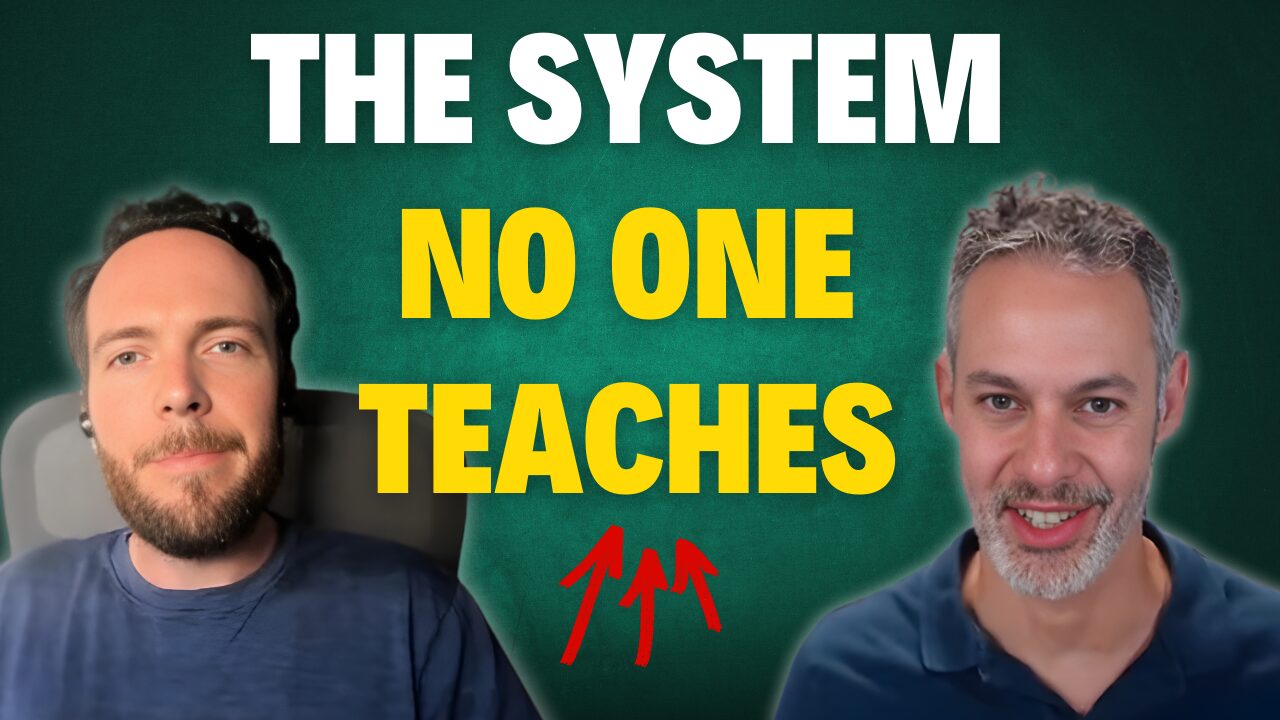
Your Team Is Broken Without This One Leadership System
Most leadership breakdowns don’t stem from strategy, skill, or software—they happen because of one missing element: a system for human connection.
In the latest episode of Scale Smart, Grow Fast, executive coach Nir Megnazi, former engineering leader at Intel and founder of Nir Megnazi Coaching, reveals the overlooked framework that drives real ROI, retention, and trust within high-performing teams.
Preferred listening on the go? Catch the full podcast episode on Spotify and Apple Podcasts.
🧠 Why Smart Teams Still Struggle
Many leaders assume that hiring smart people and using great tools guarantees results. But as Nir explains, high-performing teams thrive not just on intelligence or efficiency—but on trust, presence, and communication.
Without this human system:
- Projects stall from hidden conflict.
- Leaders get surface-level compliance, not commitment.
- Talented team members disengage quietly.
🛠️ The One System That Changes Everything
This system isn’t complicated—but it requires intention. Nir outlines three key pillars:
- Empathy & Trust
Trust isn’t built—it’s earned. And it starts by understanding what trust looks like to each person on your team. Leaders need to ask:
“What do you need from me to trust me?” - Curiosity Over Control
Great leaders stop trying to “solve” people and instead start asking better questions. Curiosity invites clarity, connection, and buy-in. - Leadership Presence
A 30-second mindset reset before each meeting—choosing to be present and to listen—can transform how your team perceives your leadership.
“If you want to influence, you must first be open to be influenced.” – Nir Megnazi
🚨 Red Flags You Might Be Missing
If your team:
- Agrees in meetings but acts differently afterward
- Delivers inconsistent performance
- Pushes back on every new direction
…it’s likely a trust issue, not a competence one. And trust is a leadership responsibility.
💬 Practical Takeaways You Can Apply This Week
- Pause before meetings. Set an intention to be curious and present.
- Ask your team: “What would make this a great collaboration for you?”
- Lead tough conversations by stating your intent clearly—before giving feedback.
These small shifts lead to massive returns—Nir has helped leaders drive 76% reported improvement in leadership behaviors and generate millions in ROI per leader.
🔗 Connect with Nir Megnazi
- 💻 Visit his website & get his free eBook on trust during change: https://nirmegnazi.com
- 💼 Connect with Nir on LinkedIn: https://www.linkedin.com/in/nir-megnazi/
Ready to build a team that runs on trust, not tension?
Book a discovery call with Workergenix to find your Ultimate Executive Assistant—the right-hand partner who helps you lead with clarity, connection, and calm.
Like what you read? Get weekly insights on scaling, efficiency, and profitability—straight to your inbox. Click here to subscribe.Transcript:
Harley Green:
Hey everybody. Welcome back to the Scale Smart, Grow Fast podcast. Now, strategy alone won’t take your team to the top. Human connection will. In this episode, Nir Megnazi, executive coach and leadership expert, explains how emotions and relationships are the real pillars of leadership success. With measurable results, including 76% employee-reported improvement in leadership behaviors and millions in ROI per leader. Nir is going to show how to turn empathy, trust, and presence into your most valuable leadership tools.
Nir, welcome to the podcast. How are you doing today?
Nir Megnazi:
Thank you. I’m doing fabulous. Thank you for having me on your show.
Harley Green:
Our pleasure. Maybe you could share a little bit more of your background. What brought you to doing what you’re doing today?
Nir Megnazi:
So, originally, my core education is engineering. I’m a computer engineer and I worked for Intel for 23 years. Most of my career, I’ve been an engineer, an engineering manager. At one point during my career, I just got tired of focusing on improving technology. Let’s get more speed. Let’s get more performance out of it. The innovation was great, and don’t get me wrong, I love technology. I’m a geek. Every new piece of technology that comes out, I’m like, wow, this is so cool. I want to get my hands on it. But at one point, the technology that really got me interested was people—the technology of human beings.
As a leader, this challenge of how do I get more with the team that I have? How do we over-deliver on what we promised and truly make our clients, whether they’re internal or external, much more successful? I got more intrigued by that than by increasing the performance of one part. So I started to take these small courses that were offered at Intel for coaching. The first time I met coaching, I was really intrigued. What is this? This is different than the regular conversations that we’re having day-to-day at work. It feels different. It goes more to the root, into the bottom of things, to the source of why we have challenges. And they focus on the human challenge and the human aspect of the challenges that we’re facing.
That opened me to a completely different and new world of, wow, many of the challenges that we have are not technical. They’re human connection challenges. If we can tap into that and go to the bottom of what makes this a problem for us as leaders or as employees, there’s much more potential there. That took me on a parallel path of leadership coaching. I went and studied coaching. What I observed is, after graduating from coaching school, I became a much more efficient leader and manager for my teams.
My team started to outperform very quickly. Our internal clients were raving about the performance of my team. Let me get this straight. Although I’m an engineer, I was almost always the least smartest person in the room when my team was there. I had the privilege of managing great people—super smart, much smarter than me. The results that we received because of that were amazing. My managers would remove me from one team to another, even if I didn’t know anything about what that team does and I couldn’t even help them on the technical path. But I knew how to manage my clients really well. I knew how to have great conversations with the teams that I was working with. So I could sit with them and learn really quickly what success looks like for them and what the challenges are that they’re facing, and then navigate and direct my team through a strategy that would help our team serve that team very well. The outcome was raving results.
Harley Green:
That’s really powerful. I can relate to that. My background is also in computer engineering, and I’ve had similar experiences where you might have the brightest technical person, but if they are in charge of working with the customer and they don’t have that human emotion and human touch to communicate well, the project’s not going to do well. And I’m sure you experienced that too and saw those moments.
Nir Megnazi:
Many times. Sometimes I would go into a room and as an observer from the side, I would see two people just shout at one another. They were shouting and shouting, and as an observer, you’d notice that they’re not talking about the same thing. Each person has their own needs and they’re shouting their needs, trying to get them met, but the other person doesn’t listen. So they can’t get the other person’s needs met. That’s how conflict is created. It’s unmet needs that collide in the same moment.
Because I’m a coach, I’m really known to sit on the sidelines for a while. Then at one point, I just say, hey, time out, everyone. Here’s what I’ve heard. Group A, what I heard is that you need A, B, and C. Is that correct? Yes. Okay, hold on. Group B, what I heard you need is D, E, and F. Is that correct? Yes. So you see, you’re talking about two different things. Now Group A, can you satisfy the needs of Group B? Yes. Great. Conflict resolved.
Especially in engineering, people are taught from a very young age—school, what do we do? We solve problems. That takes us away from what I call possibility conversations. To stop for a second, listen to the other person, and get to the root of what they’re asking, what they need, and have a deep conversation. Instead, we get too emotional or hijacked by our own emotions. Then the conversation goes sideways and we waste time, resources, follow-up meetings, escalations.
Now the VPs are involved and they need to call one another to understand what happened. Why is this big conflict and drama? So we see so much drama because we think we’re talking about the details of whatever we’re trying to develop, but really it’s a conflict of needs and lack of better communication.
Harley Green:
Now, for people that don’t have the blessing of having you in the room as an independent coach helping facilitate their conversation, what are some indicators they can keep an eye out for or strategies or mindsets that they might keep in mind to really be able to have those possibility conversations and de-escalate these situations to have the ideal outcome?
Nir Megnazi:
The first mindset shift that I would offer is: how do you apply curiosity in your day-to-day? Here’s the atmosphere that I’m used to, and I see this with my clients, with other companies. Everyone is always stressed. Everyone is always late—to the next milestone, to the next release, to the next thing they need to achieve. When you’re stressed, you just want to get your needs met. So the level of curiosity you have is very low. You cannot have a conversation with someone else if you’re not curious. If you’re just there to bulldoze your needs onto others, you might get your needs met, but the entire project could fail.
So leaders need curiosity. To apply curiosity, they need to learn how to listen well. We hear a lot of people talking, but we’re not actually listening—to what they say, what they don’t say, to their energy. And we’re missing so much information that’s right there in the conversation.
So the mindset shift is curiosity. Leaders can do that by setting their intention before going into a conversation. Ask yourself, “My goal in the first 10 minutes is to understand the perspective of the other party.” That is applied curiosity, and it requires intention.
Second, I encourage every leader to become a master of human communication and connection. Why? Because the higher we climb the ladder of leadership, the less we are involved in the actual work. The work of leadership is done through conversations. At one point, it’s 100% conversations. So if the leader’s number one skill is to have conversations, how can you afford not being a master of human connection and communication?
Harley Green:
That’s powerful. Now, one thing you’ve also talked about is the ROI that people can get from mastering these skills, mastering communication. What are some of the shifts in behavior that have the biggest impact on team performance that you’ve seen?
Nir Megnazi:
That’s a great question, and it’s different from leader to leader because every leader has their own superpowers and areas for improvement. But overall, the ideal state is a leader who sets high-quality goals that align with success for them, the team, and the organization. The team needs to clearly understand what success looks like, their role in achieving it, and how they must cooperate with others.
It also taps into their uniqueness as a team and as individuals. When people know their unique value and how it contributes to the outcome, they feel needed, appreciated, and motivated. That’s what people want: to be acknowledged, to feel fulfilled.
Creating a cohesive, synergistic team is like a sports team. You don’t need all superstars; you need a team that works together efficiently and elevates each other’s game. That cohesion often lies beneath the surface—beyond goals, tasks, and milestones. It lives in our humanity: our emotions, creativity, and direction. Leaders who don’t address this miss a huge part of the potential they can unlock.
Let’s talk about two major emotions: trust and motivation. When I coach leaders and start talking about emotions—especially engineers—they ask why we need to talk about emotions. Well, is trust important to your work? Yes? What happens when there’s no trust? Long conversations, wasted time, more meetings. So yes, trust is a feeling, and it’s critical to business success.
Harley Green:
That’s powerful. Now, one thing you’ve also talked about is the ROI that people can get from mastering these skills, mastering communication. What are some of the shifts in behavior that have the biggest impact on team performance that you’ve seen?
Nir Megnazi:
That’s a great question, and it’s different from leader to leader because every leader has their own superpowers and areas for improvement. But overall, the ideal state is a leader who sets high-quality goals that align with success for them, the team, and the organization. The team needs to clearly understand what success looks like, their role in achieving it, and how they must cooperate with others.
It also taps into their uniqueness as a team and as individuals. When people know their unique value and how it contributes to the outcome, they feel needed, appreciated, and motivated. That’s what people want: to be acknowledged, to feel fulfilled.
Creating a cohesive, synergistic team is like a sports team. You don’t need all superstars; you need a team that works together efficiently and elevates each other’s game. That cohesion often lies beneath the surface—beyond goals, tasks, and milestones. It lives in our humanity: our emotions, creativity, and direction. Leaders who don’t address this miss a huge part of the potential they can unlock.
Let’s talk about two major emotions: trust and motivation. When I coach leaders and start talking about emotions—especially engineers—they ask why we need to talk about emotions. Well, is trust important to your work? Yes? What happens when there’s no trust? Long conversations, wasted time, more meetings. So yes, trust is a feeling, and it’s critical to business success.
The feeling of trust is critical for eliminating waste and achieving execution velocity. Same with motivation. Motivation is an emotion. We feel motivated, and it’s very personal to each person.
Harley Green:
I got a question real quick on the trust. Especially in technical fields—or honestly, any business leader coming into this—what are some strategies or advice you can share with them to help build that trust without it feeling forced? Everyone’s been on the team-building events with the trust falls. What’s your advice to build genuine, deep connection and trust?
Nir Megnazi:
One of the key moments when I dug into trust—and trust, by the way, is the most researched factor in human emotions in literature. There are so many studies about it because it’s elusive. I would start by saying that trust is earned. You don’t build trust; you earn it. I first heard that in a podcast with Esther Perel and Adam Grant. That idea really shifted my perspective.
There is a choice, whether conscious or unconscious, by one person to trust someone else—to some extent and in some domain. So, how do I become trustworthy? It depends on the other party. What behaviors are they expecting to see that allow them to assess whether I’m trustworthy? There’s a conversation that can happen, especially when a team is coming together for the first time.
That’s the expectations conversation. “What do you expect from us? What’s important for you to see so we earn your trust?” And vice versa—“Here’s what we need to see to trust you.”
Trust is very context-specific. For example, Harley, I trust you as a great podcaster, former software engineer, and entrepreneur. So if I need advice about those things, I’ll ask you. But I wouldn’t trust you to perform eye surgery—because that’s not your area of competence. That’s the visible layer: results and behavior.
Beneath that is the character part—intent and integrity. I recommend reading The Speed of Trust by Stephen M.R. Covey. He breaks it down beautifully. One of the quickest ways to earn trust is to call out your intent.
This works especially well in tough situations—like performance management. You have an underperforming employee. You can go in with judgment and metrics. Or, you can start the conversation by saying:
“Hey, the goal of this conversation is to help you overcome some recent performance issues and invest in your growth. I want to see you succeed, outperform, and get promoted. Let’s figure out how to get there together.”
Now it’s a totally different conversation. You’ve shifted from judgment to support.
Harley Green:
Yeah, totally shifts the mindset there.
Nir Megnazi:
Right? And you can still be honest and direct. “If you don’t meet these goals, it might mean this role isn’t the best fit. And as your leader, I need to care for both the team and you.” But the conversation starts with intent, with care.
Most low performers already know they’re struggling. They feel the stress. So when I show up to help them—not judge them—it changes everything.
Harley Green:
Makes a ton of sense. On the flip side, looking at the leadership part of the equation, when they are having that disconnect from their team and there isn’t trust there, what are some of the red flags or warning signs they might keep an eye out for and be like, hey, trust might be an issue here. We need to really focus on earning that.
Nir Megnazi:
One of the first signs is when people agree—but then disengage. You’ll be the only one talking in meetings. Everyone nods but later does something different. You won’t see alignment in execution. That’s a massive red flag.
Sometimes it’s the opposite. If it’s a tight-knit team and they don’t trust you, you’ll get lots of pushback. They resist every direction. Why? Because they don’t trust your leadership or intentions. And that’s the difference between being a manager and being a leader.
I can say I’m a manager. But I can’t say I’m a leader. That’s something others decide—when they choose to follow you. That’s what makes you a leader.
When these signs show up, high-performance communication becomes essential. Say: “I asked you to do A, and you did B. I’m curious—what made you choose B over A?”
Harley Green:
It’s powerful.
Nir Megnazi:
It’s amazing what happens when we ask better questions and drop the judgment. We often judge based on our values and needs—not theirs. And if I want to transform the relationship, I need to first understand them. What do they need? What’s their perspective?
Through deep, curious communication, we shift perspectives together. And sometimes, their insights will reshape the actual goal. I’ve seen this happen many times.
Harley Green:
It’s powerful.
Nir Megnazi:
It’s amazing what happens when we ask better questions and drop the judgment. We often judge based on our values and needs—not theirs. And if I want to transform the relationship, I need to first understand them. What do they need? What’s their perspective?
Through deep, curious communication, we shift perspectives together. And sometimes, their insights will reshape the actual goal. I’ve seen this happen many times.
I’ll share a story. I was placed as a leader over a team where I had no technical background in their specific work. I understood the overall process but couldn’t support them technically. One day, we had to replace an old tool with a new one. My idea was to switch it piece by piece to avoid disrupting the client.
Everyone nodded in agreement during the meeting. But later, the tech lead pulled me aside. We walked around the building, something I enjoy doing during one-on-ones. And he said, “You made the wrong decision today.”
So I asked, “Tell me more. What did I miss?”
He explained, “We can’t decouple and replace blocks cleanly. Doing it your way would create massive overhead. Let us develop the full envelope for the new tool and launch it all at once. It’ll take a month longer, but the quality and outcome will be better.”
I asked, “Does the team agree with you?” He said yes. They’d discussed it already.
So the next day, I brought the team together and said, “I’m sorry. I may not have given you enough space to speak up and share possibilities. But now I hear you. You want to launch the new tool as a single unit.” They all confirmed.
I said, “I trust you. Show me a plan, and let’s go.” And that launch was a huge success.
Again, it came down to employee courage to speak up, and my willingness to be curious.
Harley Green:
I love that. Now, as we wrap up, if there are leaders listening today and they want to begin leading with more trust and empathy with their team and having that strong connection, what is the very first step they should start taking this week?
Nir Megnazi:
That’s a tough question. Let me think for a second.
The first step they should take this week is this: Before each meeting, take 30 seconds to pause and center yourself. Ask, “How do I want to show up in this meeting?”
Choose to be present. Choose to listen. Choose to be curious. Those 30 seconds will have two powerful effects.
First, your team will feel that you are truly there with them—not distracted by a hundred other things. That presence will translate as leadership presence. And that earns trust.
Second, you will learn so much more—because you set your intention to be curious.
Be open to having your perspective influenced. Because if you want to influence, you must be willing to be influenced. That’s the shift.
Harley Green:
Yeah.
Nir Megnazi:
That’s part of the mindset. When you’re curious, be open to being influenced. The goal isn’t to be right—the goal is to achieve results.
Harley Green:
Right. Awesome. That was powerful advice. Nir, thank you so much for sharing your stories, your wisdom, these practical tips for our audience today. If people want to continue the conversation with you, talk more about how they can build this connection with their teams and get that ROI with their people, what’s the best way for them to connect with you?
Nir Megnazi:
You can visit my website, nirmegnazi.com. There’s also a free ebook you can sign up for on how to build trust while going through major changes—how to lead through chaos and earn trust. Also, connect with me on LinkedIn. I read all my messages and love connecting with new people. So feel free to DM me.
Harley Green:
Awesome. We’ll make sure we have those links in the show notes. And for those of you listening, if you got value today, hit that like, follow, or subscribe button at the top. These ratings really help us equip more businesses and leaders who want to grow the smart way.
And maybe you know a business owner or colleague who could use this information—share this episode with them. It could be exactly what they need right now.
Thank you everyone for tuning in to Scale Smart, Grow Fast. Here’s to building businesses that give you more freedom, stronger teams, and lasting growth.
Until next time, keep scaling smart.