
How to Scale Your Business Without Burning Out: Lessons from the Executive Edge Live Panel

How to Scale Your Business Without Burning Out: Lessons from the Executive Edge Live Panel

Fast growth is exciting—until it starts to cost you your health, your team, or your culture.
If you’re a founder or executive scaling quickly, this blog is your wake-up call and roadmap rolled into one.

Preferred listening on the go? Catch the full podcast episode on Spotify and Apple Podcasts.

Harley Green hosted a powerhouse session on the Scale Smart Grow Fast podcast:
🎙️ Executive Edge Live Panel, featuring:

  • Bethany LaFlam – Author of The Power of OPE, Investor, & Attorney
  • Christopher Filipiak – Sales Strategist & CEO Coach
  • Alyshia Kisor-Madlem – VP of People & Systems, Found Search Marketing
  • Saima Geelani – Core Energy Coach, Founder of Talent Edge World

🔥 The Core Takeaways for High-Growth Leaders

1. Growth Without Alignment = Guaranteed Burnout

Bethany LaFlam emphasizes that scaling without clearly defined goals, values, and personal alignment results in setbacks, misdirection, and emotional drain. “If it feels misaligned, it probably is.”

2. Your Energy Is Your Biggest Asset

Saima Geelani explains how invisible drains like unclear boundaries and internal “gremlins” (self-limiting beliefs) lead to burnout. She recommends core energy leadership and micro-recovery practices to maintain momentum.

3. Letting Go Is a Leadership Superpower

Alyshia Kisor-Madlem shares real-life experience from scaling agency teams. The difference between heroic contributors and sustainable systems? Documentation, delegation, and trusting your team before you hit crisis mode.

4. Sales Starts with the CEO—But Shouldn’t End There

Christopher Filipiak reframes sales as a leadership responsibility rooted in mindset, not just tactics. When CEOs align with sales emotionally and operationally, they stop being bottlenecks—and start leading scalable systems.

5. Protect Team Morale with Transparency

Your team isn’t just watching what you say—they’re filling in the blanks when you don’t say anything. Clear, consistent communication protects morale and builds buy-in.

💡 Real Growth Feels Energizing—Not Exhausting

Whether you’re a solopreneur adding your first team member or a CEO managing multiple departments, these insights are a must-know.

This isn’t just about growth—it’s about building something that lasts without losing yourself or your people along the way.

📬 Connect with the Panelists:

 📈 Bonus: Access our masterclass on sustainable scaling:https://workergenix.com/bonus-masterclass

✅ Ready to Scale Without the Stress?

If you’re serious about scaling smart—not just fast—your next move isn’t another 12-hour workday. It’s getting the right support system behind you.

Book a free discovery call with Workergenix to get matched with your Ultimate Executive Assistant—so you can scale faster without burning out.

Like what you read? Get weekly insights on scaling, efficiency, and profitability—straight to your inbox. Click here to subscribe.

Transcript

Harley Green: All right, everybody, welcome to the Executive Edge live panel. I’m Harley Green, founder and CEO of Workergenix, where we help business leaders scale faster and smarter with the very best AI-leveraged executive assistants. This month’s panel is all about one of the biggest challenges business leaders face, growing fast without sacrificing your health, your team, and your culture. Sustainable growth, it’s not just a strategy, it’s really a leadership test. And today we’re gonna dive deep into the real mechanics of scale.

You’ll hear strategies, honest stories, and tangible frameworks from leaders who have been there and done that without the burnout. And a quick heads up, today’s session is also going to be featured on our podcast, Scale Smart Grow Fast. So if you hear something that hits home, you’ll be able to replay it later on Apple, Spotify, and YouTube. So today, let’s go ahead and dive in and meet today’s incredible panel.

First, we’ve got Bethany LaFlam, an attorney, investor, and bestselling author. Bethany helps entrepreneurs scale their wealth and freedom through strategic leverage, not burnout. She’s the author of The Power of OPE and leads a global movement to build aligned extraordinary lives.

Christopher Filipiak, sales consultant and coach. He works with CEOs of expert-based businesses to 12x growth through mindset and sales alignment. His integrated approach helps leaders add over a million dollars in revenue without losing control or energy.

We also have Alyshia Madlem, the VP of People and Systems, Found Search Marketing. With over 20 years in marketing agency leadership, Alyshia has scaled teams through acquisition and built operational systems that protect culture while driving performance.

And finally, last but not least, we’ve got Saima Geelani, founder of Talent Edge World. Saima is a globally experienced coach and HR leader who helps executives lead with clarity, energy, and purpose. Her core energy coaching framework builds leadership that sustains both performance and well-being. Welcome, everyone, to the panel.

Let’s start here. What does sustainable scale mean to you? And why do so many leaders get it wrong?

Saima Geelani: For me, sustainable scale is really like increasing the productivity of the organization while not losing focus on the energy, on the clarity and above all, the well-being of the people. What happens mostly when leaders get it wrong is when they primarily focus on the productivity, they focus on the numbers, they focus on the metrics. That’s absolutely fine, there is nothing wrong about it. But the problem is while doing so, they lose focus primarily on the well-being of the people.

Recently, I had gone through this book, Leaders Eat Last by Simon Sinek, where he says that when we ask the CEO what is your priority, they usually say customers. That might be true for small companies, but as the companies scale up, they grow bigger and that connection becomes smaller and eventually it becomes zero. So what is the truth here? The truth is CEOs or the leaders are responsible for the people and people eventually take care of your customers. So you really have to start backwards. That is where leaders really get it wrong.

Alyshia Kisor-Madlem: I think to build on that, often the focus is on numbers where people say, “I want to grow margin to something,” or “I want to grow year over year.” They lose the purpose. They lose who they are. They lose the connection to mission, vision and values. That’s what drives purpose and why. That’s what gets people to put in the time it takes to achieve those new margins and growth.

It starts to be this focus on hitting a numerical value instead of looking at the full growth journey—growing people or growing services or whatever it is you provide. You lose the connection to why you started or what you’re doing. People get disengaged and you start to see that downtrend very quickly.

Bethany LaFlam: I love that we’re having this conversation because I think too often we focus on the numbers and not on the people who get us there. The biggest thing for scaling, of course, is to leverage other people. I wrote a whole book on it. I specifically say leverage and not use because we want to make sure that we’re building up those people. It’s only sustainable if it’s a win for everybody. Everyone that’s helping you get to your vision and your dream—it has to help them get to theirs. It’s got to work for everybody. We lose sight of that when we focus just on the numerical metrics.

Christopher Filipiak: When you’re thinking about doing something sustainably, it means you can do it for a long time and it doesn’t eat away at your base-level resources. As you grow your company, or grow anything or grow yourself, you have more of something, not less. That’s the kind of growth we want.

It’s about developing the skill sets in your organization around change and growth. How can you build a culture that embraces and has the skills required to continually change and grow? When you develop that as a competency, that’s going to create sustainability in the people and in the organization as a whole.

Harley Green: Great insights there. I’m excited to dive into some of the things you all said. Bethany, you write about Aligned Living. What’s the cost when founders scale misaligned and how can they catch that early?

Bethany LaFlam: I think the biggest cost is misalignment in your business, which could mean a number of things. If it’s not driving toward a stated goal or big vision, that’s a problem. People get this wrong a lot. They don’t state the goal. They’re busy running a business and they’ll figure it out later. But if you’re just working to work and you don’t really know where you’re headed, that’s going to lead to misalignment.

You end up growing for the sake of growth, but it’s not scalable or sustainable. Then you find yourself being pulled back—one step forward, two steps back. If you’re not aligned, you are going to backslide. It’ll take longer to get to your goal. Either you haven’t identified it, or you have people outside their lanes. Entrepreneurs are notorious for trying to do all the things.

How can you catch it early? Stop quieting that voice, that inner knowing. I know it doesn’t seem logical, and it seems really soft. But especially as women, we’ve been conditioned to quiet that voice down. If it feels misaligned, it probably is. Trust that. Recalibrate. That feeling is just as important as the data. If something is painful, your job is to figure out how to make it not painful. Anyone who says it just has to suck for a really long time—don’t listen to that. It doesn’t. Your job is to get through the suck as fast as possible and actually enjoy your life.

Christopher Filipiak: That’s a really interesting awareness. As you grow your business and yourself, there’s good and bad in everything. One person’s “suck” could be another person’s passion. Alignment comes from being aware of that and choosing where to put your focus. If you’re not in love with your work or your business, you’re going to self-sabotage. You’ll spend more time in the suck than in the love.

Bethany LaFlam: The biggest obstacle is our mindset. I’ve spent hundreds of thousands on coaching just to shift my mindset and remind myself—I get to do the things I love because I said so.

Saima Geelani: I agree. From a coaching perspective, it’s about listening to your inner self—your inner “who.” That’s where the magic happens. That’s where you find your passion and energy.

Harley Green: Christopher, you coach CEOs through high-stakes sales growth. How do you help them expand revenue without becoming the bottleneck?

Christopher Filipiak: It’s about understanding what sales really is. You started a business, and sales is a part of that. But sales is also an expression of love and service. There’s a mindset component to it: mastering your own sales work as the CEO. No resistance to strangers, no resistance to sales, no limiting beliefs around money. You need awareness around those things so they don’t stop you.

Once you’re aligned with sales and money, you start selecting strategies, behaviors, and teammates based on cause and effect—not fear, worry, or doubt. That creates flow. And that frees you up from being the bottleneck.

Alyshia Kisor-Madlem: I’d add to that. As operators, we help visionary CEOs get what’s in their head out into the world. Once you start selling, you need others to understand what you do so you’re not the only person who can do the job. At some point, someone else has to get it too. CEOs need to figure out what only they can do, what they can train others to do, and what they can let go of.

Sometimes, it’s about having trusted people around you—employees or advisors—who can say, “You can’t keep doing it all.” Let go. Build trust. Surround yourself with people who can scale the mission without making it all about you.

Christopher Filipiak: Exactly. Build the skills and strategies into the business, not just into one person. As you do that, the CEO is free to do what they love most. Every CEO is different, so the goal is to build a system that doesn’t rely on one personality.

Saima Geelani: I love that Alicia mentioned letting go. It’s like parenting. You let your kids do things on their own, trusting them even if they fail at first. That’s how they learn. Same with teams. Trust them. Be there to support them. That’s how trust grows, and so does your business.

Harley Green: Great answers. Alyshia, you’ve led teams through growth and acquisition. What were some breaking points you had to solve, and what did you learn about scaling people—not just processes?

Alyshia Kisor-Madlem: The biggest thing I’ve seen is the difference between heroic contributors and operationalization. Small companies often start with one or two heroic contributors—they do everything. But you can’t scale if you’re dependent on a few people. You have to get the information out of their heads and operationalize it.

If you don’t, you create single points of failure and even “unfireable” people. Maybe they don’t fit anymore, but you’re shackled to them because no one else knows what they know. You need to build training, documentation, and backups early on. If not, you get stuck in a cycle: grow, lose something, grow again, lose again. You never really get ahead.

Bethany LaFlam: That still comes back to letting go. If the CEO can’t let go, you can’t put systems in place. And that’s often a mindset issue—feeling like you have to prove your worth. But your team wants you out of the weeds. They want to run in their lane while you stay in yours.

Saima Geelani: Exactly. It’s about trusting yourself and the team. Clear vision, clear direction. Otherwise, your team is just doing tasks, not driving toward a shared destination.

Harley Green: Saima, your work focuses on leadership energy. What are the invisible drains leaders often overlook, and how can they recover momentum before burnout?

Saima Geelani: The invisible drains are your internal narratives. In coaching, we call them gremlins. They’re meant to keep you safe, but really they make you smaller. One example: “I can’t stop. I have to keep going.” Even on vacation, some leaders keep checking in. That sends the wrong message—it says you don’t trust your team.

There’s a book, Taming Your Gremlins by Rick Carson, that helps with this. It starts with self-awareness. Then you embrace the gremlin, and start to overcome it. Also, you need clear boundaries. When roles aren’t clear, leaders end up doing everything—strategy, ops, admin—and burn out. Good leadership requires boundaries, trust, and space to breathe.

Alyshia Kisor-Madlem: I love that energy came up. Energy is a finite resource, just like time or money. You need to track what tasks give or drain your energy. That can shape how you design your day, price your services, and build your team. It’s not fluff—it’s vital.

Bethany LaFlam: We use something from Dan Martell’s Buy Back Your Time—a time and energy audit. Not just what takes time, but what drains bandwidth. If someone’s dragging, we ask: Are you working outside your lane? Are you stuck in tasks that drain you? Maybe someone else loves that work. It’s all about fit.

Harley Green: Let’s talk about trade-offs. What’s one hard decision you made to protect your energy or your team’s, and how did you make peace with it?

Saima Geelani: Maybe I can speak to that. Two years ago, I moved from France to the United States. I was fortunate to get a leadership role within a month. My background is in talent development—the soft side of HR. Over time, I realized my work wasn’t aligned with my values. My role was meant to support well-being programs, but the leadership was only focused on productivity and metrics. Both approaches have merit, but we weren’t aligned.

Eventually, I decided to resign. That was tough. I still remember how hard it was to press that send button on my resignation email. But I listened to my inner voice. I paused, reflected, and discovered coaching. That was my passion all along. Now, I get to work with anyone I want. I’m free to do the work that lights me up. I believe life is not a game to win or lose—it’s meant to be played. So enjoy the journey.

Bethany LaFlam: I want to add to that. At one point, we had a high-paying client who had the power to refer us—or not. But they were abusive to my team. I made the hard call to fire them. I wanted my team to know that I’d protect them over the money. Sure, it was risky—they could’ve trashed our reputation. But I did it respectfully. That move told my team: I’ve got your back, and your well-being matters more than any client.

Harley Green: That ties into a live question from our audience. Kedra asked: Can you talk about the importance of team morale and what leaders can do to inspire and encourage their teams?

Alyshia Kisor-Madlem: Great question. As leaders, we have a lot of behind-the-scenes conversations. And we don’t always share those with the team. But your team craves information—they want to know what’s going on. You have to define what transparency looks like in your company, and then commit to it. Let people in. Show them that you’re in this too—not just barking orders from the top.

Whether things are going well or you’re facing challenges, acknowledge it. Let them know what’s changing and why. That level of communication and buy-in directly impacts morale. Especially in tough times, the message should be: We see it, we’re working on it, and we’re in this together.

Saima Geelani: I couldn’t agree more. Lack of clear communication causes chaos. In energy leadership, we talk about seven levels of energy. When communication is unclear, people drop into Level 2—frustration and anger. Even your best people start to burn out.

Alyshia Kisor-Madlem: And you can’t stop DMs—whether on Slack, Teams, whatever. If you’re not communicating, people will fill in the blanks. They’ll start creating their own narratives, and those usually aren’t friendly to leadership. You need to get ahead of it. Share information openly and often to control the story.

Bethany LaFlam: Yes.

Saima Geelani: Absolutely.

Christopher Filipiak: As leaders, we have to model the attitude and culture we want to see. Everything in business has cycles—ups and downs. If your emotions are controlled by the circumstances, the whole organization becomes reactive. Instead, model emotional stability. Teach it as a skill. Hire people who want to participate in that kind of culture.

Morale, culture, and mindset are choices we get to make every day. And it’s easier to choose a better attitude when you’re aligned with your purpose. If you’re just chasing numbers, you burn out. But if you love what you do, you expand your energy and see more opportunities.

Harley Green: Excellent. Now, to wrap things up, I’ve got a lightning round question for everyone. What’s your best advice for a business leader who wants to scale without burnout? And as you answer, please share the best way for our audience to connect with you.

Christopher Filipiak: Think of scaling without burnout as a skill set. Ask yourself: What’s the skill set I need to develop around burnout? That starts with learning to feel your emotions and move through them to gain clarity. Also, have someone in your corner—a coach or mentor—who can help you see blind spots like overworking or poor hiring choices. Best way to connect:christopherfilipiak.com or LinkedIn.

Bethany LaFlam: Know your lane and stay in it. Your lane is where three things overlap: what you’re amazing at, what lights you up, and what moves you toward your life goals. Do only what lives in that lane and build a team to handle the rest. You get to do that. Find support to make it happen. Best way to reach me is on Instagram:@bethany_laflam.

Saima Geelani: Lead with your anabolic energy—that’s high-vibration, trust-based leadership. Energy is contagious. If you show up with purpose and positivity, your team will reflect that. It’s the best path to scale without stress. Connect with me at talentedgeworld.com or LinkedIn: Saima Geelani.

Alyshia Kisor-Madlem: Be solid in your mission, vision, values, and purpose. Build from that foundation. It’s what keeps people aligned and energized, especially when things get hard. Connect with me on LinkedIn: Alyshia Kisor-Madlem.

Harley Green: Thank you to all of our panelists for sharing real strategies, honest insights, and leadership wisdom. And thank you to everyone who joined us live. Remember—scaling isn’t just about growth. It’s about protecting what makes that growth worth it. If you’re ready to scale with the right support, check out our free masterclass atworkergenix.com/bonus-masterclass. We’ll see you at the next Executive Edge Live.

All: Thank you!
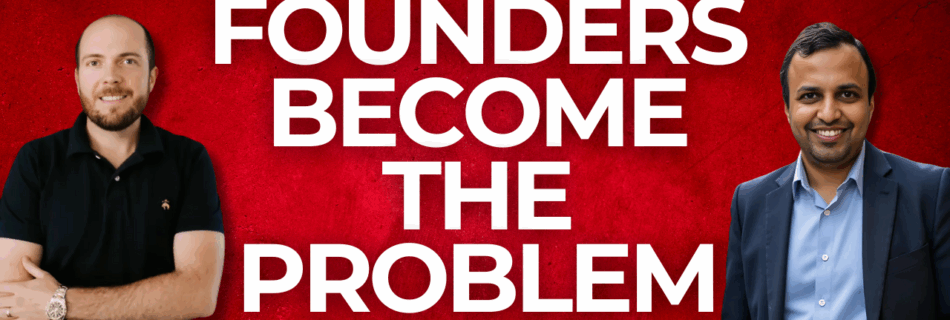
Are You the Bottleneck Holding Your Business Back?

Are You the Bottleneck Holding Your Business Back?

As your business grows, the same strengths that helped you start it may be the very ones stalling your next level of success. On the latest episode of the Scale Smart, Grow Fast Podcast, Harley Green sits down with Sumit Gupta, serial entrepreneur and strategic leadership coach, to uncover why so many entrepreneurs unknowingly become their company’s biggest bottleneck—and how to break free.

Listen to the full conversation with Sumit Gupta on the Scale Smart, Grow Fast Podcast on your favorite platform and unlock the leadership shifts that will drive your next level of growth. 👉 Spotify | Apple Podcasts

The Hidden Leadership Trap

Sumit shares that 95% of our daily behavior is subconscious or habitual. The leadership habits that got you to $1M in revenue won’t be the ones that get you to $5M, $10M, or beyond. Growth demands new leadership behaviors—and if you’re feeling stuck, it’s often because you haven’t upgraded your leadership operating system.

Biggest blind spots entrepreneurs face:

  • Acting like the expert instead of building a team that can operate independently.
  • Overworking instead of strategically delegating.
  • Hesitating to hire strong leaders because of control or trust issues.

The Mindset Shift That Changes Everything

If your growth has plateaued, you are likely part of the problem—but that’s not a bad thing. It means you have control to change it. Sumit’s advice is to stop asking, “How do I fix this?” and start asking, “Who can help me fix this?”

Strategic delegation isn’t about giving up control—it’s about amplifying your impact.

The Importance of Slowing Down

One powerful tactic Sumit shares: Pause and breathe.
Taking intentional pauses helps leaders listen better, think more clearly, and create space for courageous conversations—something most businesses desperately need to grow.

When you slow down, you become a better listener, spot hidden opportunities, and create a culture where problems are addressed early—before they become emergencies.

Building an Organization That Scales Without You

As you grow, your real job shifts from building products or services to building the organization itself.
That means focusing on:

  • Hiring for both skill and shared values.
  • Empowering people to innovate—not just follow orders.
  • Creating systems that allow the business to thrive without micromanagement.

Bottom line:
To scale smart, you must evolve from expert to strategic leader—and that starts with working on yourself as much as you work on your business.

Ready to free yourself from bottlenecks and finally scale with less stress and more impact? Schedule a quick discovery call with us today and see how the right support can transform your growth.

Like what you read? Get weekly insights on scaling, efficiency, and profitability—straight to your inbox. Click here to subscribe.
Diverse team of high-performing professionals collaborating in a modern, well-lit office, conveying productivity and efficiency."

The Hidden Cost of Overworking High Performers—And How to Fix It

The Hidden Cost of Overworking High Performers—And How to Fix It

The High Performer Dilemma

High performers are the backbone of every successful organization. They drive innovation, ensure efficiency, and push the company forward.

But instead of focusing on high-impact work, too many of these top employees are bogged down by administrative tasks, leading to burnout, disengagement, and ultimately, turnover.

While many companies assume that competitive salaries and perks are enough to retain their best talent, they fail to recognize the true burden placed on these employees.

The Leadership Oversight

  • A high performer isn’t just a strong contributor—they are a growth multiplier.
  • When they are forced to handle tasks outside their expertise, it doesn’t just waste their time—it costs the company valuable opportunities, revenue, and strategic momentum.
  • Executives must ask themselves: Are we empowering our top talent to drive success, or are we burning them out with unnecessary work?

The Numbers Don’t Lie:

✅ 30-40% of a high performer’s time is spent on low-value tasks.
✅ Replacing a high performer costs 1.5-2x their salary in recruiting, training, and lost productivity.
✅ Burned-out employees are 2.6x more likely to seek new job opportunities.

Let’s break down the true financial impact of overworking high performers.

1. Escalated Employee Turnover Costs

Burnout is a primary driver of voluntary turnover, particularly among high performers who thrive in roles where they can make an impact.

The Cost of Replacing a High Performer

  • Replacing a single high-performing employee costs 1.5-2x their annual salary.
  • In specialized industries, this figure can climb to 3-4x their salary, factoring in recruitment fees, training, and lost productivity.
  • Losing just one key employee can disrupt team dynamics and create a ripple effect of disengagement.

📊 Real-World Example:
A leading tech company faced a 15% turnover rate among top engineers, resulting in $2M+ in recruitment and training costs. By addressing workload imbalances, they reduced turnover to 5% within a year (McKinsey).

2. Productivity Decline Due to Administrative Overload

High performers are valuable because of their expertise—yet many spend their time on repetitive, low-impact tasks.

Instead of closing deals, leading teams, or innovating, they are stuck in:
✅ Email chains 📩
✅ Scheduling meetings 📆
✅ Updating CRMs & admin tasks 📊

The Financial Impact

  • If a high performer earning $100K per year spends 30% of their time on admin work, that equals $30,000 per year in wasted productivity—per employee.
  • Across a company of 50 top performers, that’s $1.5M in lost output annually.

📊 Real-World Example:
A financial services firm discovered that senior analysts spent 25% of their time on admin tasks, leading to a 20% drop in client acquisition. By shifting these tasks, they saw a $500K increase in new revenue.

3. Stifled Innovation & Growth Opportunities

When high performers are overwhelmed with operational work, they lose the capacity to think strategically and drive innovation.

Competitive Disadvantage

  • Companies with high-burnout cultures see 35% fewer new product ideas and slower revenue growth.
  • Leaders unable to focus on strategy lead to delayed decision-making, causing missed market opportunities.

📊 Real-World Example:
A tech startup found that its founders spent 60% of their time on operations instead of product development. After implementing better delegation strategies, they saw 40% faster revenue growth.

4. Presenteeism: The Hidden Productivity Killer

Burnout doesn’t always lead to quitting—sometimes, employees mentally check out while still showing up.

Why Presenteeism Is More Expensive Than Absenteeism

  • Burned-out employees make more errors, take longer to complete tasks, and have lower creativity.
  • Companies lose 10x more money due to presenteeism than absenteeism.

📊 Real-World Example:
A manufacturing firm noticed a 15% increase in product defects when employee burnout peaked. By addressing workload issues, defect rates dropped by 25% within 6 months.

5. Recruitment & Training Costs

Recruiting and onboarding new employees is expensive, but constantly replacing high performers is financially devastating.

The Financial Drain of Turnover

  • Replacing an executive or high performer costs up to 400% of their salary.
  • The time to recruit and train new talent can take 6-12 months, delaying key projects and increasing team stress.

📊 Real-World Example:
A consulting firm faced $500K in project delays due to the departure of a key leader. By optimizing workloads, they cut turnover by 30% within a year.

6. Deterioration of Company Culture & Employee Morale

When high performers leave, company morale drops, team stability weakens, and leadership effectiveness declines.

Negative Ripple Effects

  • A culture of burnout leads to higher absenteeism, lower engagement, and poor leadership retention.
  • Teams that lose key players often suffer declines in collaboration and productivity.

📊 Real-World Example:
An advertising agency saw a 25% drop in employee satisfaction after multiple top creatives left. This led to client dissatisfaction and revenue loss.

The Harsh Reality: Your Competitors Are Fixing This

Companies that proactively address these challenges are scaling faster and retaining top talent.

They’re optimizing workloads, reducing burnout, and seeing a 20-30% productivity boost.

If you don’t fix this problem, your competitors will—and they’ll win the talent and market share you’re losing.

🔥 Want to fix this? We break down the full solution in The Executive’s Guide to Scaling High Performers—so you can retain top talent, boost productivity, and scale smarter.

📩 Get your free copy now → https://workergenix.com/scaling-high-performers-guide/

A laptop surrounded by crumpled papers, symbolizing business chaos and disorganization.

Is Disorganization Holding Your Business Back? Here’s How to Fix It

Is Disorganization Holding Your Business Back? Here’s How to Fix It

Have you ever felt like you’re running in circles, working harder than ever but not making the progress you expected? You’re not alone. Many entrepreneurs and business owners struggle with growth—not because they lack ambition or skill, but because their business operations are disorganized.

When systems are chaotic, tasks slip through the cracks, decisions take longer, and opportunities get missed. But when your business is structured and efficient, growth isn’t just possible—it’s inevitable. Let’s talk about why organization is the secret weapon behind every thriving business and how you can use it to unlock new opportunities.

Why Disorganization Stalls Growth

A cluttered inbox, scattered processes, and reactive decision-making don’t just make your day harder—they cost you money. Here’s how:

  • Missed Revenue Opportunities – A lost email or delayed follow-up can mean losing a potential client or deal.
  • Wasted Time – If you’re constantly looking for information or fixing mistakes, you’re not spending time on high-value activities.
  • Inconsistent Customer Experience – Disorganization often leads to slow responses, missed deadlines, and an inconsistent brand experience, which can drive clients elsewhere.
  • Decision Fatigue – When your business lacks structure, you spend more energy making decisions on things that should be automated or delegated.

The Power of an Organized Business

When your business is systemized and structured, you gain:

  • Increased Efficiency – With streamlined workflows, tasks get completed faster and with fewer errors.
  • More Time for Growth – Less time spent on admin work means more time for innovation, strategy, and building relationships.
  • Stronger Team Collaboration – When processes are clear, your team knows exactly what to do, leading to better productivity and fewer bottlenecks.
  • Better Financial Control – Organized bookkeeping and financial tracking help you make smarter business decisions.

How to Get (and Stay) Organized

  1. Audit Your Current Workflows
    Take a step back and assess where time is being wasted. Identify bottlenecks, repetitive tasks, and areas where things frequently get missed.
  2. Streamline & Automate
    Use project management tools, CRM systems, and automation software to eliminate manual work and keep everything in one place.
  3. Delegate Effectively
    Stop holding onto tasks that others can handle. Whether it’s customer support, invoicing, or scheduling, delegating frees up your time for bigger priorities.
  4. Create Clear Processes
    Document key workflows so your team knows exactly how things should be done. This reduces errors and makes it easier to scale.
  5. Review & Optimize Regularly
    Organization isn’t a one-time fix. Regularly evaluate your systems to ensure they’re still serving your business as it grows.

The Bottom Line

An organized business is a scalable business. The more structure and efficiency you build into your operations, the more room you create for growth, innovation, and new opportunities. If you’re spending more time reacting than leading, it might be time to rethink your approach. What’s one area in your business that could benefit from better organization today?

Schedule a free discovery call!

Join our newsletter for the latest VA strategies and insights straight to your inbox every week!

Can Leadership Behaviors Transform Your Business Success?

Can Leadership Behaviors Transform Your Business Success?

As a business owner or entrepreneur, you’re likely no stranger to the hustle. From managing operations to making big decisions, you’re wearing multiple hats every single day. But here’s the question: are you leading your team effectively, or are you just managing tasks? The difference is crucial, and mastering the art of leadership can take your business to new heights.

In a recent episode of the Workergenix Mastermind Podcast, leadership expert Adam Malone shared his insights on the five key behaviors that help leaders create resilient teams, foster trust, and achieve long-term success. Below, we’ll break down these transformative principles to help you rethink the way you approach leadership in your organization.

1. Show Up Authentically

Leadership starts with being real. When you’re transparent and honest, you build trust with your team. This doesn’t mean you have to overshare, but it does mean being upfront about challenges and decisions.

For instance, if a project is going to require extra time and effort, acknowledge it. Tell your team why the hard work is worth it and how it aligns with your business goals. Authenticity encourages buy-in and helps your team feel valued, not dictated to.

2. Share Logical Thought Processes

Leaders often make decisions in isolation, leaving their teams wondering about the “why” behind the “what.” Sharing your reasoning creates clarity and trust.

When you explain how you arrived at a decision, you not only empower your team to think critically but also enable them to make better decisions on their own. Over time, they’ll start to think like you, building a stronger foundation for your business.

3. Ask Better Questions

Curiosity isn’t just for kids—it’s an essential leadership skill. By asking thoughtful, open-ended questions, you can uncover hidden opportunities and foster innovative thinking.

For example, instead of asking, “Did this task get done?” try asking, “How can we improve this process for better results next time?” This encourages your team to think about the bigger picture, paving the way for continuous improvement and collaboration.

4. Create a Culture of Feedback

Feedback shouldn’t just come during annual reviews—it should be an ongoing dialogue. The key is to make feedback positive and expected, not something that creates anxiety.

Start by praising what’s working well, then gently address areas for improvement. For example, if a team member completes a project, don’t just say “Good job.” Highlight what they did well and ask for their input on how the process can improve. Over time, this creates a feedback loop that fosters growth and accountability.

5. Embrace “Yes, And” Thinking

Inspired by improv comedy, the “Yes, And” approach involves building on ideas rather than shutting them down. When a team member proposes a change or an idea, instead of saying “No,” respond with, “Yes, and here’s how we can take it further.”

This mindset keeps conversations constructive and opens the door to collaboration. It’s a powerful way to encourage innovation while maintaining clear expectations.

Bonus Tip: Build Empathy Through Connection

Trust is built on three pillars: logic, authenticity, and empathy. Leaders often focus on the first two but neglect empathy. Take time to understand your team members’ perspectives and motivations. Whether it’s through one-on-one conversations or team meetings, creating space for empathy fosters a more connected and resilient team.

The Ripple Effect of Leadership

The benefits of adopting these leadership behaviors extend beyond your immediate team. By fostering trust, encouraging open communication, and building a culture of growth, you’re creating a business that doesn’t just survive—it thrives. As Adam Malone shared, these small daily behaviors have a compounding effect, building a foundation for long-term success.

Ready to Transform Your Leadership Style?

Great leadership isn’t about making sweeping changes overnight. It’s about implementing consistent behaviors that align with your vision and values. Start by showing up authentically, sharing your thought process, asking better questions, creating a feedback culture, and embracing “Yes, And” thinking.

As Adam put it, these behaviors don’t just improve your team’s performance—they create a business that can grow without you, giving you the freedom to focus on what matters most. So, which behavior will you adopt first?

Listen to the full podcast episode with Adam, available now:

🎧 Spotify

🎧 Apple Podcast

Schedule a free discovery call!

Join our newsletter for the latest VA strategies and insights straight to your inbox every week!

Transcript

Harley Green:
Welcome to the Workergenix Mastermind. Today, we have a special leadership expert, Adam Malone, who will share key strategies and behaviors that leaders can employ to achieve greater success in the new year. Adam is a leadership consultant, corporate keynote speaker, and father of five, known as the “Tenacious Operator.” After a 20-year corporate career and 17 years at one company, where he rose from analyst to VP, Adam left in 2024 to pursue his passion for helping high performers become great leaders of resilient teams.

This is a perfect opportunity for everyone making changes and resolutions to learn how to become better leaders in the coming year. Adam, welcome to the podcast. How are you?

Adam Malone:
I’m great, Harley. Thanks for having me.

Harley Green:
What led you to transition from being a VP in the corporate world to helping leaders be better leaders?

Adam Malone:
About seven or eight years ago, I transitioned into an operations role, managing the supply chain group. I owned the relationship with Apple, which was significant. I worked long hours, traveled frequently, and it began to wear me down.

One Friday, after a long trip to Manila, I returned home only to board another flight to San Francisco on Monday. I was exhausted and not feeling well. Sitting on the plane, I had a realization—I couldn’t keep living this way. I wanted to see my kids more and improve my marriage, which was okay but could have been better. It became clear that I needed to make a change, not just for myself but for my family.

It wasn’t enough for me to excel individually. I needed to build a resilient team. It had to shift from being about what I could personally accomplish to what the team could achieve collectively. That moment changed my perspective and sparked my journey into leadership development.

Harley Green:
Many entrepreneurs and business professionals think they can solve problems by working harder, but the truth is, we need a team to achieve our goals. It takes leadership to build that team.

Adam Malone:
Exactly. Entrepreneurs often face the challenge of feeling like no one else can do the job better. The instinct to do everything ourselves is strong, but we need to ask: Is being the best person for the task the right metric for whether or not we should do it?

Harley Green:
I remember hearing the saying, “Good enough is perfect.” Sometimes perfection isn’t necessary, and striving for it can cost too much time and energy. How do you help leaders understand this balance between perfection and delegation?

Adam Malone:
I often use the phrase, “Do we need perfection, or do we need good enough?” Many times, achieving 70-80% of the result is sufficient. I encourage leaders to consider the additional effort required to get to 90% or 100% and ask if the outcome justifies that cost.

For leaders, it’s also about letting go. Yes, you might do the task faster or better, but it’s often better to delegate, even if the result isn’t perfect. The extra time you gain can be invested in higher-value activities or simply resting to recharge for future challenges.

Harley Green:
That makes a lot of sense. Beyond time, there’s also the opportunity cost. Spending time on one task means you’re not focusing on other priorities.

Adam Malone:
Absolutely. I ask leaders, “Will your involvement in a particular task change the outcome significantly? Could you spend that time on something more impactful?” Sometimes, the best use of that time is resting or recharging so you’re prepared for the next big challenge.

Harley Green:
It’s interesting that you mentioned rest. Often, leaders push themselves to the brink without recognizing the importance of recovery.

Adam Malone:
Exactly. Rest is an investment in resilience. It’s about pacing yourself and your team for long-term success.

Harley Green:
You’ve shared some great insights so far. I know one of the main focuses today is the five key behaviors that leaders can implement daily. Let’s dive into those.

Adam Malone:
Absolutely. The first behavior is showing up authentically. Your team needs to trust you, and trust starts with being transparent. Share your thoughts openly, acknowledge challenges, and be honest about what you expect.

For example, when asking your team to tackle a tough task, acknowledge the difficulty upfront. Saying, “I know this is going to be challenging, but here’s why it’s important,” builds trust and shows authenticity.

Harley Green:
That’s a great point. I’ve seen firsthand how authenticity can rally a team. What’s the second key behavior?

Adam Malone:
The second is sharing your logical thought process. When leaders explain why they made a decision, it builds trust and helps the team learn to think like them. This is especially important if you want your business to thrive without your constant involvement.

Engage your team in the decision-making process by explaining your logic and asking for their input. This not only builds trust but also creates opportunities for improvement.

Harley Green:
That ties into empowering your team to think critically and contribute meaningfully.

Adam Malone:
Exactly. The third behavior is asking better questions. This means asking open-ended, thoughtful questions that encourage dialogue. For example, instead of saying, “Why didn’t you do this differently?” you could ask, “How do you think this fits into the broader process?”

These questions help team members think beyond their immediate tasks and identify areas for improvement.

Harley Green:
I love how asking the right questions can serve as both feedback and training for the team. What’s the fourth behavior?

Adam Malone:
The fourth is creating a culture of feedback. Feedback shouldn’t be something people dread—it should be a natural and mostly positive part of your workplace culture.

Give constructive feedback regularly, but focus primarily on positive reinforcement. Celebrate what your team does well, and use feedback to build trust and encourage growth.

Harley Green:
We’ve implemented a feedback system in our task management software, where tasks are marked as “Needs Feedback” before being completed. It ensures feedback becomes part of our process, and it’s been incredibly helpful.

Adam Malone:
That’s a great idea. Systems like that create a natural expectation of feedback and encourage continuous improvement.

Harley Green:
What’s the final key behavior?

Adam Malone:
The fifth is practicing “Yes, and…”. This concept, borrowed from improv comedy, involves building on ideas rather than shutting them down. For example, if a team member suggests a change, instead of saying, “No, we’ve always done it this way,” say, “Yes, and if we make this change, we also need to ensure we maintain these non-negotiables.”

This approach fosters creativity and collaboration while maintaining structure and accountability.

Harley Green:
I can see how that would create a positive, innovative environment.

Adam Malone:
It does. It encourages your team to bring ideas forward, knowing they’ll be considered and built upon rather than dismissed.

Harley Green:
This has been an incredible conversation. For those who want to learn more or connect with you, what’s the best way to reach you?

Adam Malone:
The best way is to text 33777 with the keyword “operator.” You’ll receive free leadership resources and be added to my newsletter, where I share weekly tips and insights. You can also connect with me on LinkedIn—just look for my black-and-white photo with a microphone.

Harley Green:
Adam, thank you so much for sharing your expertise today.

Adam Malone:
It’s been my pleasure. Thanks for having me.