How EOS Can Help You Scale Without Burning Out — Insights from Harvey Yergin
Growing a business without a clear operating system often leads to misalignment, frustration, and stalled progress. If you’ve ever felt like your business is running you instead of the other way around, you’re not alone.
In a recent episode of the Scale Smart Grow Fast podcast, host Harley Green sat down with Harvey Yergin, a certified EOS Implementer, Army veteran, and former D1 athlete, to break down how the Entrepreneurial Operating System (EOS) brings order, clarity, and growth to leadership teams across industries.
Preferred listening on the go? Catch the full podcast episode on Spotify and Apple Podcasts.
🚨 The Problem: Chaotic Growth Without Structure
Harvey shared his own experience running a real estate business that was scaling—but painfully. The team struggled with communication, profitability, and accountability. Like many business owners, he was pouring in time and energy without seeing sustainable results.
That’s when he discovered Traction—the foundational book for EOS. Within a few pages, everything clicked.
✅ What is EOS?
EOS (Entrepreneurial Operating System) is a proven framework for helping leadership teams align on a shared vision, build healthy team dynamics, and gain traction through disciplined execution.
According to Harvey, EOS helps businesses master three pillars:
Vision – Get everyone 100% on the same page with where you’re going and how to get there.
Traction – Instill accountability and discipline to actually execute on your vision.
Healthy – Build a cohesive, open, and trusting leadership team.
🔧 EOS Tools That Transform Teams
Here are two powerful tools Harvey recommends for any team implementing EOS:
The Accountability Chart – Not your traditional org chart. It’s about defining functions first, people second. This tool helps ensure everyone is in the right seat doing the right things.
Core Values – These guide hiring, firing, and daily decision-making. They ensure cultural alignment across your team.
Harvey also emphasized the Level 10 Meeting, a structured weekly meeting agenda that drastically improves team communication, problem-solving, and focus. If your meetings are painful or pointless, this is a game changer.
💥 Why Most Teams Struggle (and How EOS Helps)
According to Harvey, most leadership teams fail not because they lack strategy, but because they ignore the human side—team health. Trust, vulnerability, and openness are often overlooked, yet they’re essential for growth.
He also stressed the importance of consistency and rhythm. Even self-implementing teams lose steam over time, which is why EOS emphasizes a 90-day reset cadence to re-align and re-energize leadership.
🧠 Is EOS Right for You?
EOS is industry-agnostic. Whether you’re running a landscaping company, law firm, nonprofit, or tech startup—if you’re working with people and want to grow, EOS can help.
But it’s not for everyone.
You need to be:
Growth-minded
Willing to change
Open to outside perspective
👊 Final Takeaway
If you’re feeling stuck, overwhelmed, or unsure of your next move—you’re not alone. EOS gives you the tools to lead with confidence, align your team, and regain control of your business.
As Harvey puts it: “There’s no shame in needing help. The real strength is in seeking it.”
Book a free discovery call with Workergenix to get the support you need to fully implement EOS and stay focused on growth. Our Ultimate Executive Assistants handle the details so you can lead with clarity and traction.
Like what you read? Get weekly insights on scaling, efficiency, and profitability—straight to your inbox. Click here to subscribe.
Transcript:
Harley Green:
Hey everybody, welcome back to the Scale Smart Grow Fast podcast. Growing a business without a proven operating system often leads to misalignment, burnout, and stalled progress. In this episode, Harvey Yergin, certified EOS implementer, Army veteran, and former D1 athlete, shares how he helps leadership teams gain clarity, traction, and team health using the Entrepreneurial Operating System. With a background spanning real estate investing, military logistics, and entrepreneurial leadership, Harvey’s going to unpack the core EOS tools that help businesses align vision, empower people, and achieve results without the chaos. Harvey, how are you doing?
Harvey Yergin:
I’m good man, thanks for having me.
Harley Green:
Yeah, thanks for being on the show with us today. Now you’ve lived many lives—from being a D1 athlete, a military leader, entrepreneur, and EOS implementer. What drew you to helping leadership teams align and grow through EOS?
Harvey Yergin:
It’s fun. It’s really fulfilling and it seems like I have an innate set of skills that make me naturally good at it, which makes me pretty fortunate to have discovered something that aligns my skills with impact. Most of the business owners and leadership teams I work with are struggling in some capacity. Maybe they’re doing well and want to do better. Maybe they aren’t doing well and want to do a lot better. I empathize with that because as a business owner and team leader, I’ve been a part of successful teams and also know what it’s like to feel lost and in need of help. I know how that feels and how it feels to get clarity and when things start clicking. That’s what I want to do for people—with the help of the EOS tools.
Harley Green:
Tell us a bit more about how you got introduced to EOS. Were you on a team that was struggling?
Harvey Yergin:
I was running a real estate business. We were flipping houses in pretty good volume. It was my first real business with a team, and I wasn’t very good at it. We were struggling to make a profit, struggling to feel like we were making progress without pouring in more time and effort. Team dynamics were lousy. I was lucky enough to be handed the book “Traction,” which EOS is based on. I finally put aside my pride and cracked it open. Within the first nine pages, it felt like the book was speaking directly to me. I started to implement the tools in my business, and the rest is history.
Harley Green:
That’s similar to my experience. I remember being on a cruise where “Traction” was recommended. I used my morning workout time to listen to the audiobook. It was incredibly powerful. I took notes, and when we got back, I immediately started implementing those things. It’s been a game changer. So, I’m excited for you to share some top recommendations from EOS. Maybe people can relate to how you were feeling—stuck in the day-to-day, with teams not performing or being profitable. How does EOS help regain clarity and focus on what really matters?
Harvey Yergin:
Clarity and focus are often second-tier symptoms. The root frustrations are that business leaders aren’t generating the kind of revenue or profit they want, they’re working more in the business than they want to—whether in hours or mental energy. They’ve tried multiple things and none have stuck. They’re frustrated with their team. They might say, “nobody wants to work these days” or “it’s hard to find talent.” If you’re experiencing those things, getting clarity and focus through EOS tools can solve them. At the highest level, EOS is about getting vision, traction, and healthy. Vision means getting your team on the same page with where you’re going and how you plan to get there. Traction is about instilling real accountability and discipline. Healthy means building teams that are open, honest, vulnerable, and enjoy working together. If you don’t have that, your team will fray.
Harley Green:
Of the three pillars—vision, traction, and healthy teams—is there one that’s hardest to get right or most often overlooked?
Harvey Yergin:
Healthy, by far. People tend to focus on the “how” of business—process, strategy, tactics. There’s not enough focus on building and maintaining a healthy, cohesive team. You can do everything else right and still fail if your team isn’t built on trust. Books like “The Five Dysfunctions of a Team” start with trust for a reason. Ignoring this is often a team’s downfall.
Harley Green:
What are some recommended tools or starting points in EOS to ensure teams have the right people and accountability?
Harvey Yergin:
Two tools: the Accountability Chart and Core Values. The Accountability Chart is the first tool we use with every team. It’s structure first, people second. Most teams build their structure around who’s already there—which doesn’t work. You need to define the functions and roles your business needs over the next 6–12 months, and then assess if your people are the right fit for those seats. Core Values are on the Vision/Traction Organizer. They define the behaviors your organization values and lives by. Use them to attract the right people and repel the wrong ones. When both tools are in place, you get the right people in the right seats.
Harley Green:
Awesome. As people go through this, what are some of the biggest blind spots leadership teams have when setting up EOS?
Harvey Yergin:
Blind spots are common. The biggest stumbling block is an unwillingness to change. EOS is a new way of doing things, and if you’re resistant to change, it won’t work. EOS is for entrepreneurial teams—growth-minded and open to being honest and vulnerable. That can be scary. But holding on to old habits is often what keeps teams stuck.
Harley Green:
Are there mindset shifts or strategies that help people embrace change when starting EOS?
Harvey Yergin:
Honestly, if you have the tools and still can’t change, you may want to talk to a personal development coach or therapist. There’s often a deeper reason behind that resistance. Having an objective third party like an EOS Implementer helps. They’ll call out when your actions don’t align with your goals. Without that external input, you just get stuck in your own loop.
Harley Green:
Speaking of alignment—what EOS tools help with improving communication and meetings?
Harvey Yergin:
The Level 10 Meeting Agenda. Meetings often suck—unproductive, boring, nothing gets done. The L10 is structured to help teams actually make decisions, move forward, and connect. It’s one of the best tools for communication and results.
Harley Green:
We implemented L10 meetings in our business—it was night and day. We saved 15 minutes off our weekly leadership meetings. Team ratings went from 3s to 8s or 9s. Everyone communicates better now. Huge fan of the L10.
Switching gears—does EOS work better for certain industries?
Harvey Yergin:
EOS is industry agnostic. I’ve worked with construction, landscaping, trucking, attorneys, a baseball team, accountants, doctors, nonprofits—you name it. If you have a team, EOS can work for you. You just need to be willing to grow and change. The tools work for businesses of one, but things click more easily once you have 10+ employees.
Harley Green:
Do companies ever lose momentum after getting started with EOS?
Harvey Yergin:
Definitely. Especially self-implementing teams. You start strong, then life gets busy. That’s why EOS is designed around a 90-day world. Every 90 days, you reconnect, refocus, and re-energize. After the initial setup, I meet with teams quarterly. They always come in frazzled—and always leave fired up.
Harley Green:
That’s a universal truth, even Gino Wickman talked about it. As we wrap up, what’s one piece of advice for leaders who want freedom without losing control?
Harvey Yergin:
I get what you’re feeling—worried you’re messing things up, questioning your decisions, maybe even scared to ask for help. Just know there are thousands of us out there who’ve felt the same. You’re not alone. Whether it’s EOS Implementers, other leaders, or business owners, support is out there. Don’t be afraid to reach for it.
Harley Green:
That’s excellent advice. Harvey, thank you so much for sharing these insights. If people want to connect or learn more about EOS, how can they reach you?
Harvey Yergin:
Go to eosworldwide.com or check out the book “Traction.” If you want to connect directly, email me at .
Harley Green:
Thanks again. If you got value from this episode, hit like and subscribe so you don’t miss future strategies to help you scale smarter. Share it with someone who needs to hear it, and if you’re on a podcast platform, leave a quick rating. It helps us reach more leaders like you. Thanks for tuning in—we’ll see you in the next one.
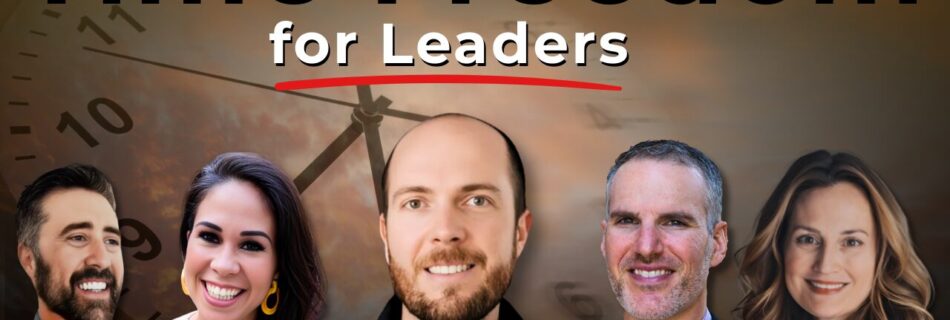
Time Freedom for Leaders: How to Reclaim Your Schedule and Scale Without Burnout
Entrepreneurs and executives are no strangers to the hustle—but too often, that hustle leads to exhaustion, not freedom. In a recent episode of Executive Edge Live, hosted by Harley Green of Workergenix, four elite leadership experts shared how to achieve real time freedom through smart systems, strategic delegation, and a serious mindset shift.
If you’re constantly stuck in the weeds of your business, here’s how to break free.
Preferred listening on the go? Catch the full podcast episode on Spotify and Apple Podcasts.
The “Time Rich” Framework: A Business That Runs Without You
Mike Abramowitz, co-founder of Better Than Rich, knows firsthand what it takes to build a self-sustaining company. While his son spent 254 days in the NICU, his business not only survived—it thrived with over 7 figures in sales.
His secret? The Time Rich Six:
Boundaries – Protect your priorities
Communication Guidelines – Define when and how your team should reach you
Systems – Build repeatable, scalable workflows
Playbooks – Document SOPs to remove dependency on your input
Team – Hire doers who can execute with confidence
Technology – Automate and support execution
If your business needs you for every decision, it’s time to rethink your structure.
Implementing EOS: More Than Just Meetings
Michelle Rourke, an EOS Integrator, busts the myth that EOS is just “scorecards and long meetings.” Instead, EOS is a complete operating system that frees the founder to operate in their zone of genius.
Key EOS tools she highlights include:
The Accountability Chart
Clarity Breaks
Delegate and Elevate™
The GWC Tool (Get it, Want it, Capacity)
The goal? To shift founders from being the busiest person in the room to the most strategic.
Delegation is a Mindset, Not Just a Task
According to Cathy Christen, a Leadership & Lifestyle Strategist, many founders wear busyness like a badge of honor. But real leadership means shifting from being the best doer to being the best developer of people.
She encourages:
Running a time audit
Visualizing your business 10 years in the future
Building the org structure to support your ideal lifestyle
Your value isn’t in how much you do—it’s in how strategically you lead.
Small Changes, Big Impact: What’s Scalable vs. What’s Not
Robert Liedtka, creator of the People First Methodology, advises founders to start by evaluating what parts of their business are scalable—and what isn’t.
He recommends:
Breaking projects into scalable vs. non-scalable
Prioritizing what creates the most leverage
Aligning your actions with your vision and communication to build trust
Small, aligned shifts today build momentum for exponential growth tomorrow.
Stop Trying to Do It All Yourself
A recurring theme throughout the panel? Delegation is essential for scale.
Whether you’re a solo founder or leading a team, you can’t grow if you’re the only one moving the ball. The panel discussed how to:
Use time audits to identify what to offload
Design roles around strengths, not just tasks
Install systems that remove you from day-to-day decisions
As Mike put it: “Your business doesn’t need a superhero—it needs a leader.”
🎁 Ready to reclaim 15–30 hours a week with strategic delegation? 👉 Get instant access to our Delegate to Dominate masterclass: https://workergenix.com/bonus-masterclass
Final Thought: Time Freedom Starts With Intentional Leadership
If you want a business that doesn’t rely on you, you have to design it that way—on purpose. That means clarifying your vision, building the right systems, and letting go of control so others can rise.
Schedule a free discovery call to explore how we can help you reclaim your time, systemize your operations, and lead with clarity—not burnout.
Like what you read? Get weekly insights on scaling, efficiency, and profitability—straight to your inbox. Click here to subscribe.
Transcript
Harley Green
Welcome everyone to today’s Executive Edge Live panel. Today we’re talking about time freedom for today’s leaders and helping people lead at a higher level with the right people and the right systems in place. We’ve got an amazing panel together here today and I wanna just welcome everyone here and thank you for joining us.
This is hosted by Workergenix. I’m Harley Green. I’m the CEO and founder of Workergenix. We help executives and leadership teams stay focused on high impact activities by delegating the rest to highly skilled AI leveraged ultimate executive assistants. Today’s conversation is going to be all about one of the most valuable assets for any leader, their time. We’re diving into how to create real time freedom with the right people, systems and support so you can lead at a higher level without the burnout. I’m honored to be joined by four powerhouse leaders who live and teach this every single day.
First off, we have Mike, who is the co-founder of Better Than Rich. He’s built a seven figure business that runs without him. He’s a creator of Time Rich and leader of GSD Intensives, helping owners systemize sales, referrals and hiring so the business doesn’t depend on them. Next, we’ve got Robert who has over 15 years of leading global and national teams. He’s developer of People First methodology that unlocks workforce potential and turns small changes into bottom line breakthroughs. And Michelle helps businesses fully integrate EOS and entrepreneur operating system across all layers, driving accountability, harmonizing operations and installing permanent integrators for long-term success. And last but not least is Cathy, who specializes in building systems and cultures that help leaders thrive without the sacrifice, empowering them to reclaim their time and lead with purpose. Thank you all for being here. How’s everyone on the panel doing today?
Cathy Christen Great, excited to be here.
Mike Abramowitz Thanks for having us.
Harley Green All right.
Robert Liedtka Very excited.
Harley Green Awesome. Well, the first question I have for the panel, anyone can feel free to jump in after I ask the question here is, what does time freedom mean to you personally? And why is it so critical for today’s leaders?
Cathy Christen I’ll jump in. I think time freedom, my whole world for 20 years has been around creating time and money freedom, right? And being able to do what you want when you want with whom you want. I think about in a business sense, it’s having the freedom to work on what you want to work on, right? To be able to focus on the needle movers, to not get stuck in the weeds. I think that too many leaders, a lot of leaders think about delegation as like giving away tasks. And it’s not about transferring ownership or it’s not about just delegating, but transferring ownership with clarity. And so I think that time freedom, there’s so much that we’re going to talk about, but it really creates space for you to be able to major in the majors and not get stuck in the weeds as a business owner and have more time to work on the business versus in the business.
Michelle Rourke Yep. You know, I’ll add through EOS, we teach visionaries how to live their best life. So for me personally though, it’s I’m right now at my in-laws in Phoenix. So the freedom to me is being able to enjoy the other parts of your life besides just working in the business. So I think that’s the biggest challenge, taking a vacation, enjoying life.
Robert Liedtka I’m very happy you brought that up. I think in terms of how you spend that time is what’s going to be most impactful for both yourself as a leader or your team in order to prevent things like burnout. The more time that you’re just putting into things like operational blow, just going through the motions in your day-to-day work, that’s going to consume you and eventually burn you out. And if you can leverage that free time that you have to work smarter throughout your day-to-day, you’ll be able to even gain more and more of that freedom to be able to have that restoration so that you’re not running in the red at all times.
Mike Abramowitz Yeah, I’ll just echo everything that’s been said. Plus it’s just for me, it’s been a choice. So time freedom just gives me choices. I could choose to work in parts of the business that I enjoy. I could choose to not work in the parts of the business that I don’t enjoy. I could choose to delegate. I could choose to choose to do. I could choose the vacation or I could choose to work hard. So just having choices is what time freedom means to me.
Harley Green Awesome. Now, Mike, you have a personal story that really drove home the importance of time freedom when your son was in the NICU. What are some of the first steps leaders must take if they want a business that runs without them, so they have that time freedom you just described?
Mike Abramowitz The cliff notes: James is doing great now. He’s four and a half, almost five. He was born at one pound, four ounces. He was in the NICU for eight and a half months. So for those 254 days, my business was able to run without me, and it still did seven figures in sales without me there.
It took a little bit of dissecting to figure out what caused that, but it really came from six principles. We now call them the “Time Rich Six.” These are:
Boundaries – Protecting priorities.
Communication Guidelines – What deems an email versus a text versus a call.
Systems – If-then processes.
Playbooks – Documentation of those processes.
Team – Who’s executing the playbooks.
Technology – Tools the team uses to execute those plays.
Boundaries, communication guidelines, systems, playbooks, team, and tech — that’s what we now call the Time Rich Six. That’s what I installed in the business to “McDonald-ify” it. Documentation with SOPs, lower-wage workers executing the plays because they were simplified, and supportive tech. That’s the Time Rich Six.
Harley Green Love it. Does anybody else have experience implementing similar pillars in their business?
Cathy Christen Yes, absolutely. I think first, in terms of the transition from going from that “I’m hitting a wall, overwhelmed, how can I work any more hours?” — I remember there being a moment where it started with something as simple as a time audit. That was the big transition. Looking at what are all the things I’m actually doing right now? Should I be doing them? Really evaluating.
Sometimes business owners have this pride or ego — “I’ve got it,” or “I can do it better,” or they fear letting go. I sat down and really looked at my calendar. What am I doing? Could this be automated? Could this be delegated to someone just as good or better than me? Is this something a $15–$25/hr person should be doing instead of me?
I put tasks into buckets: things only I can do, things someone like me could do if trained, things a loyal, coachable mentee could do, tasks for overseas support, and things that can be automated. And it was magic when that came together.
One big part of that was creating duplicatable systems. Many leaders say, “It’s just faster to do it myself,” because they haven’t taken the time to get it out of their head and onto paper. It may feel faster in the moment, but that doesn’t create time freedom, or scale, or allow you to duplicate yourself.
Someone challenged me to take pride in being the best teacher of the things in my business, not the best doer. That mindset shift changed my world.
Robert Liedtka That’s a great way to look at it. I’d also add in prioritization — for yourself and your team. Too often, teams have growing to-do lists and never get to the bottom. Effective teams implement prioritization where it’s painful to let something go. You might want to do it, but you know you need to focus elsewhere.
You need to remove not just the time but also the mental space things take up. When your attention is fully on what’s been prioritized, you’re far more effective than trying to juggle 100 things at once.
Harley Green Awesome. Well, Robert, right back at you. You believe small changes can make a big impact. What’s one change a leader can make this quarter to start reclaiming their time?
Robert Liedtka Yeah, everything starts small. It might sound obvious, but many leaders get stuck in theory without taking the first step. The key is to break things down into their smallest components. Then, prioritize.
What I do with teams is help them lay everything out — then sort into two buckets: what’s scalable and what’s not. Focus first on the scalable items. Then ask: What can we implement in the next day, week, or month?
Get that first small win, and then scale that across the team. Also, instill the habit of identifying what’s working well and what’s not — consistently. That reflection builds value across the team. It’s either the same input with better output, or less input with the same output. If you can align both, you dramatically reduce how long it takes to get results in the organization.
So — identify what you’re doing, then what’s scalable, then what’s valuable, and then what’s realistic to implement now. That’s how you start to reclaim time.
Harley Green Well, going over to you, Michelle. Many leaders think EOS is just meetings and scorecards. How do you reframe EOS as a system for freeing up the visionary to lead at a higher level?
Michelle Rourke EOS is a framework. The most important thing is to pick a framework — and actually stick with it.
Too many people treat EOS like a buffet. They pick an L10 meeting here, a scorecard there. But EOS is a complete system. The first thing we teach is: What do you want from your company?
I’m an integrator, so I work hand in hand with visionaries. We start with vision, goals, values — but then break that into execution. That starts with getting people into their unique ability, so others can handle running the business.
One of the first steps I insist visionaries take is a Clarity Break. Step back, write out everything you do in a day, what’s actually important, and then we work through that list.
EOS gives us tools like IDS (Identify, Discuss, Solve) sessions, weekly meeting rhythms, and more. Whether you use EOS or something else, the point is: implement a system that reaches every layer of the business — not just the top level.
Harley Green I’m definitely hearing some themes here — making sure people have a good understanding of their values and how they’re spending their time in order to implement change effectively.
Cathy Christen Yes — and systems create predictability, which creates freedom.
Something like EOS — we’ve used our own version of it for nearly two decades — helps stop you from running your business on hope, memory, or chaos. It ensures you have the right people in the right seats, and clear processes to match.
It reduces the 2 a.m. anxiety of “Is this getting done?” Systems aren’t about control — they’re about peace of mind. When your team knows what’s expected every week and how to be held accountable, you get better performance.
Good systems also allow people to co-create, take ownership, and contribute to decisions. That increases buy-in and drives high performance.
Mike Abramowitz I’ve got several thoughts — let me pull in a few things from what everyone just said.
Cathy said something powerful: “Doing things to get them done” vs. “Doing things to get them delegated.” That’s a big nugget.
Robert mentioned when you say yes to the wrong priorities, you’re saying no to the right ones — I loved that.
Michelle brought up unique ability — what only you can do in your business. I call it the Zone of Genius — Gay Hendricks talks about it in The Big Leap. Everything else outside that zone? Delegate.
And what you’re doing with Workergenix, Harley — I love that. You’re plugging in a team of doers, powered by AI, to tackle everything outside a leader’s zone of genius.
Lastly, Cathy mentioned meeting cadence — I recommend pairing that with the One Minute Manager philosophy. Goal setting, brief check-ins, praise or redirect, repeat. That keeps accountability sharp and simple.
Robert Liedtka Mike, I love that you brought up One Minute Manager. I’d add one more thing — leaders sometimes fall into the trap of thinking only they can do a certain task. Ego gets in the way. They end up holding onto too much, thinking, “I’m the best at this,” and suddenly, they’re empire-building and headed straight toward burnout.
You’ve got to be real with yourself about your actual skills and value. What can only you do? Once you identify that, it’s way easier to delegate and focus your energy.
Michelle Rourke Yes! And I’ll add: If your goal is to scale, you can’t be stuck doing everything. You have to learn to step out.
Harley Green Right. And we’ve seen the opposite too — leaders feel guilty handing off tasks they don’t enjoy. But just because you don’t like doing it doesn’t mean no one does. There’s someone out there who loves that task and may be even better at it than you. Delegating creates opportunities for others too.
Mike Abramowitz That reminds me — a friend once asked, “What do all superheroes have in common — except Batman and Iron Man?”
The answer? They’re broke.
Robert Liedtka They’re broke?
Michelle Rourke They’re broke.
Mike Abramowitz They try to be everything to everyone, but they have no money, no life, no relationships. The “superhero syndrome” isn’t a compliment. Being the best at everything in your business is actually a problem.
Harley Green Powerful point. Cathy, as someone who helps leaders thrive without sacrifice, what mindset shifts are needed to reclaim time while still growing a business?
Cathy Christen One of the first mindset shifts I work on is this: You don’t have to do it all.
Too many leaders wear busyness like a badge of honor. But the shift comes when you realize your value isn’t in how much you do — but in how strategically you lead.
Let go of being the hero. Your business doesn’t need a hero — it needs a leader.
The best business owners are developers of leaders. Even if you’re a solopreneur doing half a million dollars, act like your business is in the “adult” stage. That’s a mindset shift.
Stop thinking, “I’ll deal with that later.” Instead, ask: “What does my business look like 10 years from now?” Then reverse-engineer that. Who reports to you? What’s your org structure? What type of marketing team, support team, operators will you need?
Don’t limit your thinking based on where you are right now. Start with vision — then see what it takes to get there. Because the truth is, with tools like Workergenix, there are very practical, affordable ways to offload tasks and scale faster.
I ask every founder: What does the life you love look like? Let’s build the business that aligns with that.
Mike Abramowitz That was fire. I’ll add this — we’ve been working with a lot of blue-collar businesses. Our new thing is “White Collar Systems for Blue Collar Workers.”
It starts at the top of the funnel. For example, if a contractor is taking every phone call — how do we stop that? Maybe we create a form on the website, offer a lead magnet like “$500 off,” and get their info so we control the follow-up.
Now we’re not reacting — we’re guiding the sales journey.
Then we add a discovery call with qualifying questions before ever sending a crew out. That saves time, gas, and labor — because we’re not servicing unqualified leads.
Plugging in a virtual assistant for admin is great, but don’t stop there. You need to build systems and predictability around the whole user journey — for your customers and your business.
Harley Green Michelle, did you want to jump in?
Michelle Rourke Go ahead, go to your next one.
Harley Green Alright, so the next question I have for everybody is: What are some of the most common traps that keep leaders stuck in the weeds? I think we’ve touched on some already — but how do you help them avoid those traps? Feel free to jump in.
Robert Liedtka Great question. Every leader, no matter where they are in their journey, needs to be aware of this if they want to grow.
Where I see leaders get stuck is when they have enthusiasm, but lack the tools or communication skills to bring their teams along. Or maybe they haven’t built trust, which is critical.
I teach leaders to align the three major aspects of trust:
What you think
What you say
What you do
If any of these are out of sync, your team will sense the misalignment, and trust will erode. As humans, we pick up on that very quickly.
You need to be introspective. Ask: What do I really think? Am I saying that clearly? And does my behavior match? Without that alignment, your leadership becomes transactional instead of transformational.
Michelle Rourke I’ll dive in. One of the biggest traps I see is misalignment with the right people in the right seats.
In small-to-medium businesses, it’s common to build the team around people — family, friends, or long-time staff — instead of building based on structure.
You end up creating a job for Uncle Ted instead of identifying the functions the business actually needs.
Later, when it’s time to scale, you’re stuck with the wrong person doing the wrong job. That’s hard to unwind.
So I always say: Start by thinking 6 months ahead. Build your accountability chart based on what the business needs, not who you already have.
Cathy Christen Dead on. When defining a role, you also need to think about the attributes you want.
Do you need someone outgoing and energetic? Or someone quiet and detail-oriented? I once hired someone amazing for an operational role that needed a lot of inventory analysis. But she was super chatty — and it didn’t work.
It wasn’t that she was bad — she was just in the wrong seat.
When we moved her to client acquisition and marketing, she thrived. She was happy, we grew, and we found someone else who loved being behind-the-scenes with spreadsheets.
The key is getting crystal clear on the role and the kind of person who will thrive in it. Your brain starts looking for the right match once it knows what to look for.
Mike Abramowitz I’ve got two traps. One: leaders see everything as transactional, instead of investing in relationships — with their team, clients, and partners. Relationship-building is not a “nice to have.” It’s the fuel.
Two: There’s a math trap. Let’s say you want to work 30 hours a week for 48 weeks a year. That’s 1,440 hours.
Now let’s say your income goal is $300,000. Divide that by 1,440 — that’s $208 per hour.
If you’re doing $15/hr tasks, you’re out of alignment. You’re undercutting your own value. Just that shift in perspective can change everything.
Michelle Rourke EOS has a great tool for this — it’s called Delegate and Elevate. It’s the same idea. You figure out what gives you energy and what drains you. You start handing off the stuff that doesn’t match your unique ability. That’s how you grow.
Harley Green And speaking of the right seats, we had a podcast guest recently who talked about doing a responsibility auction.
If you’ve got a team where roles are murky — maybe family, friends, or long-time staff — strip away the names. Just list all the responsibilities on paper. Then let people “bid” on what they want to own.
The blanks that no one picks? That’s where you hire. It’s a simple way to get people aligned without hurting feelings.
Michelle Rourke Yes! And often when you remove someone from a role they weren’t thriving in, they’re so much happier. They didn’t want to be there either — they just didn’t know how to say it.
Cathy Christen Exactly. And productivity goes up when people are in the right seat. It’s not just about skills — it’s about energy and alignment.
Mike Abramowitz Let me click on that. Jeff Woods once told me: “Every seat should have three key jobs. And if you can’t do those three, you’re fired.”
It’s not about overwhelming people with 15 tasks. Keep it simple. Define the three most critical things each role must deliver — and build accountability around that.
You can connect that with the book The ONE Thing. Focus on what drives 80% of the results — and get clarity on what matters most.
Robert Liedtka Yes. And if someone consistently picks responsibilities that don’t align with the company’s vision — that’s a red flag. You might need to reevaluate the role or the person.
Prioritization gives you the lens to run those exercises more effectively.
Michelle Rourke Another EOS tool I love is GWC — Get it, Want it, Capacity to do it.
You ask: Does this person “get” the role? Do they “want” it? And do they have the “capacity” — meaning the skills and bandwidth?
It’s a simple filter that brings so much clarity.
Harley Green I’ve got more questions, and this group could talk for hours, but let’s jump to a final lightning round.
In just one or two sentences — what’s your best tip for a leader who wants to stop working in the business and start working on it this year?
Mike Abramowitz Oh man, how do I get this into one sentence?
Robert Liedtka Trying to pare that down too, ha!
Michelle Rourke One sentence? Okay — Let go and trust the system.
Robert Liedtka It all starts with ego. You’ve got to be honest about what you’re good at, what you’re not, and prioritize based on that. (Sorry, maybe a few commas and dashes in there.)
Cathy Christen Super tactical: Run a time audit. Then figure out what you don’t have to be doing.
Mike Abramowitz Okay, here’s my one-liner: Know what you want — then go build it.
Harley Green Powerful. I want to give everyone a chance to share how people can connect with you. Where can our audience find you online?
Cathy Christen Visit CathyChristen.com — all my links and socials are there. That’s Cathy with a C and Christen with a CH.
Michelle Rourke The best way is LinkedIn — just search for Michelle Rourke. Also, I recommend the book Traction — if you want a copy, send me a DM and I’ll mail it to you.
Robert Liedtka You can find me on LinkedIn as well — Robert Liedtka. My world is great for anyone in corporate who’s looking to scale teams or make a career move.
Mike Abramowitz And if you know a blue-collar business owner who wants more freedom, head to betterthanrich.com/GSD. I’ll do a free OBS call and help you design systems that work for your business — whether you do it yourself or hire us.
Harley Green Thank you all for your stories, insights, and wisdom today.
To everyone watching — thank you for joining this conversation. As a thank-you, we’re offering free access to our masterclass: “Delegate to Dominate.”
In it, I walk through how top execs are reclaiming 15–30 hours a week using the right strategic support.