How to Turn Your Team into a High-Performing Asset (Without Burnout)
If your team is your biggest investment, why aren’t they delivering your biggest return?
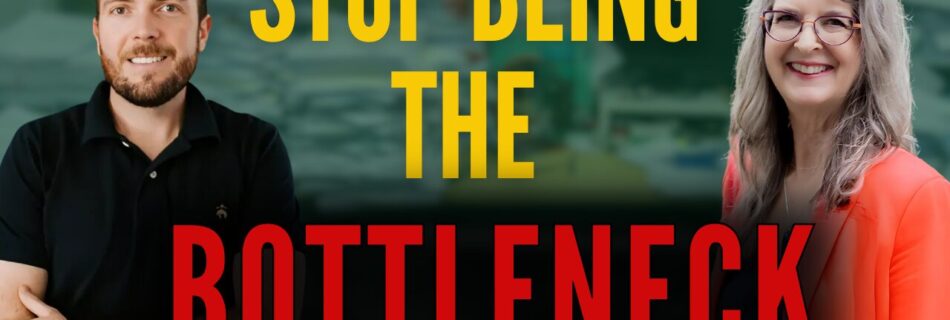
In a recent episode of the Scale Smart Grow Fast podcast, host Harley Green sat down with Katie Close, transformational leadership coach and founder of Self Mastery, Entrepreneur Evolution. Katie shared a powerful 6-part framework that helps leaders transform their teams into aligned, efficient, and high-ROI assets—without burnout or bloated headcounts.
Preferred listening on the go? Catch the full podcast episode on Spotify and Apple Podcasts.
Here’s what growth-minded founders and executives need to know:
1. Strategic Clarity Drives Everything
Vision isn’t just a poster on the wall. According to Katie, strategic clarity must be embedded into daily operations and decisions. Without it, you risk hiring misaligned team members and wasting energy on low-ROI activities.
2. People Need Defined Roles and Accountability
Too many leaders expect new hires to “figure it out.” Katie emphasizes clear role definitions, consistent processes, and aligned expectations as key drivers of performance and satisfaction.
3. Process Before People
Before hiring, first fix your systems. Throwing more people at unclear workflows only creates expensive inefficiencies. Align structure and operations before expanding the team.
4. Hire Support for the Visionary
Visionary leaders often live on the edge of growth and chaos. Hiring an executive assistant or integrator helps bring structure to vision, translating ideas into execution and freeing the visionary to focus on innovation.
5. Emotional Intelligence is Non-Negotiable
Leadership isn’t just strategy—it’s psychology. Katie highlights how subconscious beliefs and unprocessed emotions can sabotage leadership. Emotional intelligence helps leaders stay grounded, navigate setbacks, and maintain the energy needed to inspire others.
6. Start With Honest Conversations
Want to improve your team’s performance? Start by asking: “What’s working, what’s not, and what should we change?” Katie calls this the “1% conversation”—a simple practice that catches small issues before they become big problems.
“Scale smart before you grow fast.”
Katie’s final advice? Optimize the human side of your business. Emotional patterns, clarity gaps, and poor delegation habits are the silent killers of growth. Get intentional, get honest, and start leading smarter.
Learn more about Katie Close’s coaching and framework at https://katieclose.com
Want a high-performing team without the burnout?
Workergenix pairs you with an Ultimate Executive Assistant to bring clarity, systems, and execution to your vision—book a free discovery call today.
Like what you read? Get weekly insights on scaling, efficiency, and profitability—straight to your inbox. Click here to subscribe.Transcript:
Harley Green:
Hey everybody, welcome back to the Scale Smart Grow Fast podcast. Now, if your people are your greatest investment, why aren’t they delivering the strongest ROI? In this episode, Katie Close, Transformational Leadership Coach and founder of Self Mastery, Entrepreneur Evolution, shares how business leaders can align strategy, structure, and emotional intelligence to unlock their team’s true potential. Drawing from over two decades of experience, Katie reveals six key framework items that help transform expensive overhead into consistent high performance enabling growth without burnout. Katie, welcome to the podcast. How are you doing today?
Katie:
Hi Harley, thank you. Yes, well.
Harley Green:
Great, now Katie, maybe you can share a little bit more about your background. What brought you to helping others with their people now?
Katie:
Well, my husband and I, when we got married, we had these master degrees and we had envisioned ourselves in the workplace to some degree, but he had this stirring for entrepreneurship. So very quickly we are building a moving company from scratch. We got a truck and now we’re building a company. I was a little bit surprised about how emotional that journey was because if I’m getting straight A’s through a master’s program, why am I not figuring out business? It actually required something distinct from us. We went through some highs and lows that we weren’t expecting.
We then got into the transformational work of people in nonprofits, because I was very inspired by that. Organizational leadership, yes, but really keying in on the individual. I often say that team is made up of I’s. They just all get together and figure out how to harmonize and become an efficient organization for the intended purpose or mission.
When I really started to take my time with individuals and actually individuals that were on the brink of severe challenges—and through a nonprofit, it was a lot of drug and alcohol addiction—and those people, they need to change. You don’t have the convenience of when or how or if. It’s now. It’s essential.
Watching that transformation, I saw how much of it occurred at a subconscious and emotional level. Then I started to apply a lot of that for business. We draw out our patterns. Especially if we have margins, we just allow them to be eaten up by overhead. I know you guys just recently had a podcast about increasing head count, just more people as if that’s going to solve what people. What are they going to have to feel, think and exchange in the organization?
I started doing that for us. We opened up another business—we had sold our moving one—but we opened up a lawn and landscaping one. People saw the transformations that were occurring and started asking me to coach. Again, I love people. So I was happy to do that. And I’ve continued to do that as we’ve had a number of other businesses. We’ve sold some, building other ones, looking to buy one again recently.
I go in and help other businesses with those underlying dynamics that often get lost. We know ourselves, right? I don’t know, Harley, if you’ve ever experienced this, but you’re like, I’m doing a new workout program, or I’m going to get up at the same time every day, or I’m going to do my work blocks. The idea of it’s good, but our emotional patterns sometimes overtake all of that.
Imagine wanting to change the entire patterns and habits of a whole organization—not just yourself, but the whole thing. That’s, I think, where there’s so much underlying potential, but there’s so much work to be done.
Harley Green:
Absolutely. I love what you said about the challenge of changing this whole organization when we struggle just to keep consistent ourselves. One of the things you say is that people are both your greatest expense and greatest return. What makes that alignment so critical for leaders who want real ROI from their team?
Katie:
Well, if we bring it back to yourself, we watch a lot of our own internal patterns play out. We’re sometimes very hard on ourselves, on our mistakes, on our patterns. But we have to realize we are—especially if you’re a visionary or one of the key elements—you are one of the greatest assets to your business: your energy, your clarity, your patterns. As you start to believe that, you can start to believe that in your people. But it doesn’t mean it’s just automatic.
There are a number of elements going on. A lot of time people just say, I’ll put in a new person. This person’s driving me nuts. I loved them at first, get them out of here. It’s like dating. You ever see somebody fall in love and the person could do no wrong? They hire them on the first meeting. No real plan or strategy. Just a good feeling. And then they’re out. They’re not doing what I said. I can’t stand it anymore. Get out. Hiring somebody else. Then that person looks like the last. Bob looks a lot like Billy who looks a lot like Luke.
We actually have a way of being that can either make people very expensive for us or make people really optimized and beneficial for us.
Harley Green:
Yeah, let’s talk about that. Let’s talk about your framework, the six key elements in your framework. What do those consist of?
Katie:
We have to be clear on where we’re going. Vision, mission, strategic clarity—if you write it down and put it in a drawer, it’s a start, but often gives a false sense of engagement. There’s a decision every day to live out that clarity. Am I going in the direction I intend? What is or isn’t moving me there? I love quarters because every quarter you can reassess. Every day might be too much, but strategic check-ins help.
Then we have our people, but we’re really choosing them in light of the strategic clarity. A lot of times we think someone will just come in and fix something, but people appreciate clarity and a bit of structure. Visionaries often don’t like being told what to do, but others want direction and structure. That makes for a great organization.
Transparency is another one. We need to be okay with micro mistakes. With good measurables, we facilitate clarity and quick responses to breakdowns. Then we solve root problems—this is where emotional intelligence is key. It takes intentionality, not just fire-fighting. We need process and execution with consistency, building new habits. Otherwise, you’re just adding more people without clear direction or impact.
Harley Green:
Yeah. One thing we found in our business was going from chaos to having clear job descriptions, responsibilities, and procedures. There was less chaos, more done, and everyone was happier.
Katie:
Exactly.
Harley Green:
Of the elements you just talked about, is there any one in particular that has the most impact when not in place? What red flags can people watch for?
Katie:
They’re all important, but strategic clarity and the ability to execute it regularly stand out. You can’t just write it and put it away—even putting it on the wall isn’t enough. It must be in the habits of your people. If you can integrate it daily, people start to figure it out and embody it.
It’s hard to scale if people have to read you all the time. That’s why having an operational person or executive assistant to bridge the gap is essential. Visionaries iterate a lot. Not everyone wants to live on the edge with them. An assistant can stabilize execution, allowing the visionary to keep creating.
Harley Green:
What would you say to that visionary who doesn’t have an assistant yet? How do you communicate the benefits?
Katie:
This year I’ve had a true executive assistant. My day is full of creativity and new decisions. I’m less bogged down, and I didn’t realize how much the little stuff was wearing me out. Yes, it’s a bit of a risk, but I’d talk to a visionary using words like “risk,” “return,” “creativity,” and “freedom.” That’s what they want.
I also host twice-monthly workshop calls for a visionary and their assistant or integrator. They both need to be there. Visionaries are bigger-than-life people—they often undervalue that stabilizing role. We’re often in survival mode, thinking we have to bring in the money, make stuff happen. But we need structure and people who can create that calm.
Harley Green:
You mentioned freedom and time. Sometimes visionaries feel guilty when their assistant is working and they’re at their kid’s ballgame. What would you say to that?
Katie:
Great question. Guilt is often systemic—it’s not always just your feeling. It could come from cultural or family conditioning. Maybe you were told you’re lazy if not busy. We need to recognize that conditioning.
Visionaries need to focus on their energy. That’s the most valuable thing. If going to the ballgame re-energizes you and you come back with more clarity and drive, that’s invaluable. But if you check out and don’t come back energized, then yeah, maybe it’s an issue. Your job is to
Harley Green:
That leads into another question. How does emotional intelligence factor into team optimization?
Katie:
We have this prefrontal cortex where we set goals and get strategic, but a big driver in our brain is the limbic system—our emotions. We are moved by how we feel: respected, powerful, free. Tools like the Predictive Index and Culture Index help uncover work motivators.
Money can only motivate so much. Emotional intelligence allows leaders to notice and work through things like burnout, stress, disappointment, regret—all of which affect creativity and leadership. Ray Dalio said, “Pain plus reflection equals progress.” We need to reflect to grow.
Harley Green:
So when aligning people, strategy, and systems, what mindset shifts do leaders need?
Katie:
Let’s play with this. When you take on more systems, part of you probably goes, “Woohoo,” especially if you don’t have to build them. But is there a part of you that resists?
Harley Green:
Definitely. Sunk cost fallacy comes to mind. “It’s worked this far, why change it?”
Katie:
Okay, so why change what’s working?
Harley Green:
If the ROI is better—if it helps us or our clients more—then it’s worth it.
Katie:
Have you had it work out?
Harley Green:
Yes, in our lending business we switched platforms, and it’s been great.
Katie:
If it hasn’t worked out, there’s still something to learn. Sometimes we don’t reflect on what went wrong. That’s where expensive entrepreneurial education becomes valuable if we show up for it. Reflect and evolve.
Harley Green:
What are some examples of subconscious issues holding leaders back?
Katie:
I had a client who loved freedom and thought everyone wanted the same. They hired salespeople with no structure, thinking autonomy equals performance. But it was abdication, not delegation. The hires weren’t held accountable, and it blew up. One hire even reminded the client of his father. It was subconscious patterning playing out.
Harley Green:
Wow.
Katie:
We all have those patterns. The subconscious says, “I got you,” whether that’s brushing your teeth or repeating emotional cycles. We have to examine which patterns serve us and which don’t.
Harley Green:
What’s one practical step leaders can take this week to start that shift?
Katie:
Have a safe, honest conversation with each person on your team. Ask: What’s working? What’s not? What would you change? You don’t have to implement it all, but it gives you awareness. We call it the “1% conversation.” Catch the issue at 1% before it becomes a 50% problem.
Harley Green:
Katie, thank you so much for sharing these actionable strategies. Where can people connect with you?
Katie:
Visit katieclose.com. I offer coaching for both the executive and their organization. We do group work every quarter around the six elements. Harvard Business Review says a $10M business can lose $2M yearly in operational inefficiencies. If $2M motivates you, come check it out.
Harley Green:
If you got value from this episode, hit like and subscribe so you don’t miss future strategies to help you scale smarter. Share this with someone who needs it. Thanks for tuning in!