
Leadership Bandwidth: What Sarah Papoff Learned About Building Trust Instead of Letting Go

Opening Scaling Tension

Somewhere between fifty and two hundred people, the founder’s calendar stops being the constraint and awareness takes its place. Decisions still route through you, but you can no longer see enough of the business to make them well, so every handoff feels like exposure. The standard advice is to β€œlet go.” Most founders hear that as an instruction to stop watching the one thing they are accountable for, and they refuse. The result is operational drag: a leader who stays in micro decisions because the alternative looks like losing control.

Sarah Papoff spent more than a decade at Bain, then led operations at startups from pre-revenue to $200 million in ARR. Her view is that the framing itself is the problem.

The Hidden Constraint

The constraint is not unwillingness to delegate. It is the black box. Papoff says β€œlet go” is exactly what founders are scared of: scared of the black box, scared of things happening, and scared of their own lack of awareness. A founder who cannot see what happens after a handoff will rationally pull the decision back.

That reaction has a cost that compounds. Every decision a founder retains competes with the work only the founder can do, which turns leadership bandwidth into the scarcest resource in the company. Fixing it with more effort does not work. It requires a different structure for how information and authority move.

The Operating Shift

Papoff’s core operating principle is to build trust and transparency instead of letting go. The founder is not absent. The founder is far enough from the work that things can happen without them, and close enough to see when something is drifting and to step in.

At the 50 to 200 person stage, she describes what that looks like in practice. The weekly executive meeting becomes the primary place the founder gets information. The founder is no longer meeting with the executives’ direct reports on a regular basis, only with the executive team, and gets updates weekly. One-on-ones, product reviews, and other recurring forums sit alongside it on a set cadence, with ad hoc reviews for specific items. If the system is working, that is enough.

The shift is from personal involvement to designed visibility, which is scaling discipline in practice. Control comes from the quality of the information the founder receives, not from the number of decisions the founder touches.

Execution in Practice

Three insights from the conversation turn the principle into decision-making frameworks and execution systems.

Sort decisions by reversibility. Papoff uses the one-way door and two-way door test. If a decision cannot be undone, the founder trusts that they will be consulted. If it is reversible, even a fairly major decision, the founder does not need to be in the loop. Her example is a website banner test: if you can change red back to blue with a button, it does not need to go to the CEO. This is risk management applied to delegation. Founders who hold on to reversible decisions block experimentation, and experimentation is where the company learns. Even when a test succeeds and the CEO still vetoes the red banner, the data was worth having.

Expect onboarding to break first. Asked what fails when a company grows from 10 to 50 customers, Papoff points to onboarding, for customers and employees alike, and recommends solving both together. In a recent client engagement, a customer listening exercise showed the company did not have a feature problem. It had an onboarding and service problem. A centralized customer service system followed, and email response times dropped to under 90 minutes. New hires reported they did not understand the product either, so the team built employee onboarding alongside the customer journey. Documentation can be lightweight, such as a Notion document or a checklist, with one rule: the last step is that whoever finds a gap updates the SOP. She also suggests giving new employees a test customer instance so they go through the full customer onboarding themselves.

Audit decisions before you add meetings or tools. To get time back, Papoff suggests a decision review. List the decisions made weekly, monthly, and quarterly, and the forum where each one is made. Then check whether the right people and the right information are in the room, and whether the meeting cadence serves those decisions. Many recurring meetings, she observes, exist to meet rather than to decide. On tools, her answer is β€œit depends.” A shared customer success platform solved a real systems problem for her client, but it did not replace the need to hire, and no tool fixes weak decision-making.

Leverage Outcome

Operational leverage here means expanded capacity, not longer hours. When a founder trusts a structure that provides visibility, the company can run more tests, absorb more learning, and make more decisions without routing them through one person.

Papoff also names a smaller, practical drag: high-frequency scheduling takes far more time than most leaders expect. When no administrative support is in place, she notes that operations leaders fill the gap, because getting the right people in the room is critical to good decisions. An effective executive assistant takes the mental load of meeting conflicts and logistics off the founder’s plate, so their active attention can go to founder-led sales, product, and the other places only they are needed.

Connect With the Guest

To learn more about Sarah Papoff and her work:

Website: https://signalpathadvisory.net/

LinkedIn: https://www.linkedin.com/in/sarahpapoff

The Immediate Move

Leadership bandwidth is the real constraint on a scaling company, and structure protects it better than effort does. The founders who scale do not abandon the business. They transfer ownership of reversible decisions, define the forums where the important ones get made, and replace personal involvement with visibility they can rely on.

Start with the decision review. Map the decisions your team makes and where they happen, separate the one-way doors from the two-way doors, and remove yourself from the second group. Each re-decision you eliminate reduces cognitive load and returns time to the work that only you can do.

Watch this before you hire your next search role.

Book a discovery call to see how the right executive support helps you scale with clarity, alignment, and control without burnout or chaos. Click here to subscribe.

Full Podcast Transcript

Great.

Sarah, thank you for coming on the podcast. I’m excited to dive into your story.

Fantastic. Well, thank you so much for having me.

Now I I understand you spent more than a decade at Bain and then you moved into startups from pre-revenue all the way to 200 million in ARR. What pulled you toward the operation side of these growth businesses?

That’s a great question. So when I first dove in, I was really eager to be involved in the strategy and growth. And that is where I started. And it is really exciting to be on the growth and strategy side of a business. But what I found out really quickly, and what I fundamentally knew from my years at Bain is at some level, even though the excitement can appear to be on the strategy and growth side of a business.

At the end of the day, if your customers aren’t happy, they leave you. And if the fundamentals of the business aren’t sound, if the company doesn’t really work, the rest of it doesn’t really matter. So, really, the core

Mm.

of the core of the business is in how it operates. Once a customer enters the ecosystem, how is the onboarding process? How are they taken care of?

Does the product really work for them? Does it solve their first use case? Does it continue to solve their problems day to day? When they hit a bump in the road, how is that handled? Is billing handled in a easy-to-use, easy to handle, really graceful, you know, easy, easy touch way? And, you know, just how frictionless is being a customer? And all of those things really just make the difference in.

customer experience and ultimately your NRR numbers. And when you start to compound growth at some point, your NRR is a really, really big part of that. And operations at some level can be the biggest compounding piece of of your growth. And I I wanted to be a part of that.

Right. I I’m resonating with all of this because I have seen that play out, right? Where you cannot just, let’s say, focus on strategy and get new clients. And if you don’t service them well, like the business still isn’t going to work. The numbers aren’t going to work. So there’s a one piece of everything you said with operations of, hey, that’s really gonna help your your bottom line, right? Help your numbers. And the other piece that I think about is also as entrepreneurs, as business owners, we

wanna feel good about the product or service we’re providing and our customer experience or our client experience, like you said. I don’t wanna be the kind of person who has a business that like maybe we do, you know, paid ads or something like that and we get all these new clients, but then we’re not satisfying them, right? We’re not providing that great client experience. Like I

as a as a human being, as someone with a soul and values, I feel like that would kind of be negative. And that’s what we dislike about, you know, these big faceless corporations that are only caring about their their stock numbers, right? That’s what Americans dislike about them and why Americans like, let’s say, family businesses, small businesses, entrepreneurs.

Exactly.

Exactly. And, you know, I think even some of the bigger businesses out there, you know, there are some that really are customer service oriented in operations and have have those values. And you just have to know where to go and and where to look for them. so it really is, you know, kind of

kind of keeping that in mind, but it does. It it comes out with the numbers, right? And and you can see it in NPS and you can see it in churn. And it really does, does come up with, with the numbers. I mean, you know, Zappos being the the ultimate famous example, right? You know, they take all the returns, they write personalized notes, and they grew for a reason, right? People loved it.

Exactly, exactly. and I think, you know, people will stick with people, or stick with companies, they’ll refer and they’ll spend more, especially as having that amazing client experience. Actually, it’s funny, I had one just yesterday. We’re in Myrtle Beach, and we have some rental properties here and they’ve opened a Trader Joe’s recently nearby. And shopping at Trader Joe’s is just such a pleasant experience versus other

stores. And I think it’s one of those places that does everything you’re talking about. They care about their customer experience to such a high level. And like that means you’re not caring if it’s the cheapest place or the best value or anything like that because you’re getting such a great experience and you can trust that they have quality ingredients and everything that goes into it.

Trader Joe’s is actually one of my favorite examples. So one of the things I love about startups, and I’ve loved about being a leader at startups, and then also now in an advisory capacity, being an advisor and getting to wear multiple hats. You know, when you’re an operations leader at startups, even though operations and growth might be

What I came in with as my expertise, I ended up being a people leader multiple times. And where I’m circling back to on the Trader Joe’s example is what you may or may not know about Trader Joe’s is the reason the experience at Trader Joe’s is so good is Trader Joe’s treats their people right. So what Trader Joe’s does that many other companies don’t, is they give health insurance benefits at a lower number of full-time hours than many other companies do.

So lots

Okay.

of people go to work there because you can get health insurance benefits at a lower number of total weekly hours than other places. They also, in many cities, pay significantly above minimum wage and comparatively higher than other grocers. And people just feel appreciated. If you go and

Mm-hmm.

you are earning more comparatively than other grocery workers, you feel appreciated. And

You treat the people around you like someone that feels appreciated. And all of a sudden, in the store, everyone feels like an appreciated and valued person. So the way you treat your employees is the way your employees treat your customers. And it’s actually getting the opportunity to take over HR at one of the startups I led a few years ago. I was.

Extremely nervous. The CEO came came up to me. the person who was leading HR had too much going on. They needed to move it. We kind of looked around the executive table. It’s it made the most sense. I knew, I knew I needed to do it. And I reached out to a bunch of friends. It turns out a lot of people who’ve left Bain have ended up taking HR at at a number of startups and actually quite a bunch of larger companies. And I called a few of my former colleagues up.

Realized that Bain is actually an incredibly good training ground for people leaders. Bain has very, very, very strong people values. And the reason why is at Bain, people are the talent, right? Consultants are the talent and the product. And what Bain realized is how you treat your employees is how you treat your talent. They are your product. And it turns out this is true in

All businesses, the way you treat your employees is how they treat your customers. And that that turns into doubling the benefits. And when you have a bad company culture, those companies have poor customer service. Now, is this true every single time? No, I’m sure, I’m sure there’s an exception out there. But I would say by and large, companies with poor company culture on average.

Have poor customer service and often higher return. It is, it is a harder, harder road to to go down. When you have good company culture, you have happy customers because you’re paying people and sometimes it’s monetary, sometimes it’s benefits, sometimes it’s LD, right? You’re giving great training, you’re giving great opportunities. People are learning, they’re getting, you know, promotions or they’re getting learning opportunities, they’re getting

career advancement and and things like that, then they’re able to get themselves to the next level. They’re excited about their job. They’re excited to come to work every day. They’re working hard for your customers. Well, those customers are are feeling that. Then you have low employee turnover. Well then you have really good employees because they’re super knowledgeable. You also don’t have to constantly be paying to train new employees. So you’re actually saving yourself a bunch of money also, right? Retaining cus

Retaining employees is a cost savings technique, right? Frankly, that that people forget about. it’s so much cheaper to retain your current employees. It also keeps your customers happier. it’s it’s really the ultimate it’s the ultimate secret customer happiness initiative, cost savings

Mm-hmm.

initiative that you should be doing in in the good times, but it’s so easy to forget. It’s so easy

Mm-hmm.

to forget. And

So many companies wait way too long to hire a senior HR leader. And especially a senior strategic HR leader. So many startups, you get going, you get hiring, you hire your recruiter, right? And maybe you hire a VP of operations, but so many companies wait way too long to hire someone that’s really a CHRO or

A COO that’s a people-minded, someone that’s really keeping that strategic people view on and thinking about culture and LD and career paths. And this is how it it can really get out of, can get out of hand. And you end up being a 300-person company without career paths, with people that are kind of hanging out, not knowing where their career is going, wondering, really high talented people that

Don’t see any way they’re ever gonna get promoted. And then they’re floating around and and going other places instead of sticking around and and working hard for you.

Mm-hmm. And what size do you think a company should be when they look at hiring, you know, a dedicated VP of HR or someone else to help in that role?

You know, it’s such a hard decision because you have to be really thoughtful, right? You know, as much as I want a, you know, senior operations leader and a senior people leader and in all of these roles, I have to be realistic, right? You need a revenue leader, you know, paramount. You need an engineering leader, assuming that you’re you know, some

AI or SaaS business, you know, you need a product leader. Those are, those are actual non-negotiables because I’m certainly not gonna engineer or design the product. I think you’re probably best off if you can find some sort of a hybrid people ops leader, someone that is either

people leader that can lean in on the op side with a you know a CHRO that can oversee a VP ops or the other way around, a COO that’s very people minded and can oversee like a director of of of people that’s you know, maybe they’re really a recruiter, but they’re strategically minded recruiter. Great step opportunity for a recruiter that wants to become more more strategically minded.

Lots of great options there. It’s great to help people get thinking, Sarah. I love that. Now let’s think about another piece of of of you know startup and the growth. When your customers go from maybe like let’s say 10 to 50, right? You’re starting to get some traction and do some rinse and repeat and the business is starting to work, things are gonna break. And what are you thinking or what do you think is usually one of the first things to break that people might want to plan ahead for?

with their own business.

what is the first thing to break? Gosh, there’s so many. I think the first thing to break is probably onboarding, both customer and employee. And they’re actually often solved in really similar ways. And I actually recommend solving them together. which sounds a little bit crazy. but I just did this with a client over the summer. I was working with a client over the summer.

And they originally hired me because they wanted to a customer listening exercise. They felt like they didn’t have a great sense of what was on the roadmap. They wanted to get a better sense from their customers about what their feature roadmap should have. So did a bunch of customer interviews, kind of a customer listening exercise. They were between product leaders. So they were hiring a product leader. So I kind of did this work, kind of strategic

Mm-hmm.

work in the interim. And what I actually found out through the listening exercise.

Was that they were having a service problem. They had an onboarding problem. The customers hadn’t felt well onboarded, and they were actually kind of having a customer service problem. They actually weren’t really having a feature problem. so we ended up we ended up scoping a new project to install a new customer, customer service system that

centralized the email and got got a better kind of tiered servicing system going on. So they they solved a lot of that. The customers are feeling much better serviced. The emails, they’re getting email responses in under 90 minutes now, which is a huge improvement from from where they were before. So that’s that’s a great great result for them. And glad we did the listening exercise. So often, right, the problem isn’t what you thought it was. So they knew they needed to listen, found, found new information, which is great.

But what we also found in that process was I was talking to a few of the new employees that kind of got hired in that time period, also, who were a week, two weeks into the job, and they were saying, we don’t really understand how the product works either. We’re we’re two weeks in and we don’t feel like we really understand it either. So, in the process of building a new customer onboarding system, we actually in parallel built

a employee onboarding system that helped them parallel understand the product in parallel with the customer journey. And then we layered on top what were the internal tools that that they needed as well. Because companies grow and move and change so quickly. But you need some documentation, even if it’s lightweight, right? It’s a notion document, it’s a checklist, this doesn’t need to be

Mm-hmm.

really heavy.

And do you want to know what the last step of the document is? What was missing? It’s now your job to add it. Right? That’s

Right.

okay. When you’re 50 people, that’s okay that that’s part of the SOP is updating the SOP.

I love that. And I think that’s a really good point, Sarah. and I think of when you mentioned like the employee onboarding and how they don’t really understand the product, it can be difficult for, you know, business owners, entrepreneurs, those of us who have like lived and breathed our our business for so long. We can’t always think about the connections we’re making in our head or the things that we know that would not be apparent to somebody who’s who’s new to it.

Right. But then leverage the systems you have. Set them up a customer instance, right? You know, we don’t

Mm-hmm.

have to, you know, they don’t need to live in not knowing what they don’t know. Let’s have a fake customer instance and let them do the full customer onboarding. Let them be a customer, right? but don’t just let them live in the unknown because they need to, they need to figure it out.

Yeah,

that would be stressing. Now, can you think of a time when growth started to outpace a team’s capacity? what did you see and what did you do first?

Sorry, repeat the question when growth started to

to outpace a team’s capacity. Like they’re growing faster than they can handle it.

a good question. I’ll go back to the thinking about the customer success side, which is one I always like to to think about. I feel like that’s where that’s where this one always push push often comes to shove. it happens with services and and other operational groups as well. I think it’s where the tiered service model often becomes the the first answer where, you know,

10 to 50 customers, we’re servicing them all the same, right? We’re giving them all white glove service. Our first 50 customers, we were so happy that they’re there, right? But at some point, we can’t love every customer equally, right? We can’t service them all equally. And at some point, we have to say there are two or three tiers of customers, and some of them get lighter touch than others. And let’s start defining what that means.

You know, what does it mean to be a heavy, medium, and light touch customer? And how frequently can and do we meet with people? And what does that look like? And are some people grandfathered in because they’re our original 20? And that’s okay, right? You know, some people get that. but at least for new customers, what does what does light touch mean for the next smaller customer set that’s sold? And how do we kick that off? And how do we present that to them, right?

you know, okay, if someone is used to this level of service, weaning them off might be too hard. But when smaller customers are sold in the future, you know, maybe they never get monthly meetings. They only get quarterly meetings and they get monthly emails or they get whatever it is that that’s differentiated. and it’s a hypothesis, right? And it can be some test and learn. but but

Starting some experimentation like that, I think usually usually is a is a good way forward.

Yeah, no, I I think that’s a really good point. I love that. kind of along a similar a different question about growth. I understand, Sarah, that you took a marketplace from 1,000 to 10,000 supplier brands. And how did you turn messy work there into something that’s predictable enough to scale like that?

Yeah, that was a lot of crazy data and spreadsheets. And that was, we’ll start with a huge collaboration with the product team. it was, you know, it started, you know, it started as a growth problem, right? How many, how many brands can we get to want to join us per month, right? So it started with a demand problem and an email marketing problem and and all of those types of things.

And then all of a sudden it flipped to, you know, actually we have more brands that want to join us a month than spreadsheets that we can manually manually clean and upload. and then it’s turned into a collaboration with the product team to say, here’s what these spreadsheets look like that we’re cleaning and uploading to our website. My operations team.

could do, I think it was like 25 a month because we were we were manually cleaning them. This was before ChatGPT and Claude. So, you

Right.

know, now with the LLMs, I probably could have figured out how to how to build some agents and do it. But at the time I absolutely could not. We were, you know, using macros in Excel. I

hate to admit,

Yeah.

but that’s that’s where my capability is.

but the product team helped us figure out they built some kind of lightweight code and automation. There was some pattern recognition, and they built some automation so that we were able to go from uploading like 25, maybe 30 max a month to, I mean, honestly, a fairly unlimited amount. We were still doing quality checking that was manual because we we had certain criteria, right? We didn’t just want to let anyone onto onto the marketplace.

But we virtually could could get to an unlimited number where the quality check ended up being the barrier. but that was that was really fun to get to the point where it became a it went from an email marketing problem and a growth problem to a product problem.

Yeah, that’s awesome. I love that example. really again, great to have people think about things in a different way and as you keep growing and evolving, the problems you solve are going to grow and evolve. So

Yeah, exactly. And it’s it’s cross functional, right? You know, every every part of every part of the business is is there.

Right, yes. Now, I love how you’ve helped so many companies do this growing and scaling. And I am sure you’ve run into a lot of founders who like to hold onto everything tightly, right? This is their baby. and I’d love for you to share as you’ve seen them let go, right? For the ones who have been able to successfully let go so the business can grow and scale beyond their own cap capabilities.

How how does that how have you seen people do that successfully? And then what change is available in the business once the owner does let go?

Yeah, I think, you know, let go, I actually think is a tough word. I think a better framing of it is build trust. Because I

Mm-hmm.

think let go is exactly what founders are scared of. And they’re scared of the black box and they’re scared of things happening and their lack of awareness. And I think of what founders are usually able to do when things go right.

Is they’re able to build trust and transparency. So they’re not actually letting go. They’re building systems where they have enough trust and transparency that things aren’t getting away from them. They know enough of what’s happening. They see enough of what’s happening that they know if something is going too far the wrong direction.

That they are gonna see it and that they are still able to influence it, which is important, right? Because you don’t want them to get too far away from it, but you want them to be far enough away that things can happen in the meantime, right? You don’t want them involved in in micro decisions. So to to me, what that often looks like as we think about kind of the scaling from call it.

50 to 150 or 200 people, that goes to like the weekly executive meeting being the primary place where they’re getting information. They are no longer meeting with their direct reports, direct reports on a regular basis. They are only meeting with their executive team. That is the primary place they’re getting information. They’re doing it in a weekly meeting.

And they’re getting updates on a weekly basis. They’re also doing one-on-ones and they’re doing product reviews and they’re doing other meetings that are kind of on a regular, regular forum and cadence, but those are their primary places for information outside of other ad hoc, you know, review this feature, review this this specific item. And if things are going well, that should be enough.

They’re also building enough trust with their executives that they know, you know, the old, the good old one-way door, two-way door, right? If it is a one-way door, if we cannot come back from it, I fully trust I will be consulted. If it is a two-way door, if it is even a fairly major decision, but we could undecide it, yeah, you don’t always need to consult me. It’s an A-B test. You’re

Testing a red banner on the website, but you could press a button and change it back to blue, you don’t need to ask me, right? So

Right. Mm-hmm.

I think those are those are some of the things. I think it’s the founders that can’t let go of things that could be changed back with the press of a button that really have trouble getting out of it and letting the company move on. The founders that are able to give up that stuff.

And let the company do a lot of testing, a lot of experimentation. Because those companies can then bring learning, right? Then they can come and say, my God, we did all these tests, we got all this learning, here’s all this data. Maybe they do an experiment, it has extremely successful results. And the CEO says, I don’t care that that was really successful. I hate red banners. I’m never gonna use them.

Ha ha.

Okay, that’s still the CEO’s prerogative, right? But

It was still a test worth running, right? You know,

Mm-hmm.

they were still allowed to do it. That’s still data worth knowing. and they hate red and whatever, right? CEOs pick weird things sometimes.

I love it. That’s a perfect example. And you actually answered my next question, which was going to be, how do you help people figure out what to hand off first when they are stretched thin? But you answered that. It’s like the, you know, the one-way door versus the two-way door. So amazing. You answered two questions in one. Now

Yeah.

I’m sure you refin run into often, Sarah. Founders and CEOs can think the answer is more software or more tech, right? When a tool when is a tool the right fix and when are they just adding more noise?

that’s a big it depends. it’s a big, it’s a big it depends.

The the problem and the people and the people in place, right? and how many people there there are to like solve the problem and manage the system, right? like I mentioned this summer, one of the problems was emails weren’t getting responded to. And I talked to the team, and part of the problem was emails were going to personal email boxes.

And the answer was definitely that they needed a like actual customer success platform. So all of the emails were going to like a central customer success system so that emails were not in personal email boxes and they were in a shared place where like multiple customer success people could be working together on it. Right. That was that was absolutely a tech systems.

Problem. They also were short staffed and needed to hire someone as well. So that was a people and systems problem in that case. but you know, sometimes it’s it’s you know decision making, right? And and a tech tool isn’t gonna solve good or bad decision making, right? So I think I think it’s a very, very case-by-case basis.

right, I think that was helpful and the example gives some some depth to that to help people figure out for themselves. Now, as you know, Sarah, at Worker Genics we help people get full time executive assistance. which I think, you know, with tech and with other options that are out there now,

Often founders and executive teams can delay getting that executive assistant. When have you seen a full-time executive assistant make a big difference for a founder or an executive?

High frequency scheduling takes so much more time than anyone thinks that it does. and I actually find that as an operational advisor, or even when I’ve been a a COO or a VP of operations, that in my role, I end up taking on those admin duties frequently when an admin isn’t there because it needs to get done.

And as an operations leader, the the right people being in the room is critical for me, right? Stakeholder management is one of the most critical pieces of operations, making sure the only way the right decision is made is if the right people are in the room. and that’s critical for for operations. when there is an executive assistant.

It makes the life of the operations leader a thousand times easier. but I think the operations leader ends up filling the gap otherwise. So I would say my my dreams come true when there’s an effective executive assistant at play. I I I definitely know that my my life will be easier. and I find, you know, definitely executives that have them.

Have more time to focus on what matters, right? if they’re able to offload the mental load of when is that meeting, when is that, you know, if a if a meeting conflict comes up, how is it going to be handled? If they just don’t need to actively be thinking about it, they know that someone else is whether they’re gonna solve it or that person’s just gonna be responsible for.

bringing it to light and and they want to solve it themselves, whatever that working relationship is, the mental loads off their plate, which is is helpful. That means their active brain can be used on founder-led sales or product solutioning or the other really vital places that that founder’s brain is needed.

Right, I love that. Great example, Sarah. Now, Sarah, if somebody listening wants to get some time back this week with their operations and their business, what’s one thing they can do and how will they know it’s working?

time back with their operations this week. that is a great question.

Okay, this is where we need to edit out the pause.

They will. Jo John yeah, John the editor will he’ll he’ll do that.

I’m back with our operations this week. What did I what was my planned answer for this one?

I don’t remember what my planned answer for this one was. If someone wants to get time

That’s it.

back for their for their operations this week, I think the best thing to do is actually to do a decision review. So I would think about all the decisions that are made on a weekly, monthly, and even quarterly basis, and what forums those are made in. And I know this seems like a lot.

To think about. The good news is if your Clotter ChatGPT is hooked up to your email and other places, it can probably be a good cheat and help you figure it out pretty quickly. But I would try to get a list together of the decisions that are made on a weekly, quarterly, monthly basis and what forums those are made in. And just try to get a better check on the drumbeat of those decisions and those meetings.

And a tally on how those are being made, if they’re being made with the right information, the right people in the room, and the right the right information flows. And then think about kind of the meeting cadence and drumbeat that you have set up overall and make sure that it’s serving those decisions.

Because I often find in many companies that there are a lot of regular meetings that don’t actually serve the business decisions that need to be made. And we spend a lot of time in meetings just to meet. And then the decisions are either being made other places or extra meetings need to be set up to make those. And actually redesigning a system where the meetings match the decisions that need to be made.

can help be really much more effective in that meeting time across the team. And that’s a system that can be designed and redesigned pretty, pretty quickly, pretty effectively.

I love that. I love that because one of my pet peeves is meeting just to meet, right? Or meeting when there’s a more time effective way that that situation could have been handled, right? ’cause so many people with from a corporate setup they just want to check the box. We had the meeting and like that’s what we do. but as somebody who’s entrepreneurial, it’s like, well, that doesn’t matter. It’s

how much revenue we’re making, how much are we actually taking home, netting, and and how are we making this a great business with great client service and meetings don’t always serve that. So you’re speaking to me on that one, Sarah. I love it. All right. Now this has been a great conversation, Sarah. If somebody would like to connect with you, learn more, what is the best way for them to do so?

Yes, absolutely. I would love if people want to check out my website. if they want to learn more, see some case studies. My website is signalpathvisory.net. They can check out my website there. they can also check out my founder time leverage quiz. So if you’re wondering how you’re spending your time, if it’s effective.

I have a few kind of self-assessment questions that that you can take and kind of check yourself on on how you’re spending your own time. My email address is posted on on the site as well. It’s Sarah Papoff at gmail.com. Certainly feel free to send me a note. I’m happy to continue the conversation with anyone as well.

That’s amazing. And so for our listeners, that’s where you can reach out and connect with Sarah and see her advisory services. And Sarah, thank you so much. This was such a good conversation. I hadn’t heard the the one-way versus two-way door thing before. And so now I’m like thinking of all the places I can implement that. So you got me very excited. I love the idea of getting the right structure in place as businesses grow. And for most leaders, you know, the plan is rarely the problem. It’s the follow-through.

Good ideas get talked about, everyone nods, the week gets busy though. And so if any of our listeners are looking for a full-time ultimate executive assistant, like Sarah mentioned a little bit, who can help with things like scheduling, getting the right people in the room, that’s where Workergenix comes in. And if it sounds like something you can use, head on over to workergenics.com and reach out there. Thanks for spending some time with Sarah and I this week, and join me again next week for another episode of Scale Smart Grow Fast.
Scaling Discipline: What Directed IRA’s Founder Learned About Operational Leverage

https://youtu.be/n3YhIDUpgDk

1. Opening Scaling Tension

Mat Sorensen spent years as an attorney representing self-directed IRA companies β€” the same companies that are now his competitors. He was good at it. Good enough that when one of the businesses he advised sold for a hundred million dollars, he realized something uncomfortable: he knew that company’s operations better than the people who ran it. He was billing hours as the expert in the room, while the value he was creating accrued entirely to someone else’s balance sheet.

That’s the tension most founder-led firms eventually hit. Revenue climbs, the calendar fills, and the founder becomes indispensable in exactly the way that caps growth β€” every decision, every client relationship, every fire still routes back through one person’s bandwidth. Being excellent at the work and building a scalable business turn out to be two different disciplines, and the first one can quietly block the second.

2. The Hidden Constraint

The constraint isn’t market size, capital, or even headcount. It’s decision load. Sorensen put it plainly: trading time for money is a structurally poor way to build wealth, because every hour spent executing is an hour not spent building the systems, roles, and judgment infrastructure that let the business run without him in the room. The expertise that makes a founder valuable also makes him a bottleneck β€” every unresolved question, every exception, every client issue defaults back to the person who “knows how this works.” That’s not a bandwidth problem you fix by working later. It’s an execution systems problem, and it compounds as volume grows.

3. The Operating Shift

The shift Sorensen made wasn’t “delegate more.” It was narrower and more durable: identify the three functions the business could not survive without, and permanently assign ownership of each β€” before adding anything else. For Directed IRA, that was financial and compliance control (the company is licensed, regulated, and audited, so this function is pure risk management), operational execution (service delivery clients could rely on independently of him), and customer acquisition (the one function he kept for himself, because a good structure with no customers doesn’t work).

This is the core operating principle underneath everything else in the conversation: leverage doesn’t come from doing more. It comes from building a decision-making framework where each critical function has a single accountable owner, so decisions get made once, by the right person, instead of re-litigated every time volume increases.

4. Execution in Practice

Four insights from the conversation show how that principle gets operationalized.

A minimum viable org structure, not an org chart built by instinct. Sorensen started with exactly three hires β€” a controller, a paralegal, and himself running sales β€” because those were the three functions the business could not scale without. Everything added later got layered onto that foundation rather than replacing it.

Shedding responsibility in phases, deliberately. Directed IRA opened roughly 500 accounts in its first year. It now opens over a thousand a month. That volume didn’t get absorbed by working harder β€” it got absorbed by continuously offloading tasks the founder had been doing personally. Sorensen frames this as becoming a different “version of yourself” at each stage: the dynamic generalist early on, then someone who actively sheds work as the business can support it. The operating discipline here is recognizing that the tasks worth removing from your plate change as you scale, and waiting too long to remove them is what creates the bottleneck, not the growth itself.

Relationship-vetted hiring over open recruiting. Eight of Sorensen’s ten-person leadership team never applied for a job. He hired people he’d already watched perform, under real conditions, over years. That’s a risk-management decision as much as a hiring one β€” it collapses the ongoing verification cycle most founders run informally every time they wonder if a new hire is actually going to own their role, because the track record already exists before day one.

A risk-versus-goodwill trade-off on brand. Sorensen is explicit that Directed IRA has sacrificed short-term growth and margin to protect service quality. The logic is a capital allocation decision dressed up as a values statement: a strong brand generates referral-driven customers at close to zero acquisition cost, while a damaged one forces permanent, expensive advertising spend to compensate. He’s seen both models in his industry. One compounds; the other bleeds cash indefinitely.

5. Leverage Outcome

Put together, these choices reframe leverage correctly: it’s expanded capacity, not extended hours. Sorensen calls Directed IRA a human capital business β€” payroll is its largest expense line, ahead of any other cost β€” which means the entire growth model depends on how well roles are structured and owned, not on how many hours anyone puts in. Scaling discipline, in his account, is really leadership bandwidth protection: deciding in advance which decisions deserve the founder’s attention and building everything else so it doesn’t need to reach him at all.

Connect With the Guest

To learn more about Mat Sorensen and his work:
Website: https://directedira.com
LinkedIn: https://www.linkedin.com/in/matsorensen/

The Immediate Move

The constraint on your business right now is very likely not capital, headcount, or demand β€” it’s how many decisions still have to pass through you before anything moves. Structure beats effort here: a role with clear ownership and defined judgment criteria eliminates the same decision from ever needing to be made twice. That’s the actual mechanism behind operational leverage, and it’s also the fastest way to protect the one resource you can’t buy back β€” your own bandwidth.

Watch this before you hire your next support role.

Like what you read? Get weekly insights on scaling, efficiency, and profitability straight to your inbox. Click here to subscribe.

Full Podcast Transcript

All right, listeners, quick question. What do you think your retirement account is doing for you right now besides sitting there while you hope that the market’s kind to it?

Because here on Scale Smart Grow Fast, we like to poke at that assumption a little bit, since those dollars can actually go to work in real estate, private funds, or all kinds of

alternative assets if you know about how to do that. And my guest today has basically built this amazing empire and company around showing people how to do that.

He also gets that once things start growing fast, you need real execution behind it. He’s got an amazing team helping him at directed IRA. And that’s what we like to help people build with full-time ultimate executive assistants here at Worker Genetics. So please welcome Matt Sorensen, the founder and CEO of Directed IRA and Directed Trust Company, and the guy who literally wrote the book on self-directed IRAs. So let’s get into it. Matt, thanks for joining me today.

Thanks, Adrian. Thanks for having me. Pleasure to be here talking about, you know, directed IRA, my baby. you know, you have a business owner come on talking about their business. They could talk your ear off all day just like they can about their own kids. So excited to be here.

Well, let’s get started at the beginning before directed IRA really took off. When you were at the start, you know, grinding it out as an entrepreneur. What did a normal week actually look l for like for you back then?

Well, for me, I mean, I was actually a lawyer helping clients investing with self-directed IRAs. I was representing a lot of self-directed IRA companies, banks and trust companies that are now my competitors. So I was working just as hard, just doing different things. You know, I was a an attorney billing hours. And quite honestly, I had seen a company in my industry sell for a hundred million dollars. And I was like, wait a second, I advised that company.

I knew more about their business than they did. I felt like I was more of an expert. And here I am billing hours. And I thought, I’m in the right industry, but I got the wrong business billing hours as a lawyer. So that was honestly the impetus is just that work as a lawyer, becoming an expert, knowing the business and understanding the customer, and then seeing a company have success. So that’s what my day looked like. It was kind of doing the same stuff, but just in a different way as a lawyer advising clients on tax and legal stuff.

Right. And I love how you really highlight there that you were, you know, you were billing for hours, right? You were doing what we, you know, think of as like trading hours for dollars, and you realized

Yeah.

that you could instead work on building a business where the value would exceed more than just your hourly rate.

Yeah, I mean trading time for money is like the worst way to, you know, earn a living. I mean, you can scale it, of course, and get other people that they’re trading their time for money and you’re making margin on that. And that that that works. I mean, there’s plenty of businesses like that. but as a professional, I think a lot of professionals realize this. It’s like, how do I make more money? Well, you work more and you get into this rut of just

kind of trading your time for money. And it’s well, quite honestly, it can be a little frustrating when you try to get some work life balance. if there if there even is a thing. But anywho, yeah, that was my that was kind of a realization for me of I didn’t like the way my life looked at that point and the way that business was building compared to other companies I could start and something like what we’re doing at directed IRA.

Perfect. And so I think that kind of sets the the framework for the rest of our conversation today, because I think what we’ll talk about first is how you’ve built directed IRA and how our listeners can think about building a business where you know you’re a business owner and you’re making money when other people work, right? And not just your

Yeah.

own billable hours. And then we’re also gonna get into how people can make money with their money, right? With investing like in self-directed

Mm-hmm.

IRAs. Does that sound like a good plan?

Love it, sounds great.

All right. So let’s first talk about you building out directed IRA and some of the takeaways that our business owner, entrepreneur listeners can have for that. So as you focused instead of just billable hours as an attorney and you started building this company, what are some of the first things that you stopped doing yourself and started outsourcing to other people so that you could become this business owner and not just trade your own hours for dollars?

Yeah, I mean, I think at first, I mean, we started with three people, you know. So, I took a controller from my law firm, young guy with an MBA, getting his CPA license, who’s now the CFO, and I took a paralegal in my law firm that had worked directly for me for probably seven years, super experienced. We worked well together, had a lot of great operational stuff. And it was just the three of us that started. So

I I knew that I needed someone to handle the kind of the financial details. I mean, we’re we’re licensed, regulated, audited, all of that. Like you can’t like mess up or you lose your ability to do business. I needed operational execution. And then my job is really the sales and marketing. Like, you know, you can have the greatest, best you know, structure and people and processes and technology, but if you can’t acquire customers, it isn’t gonna work.

So I was out there kind of doing the customer acquisition, not actually opening the accounts, but just spending the time building the relationships, making the sales, opening the accounts. and and that’s how it started. I mean, but you know, even in our first year, I don’t think we didn’t even open up 500 accounts. I think it kinda took us a little over a year to get to 500 accounts.

We’ve opened up over a thousand accounts a month now. So like we’ve came a long way from where we started just seven years ago. But it was really about figuring out what were the what were the core things that the business needed to function. and it was really solving it first on day one, kind of those those three pieces. I needed some sales and marketing, I needed some operational execution that customers could rely on, and I needed the finance accounting and the dollars and cents that we had of other people’s money.

to make sure that they were adding up and and and and flowing properly.

I think there’s a lot of great takeaways in what you shared already there, Matt. Like it’s a snowball. That’s what I think about when you’re saying, you know, now you open twice as many per accounts per month as you opened in an over an entire year. And so it

Yeah.

takes some time to get that ball rolling for new companies.

How do I?

So for somebody who’s in that stage where they’re still working to get to get it rolling, what wisdom would you have for them?

I I think like the the first thing is is there’s gonna be different versions of yourself in the phases of your business. And the first version of yourself that the business needs is you need to be pretty dynamic and be able to do a lot of things until you get to a point where you have enough customers and business to where you then need to start shedding responsibilities to scale to where, you know, we we are doing twice as much in a month we were doing in a year.

So I I think at at first when you’re in kind of this first version of maybe it’s you or you and a couple of people, whether these are contracted out, these are assistants, these are, you know, I think even like hiring your first assistant for for many people is like an important first step is you’ve got to get like that customer acquisition down. You’ve got to figure out what are the core services that need to be offered. And and then you’re likely providing them, possibly.

but then maybe get your administrative duties off the table. I mean, everybody’s got a different thing. I knew from day one I had to go for it. I was like, I’m gonna get at least two people, like highly skilled people that I’ve worked with for years. I didn’t post to do a job posting. I recruited everybody individually who I wanted because I’ve worked with people over the years. And and so this is kind of the first phase is like it everybody’s different. And I’ll and and I’ll say that. The other thing I would say is, what are you good at?

Like you’ve got to get really honest with yourself about what you’re good at and what you’re bad at. And find people that can supplement what you’re bad at and can make up for your weaknesses. Hire that. and focus on what you’re good at so long as that can drive revenue and value in the business.

Right. A lot of great takeaways there. I love how and you bring up a good point. And I see entrepreneurs need this, right? They need to hear when you get started, you are gonna have to wear all of those hats. And yet as you grow, then you can start to build your team. And people create issues when they go to the extremes in either one. Either they get too top heavy, they build too much of a team too early, or they need a team. They’ve gotten that that they’ve scaled and they don’t bring the team on. And so you kind of

we’re

able

Yeah.

to walk that middle line relatively successfully obviously because the company’s done great now.

Yeah, and I think, you know, there’s there’s not a right or wrong way. I think some some people will wait too long to bring on other people. And even a lot of small businesses that might have ten employees, you know, the business owners frankly taking too much money out of the business than they should and should be reinvesting and and focusing more on growth.

but they get comfortable with a certain, you know, standard of living and you know, they wanted all the financial rewards of the business. And now they hit a certain level and they just start draining the business and not reinvesting like they were on day one. So, so so this is not like a day one problem. This is a problem you’ll always have in the business when you’re scaling. So, but I think some people wait too long to hire and they stunt the growth of the business because of that. Other people h hire too fast and they’re they’re

They’re losing out on profitability and margin that they could get in the business. And so like s some people are like, Do you need the income? Like, how much can you risk also? And so I, you know, we used this is why, you know, there’s so many successful tech companies of people in their twenties. They can go all in. They live in a dorm.

Right.

They live at their parents’ house. They have four roommates, you know. They don’t need

Mm-hmm.

to they’re not taking money out of the business. They’re all in, they’re putting their time and money into it. So,

So I know there I don’t think there’s a there’s a right or wrong way for it. You gotta figure it out for yourself, but have some self awareness. That’s like, you know, understanding yourself and having some self awareness is probably the most important thing.

Mm-hmm. That’s very good. very good point. So something as we talk about hiring, talking about building the team, something I know

Yeah.

that a lot of our listeners have talked about as a challenge right now is is the hiring. Getting somebody on your team who’s really gonna own their responsibilities instead of just like checking a box, being like, Yep, I did it, I did it.

So what insights would you have about hiring or onboarding people to your team so that they actually own their role and their responsibilities?

Yeah, I think I think a lot of business owners think in terms of like what they need. they need to be thinking of what does their employee need? Like if I’m hiring someone, what does that person want? What are they expecting? what am I offering them? You know, like what’s the opportunity for them? I mean, seriously, like you gotta like if if you want good people.

You’ve got to be willing to answer that and have a really good answer for that. Like, what is your sales pitch? Seriously, if you’re writing job postings and and not and getting like terrible candidates or people that aren’t what you’re looking for, you need to kind of rethink. Well, like, well, who am I looking for? I think a lot of small businesses, and and I’ve had to do this and many other companies I’ve owned to, is is you can’t afford you know, everybody’s like, hire an A player. Well, duh.

You know, like I if I could just get like five LeBron Jameses on my team, I’d do that too. Like even the Lakers can’t afford that, you know, or whoever wherever he’s playing now. I don’t know. You know what I mean? Like, duh. Okay. So so like, okay, well, okay, I’m gonna go get eight players. But when you’re starting out and you’re brand new small business, how do I get those people? What what I did, the nice thing about my pathway at least.

Is I met a lot of people over my career that I liked working with. I had been a lawyer for 15, 20 years, and I had been in the space, well known. I had met people. So those first two people I hired, I’d worked with them before. I recruited them. They believed in me. They trusted me. They were starting the they were this is a brand new company, you know. They were leaving a law firm to go work at. So, but

So I really built my team through a lot of personal relationships and people that I knew that I knew were excellent at what they did. And this was really important because it it leads to the next phases that are critical in the business. So I then went and recruited a COO in my company who was a guy I met that was running events in my industry. I would speak at his events. He understood sales and marketing. He could fill a room of people. And I’m like, I need that on my team. It took me two years to get him to join.

He’s our COO now, right now. and then we did an event, one of our own events, and I had about 10 people up from my team. We did a little team picture. This is part of our leadership team here. And I want to say, like, eight of those 10 people didn’t apply for a job. Like they did not even apply for a job. They were people that I knew or someone else on the team knew that brought him in and said, You need to work here. So

I think you can lean on your personal relationships, people that you know, but but they’ve got to be sold on you and the vision that you’re trying to build. And I think you need to think about what does this mean for them? Like what’s in it for them? And if you can answer that, you can attract and retain really good people. Now, after that, if you get a core group of people that are great, that are good at what they do, your company’s gonna thrive. Your customers are gonna like you.

Other people that you hire later are gonna like working with them because they’re gonna be like, this is a cool place to work. People here are really good at their job. Their customers love this business. You know, it becomes part of your culture now. So easier said than done, but that has probably been one of, if not the most important piece of our success, is getting a really strong core team who was good at what they did, who liked working with each other, that created this.

love that our customers have for us that have differentiated us in the marketplace and that also created a really good culture for anyone else who joined the team, whether you’re no matter where you are in the organizational structure of where it’s like, these are actually really great people. I enjoy coming to work and I like, I like what this company’s doing.

That’s a lot a lot of good wisdom in that. Thank you so much, Matt. That’s fabulous. Now,

Mm-hmm.

I’m curious, because we talked about the beginning. You talked a lot about your growth. I’m curious how many years has it been? And now you told us a lot what it was like at the beginning. You know, you’re having to be dynamic, you’re having to wear a lot of these hats. What does your day to day look like now compared to that?

it’s it’s a little different, you know, like I don’t talk to people like customers at all anymore, really. I mean very rarely. So I would say a lot of my time is spent in management functions, obviously, with the leadership team, with other managers. I’m very connected to the marketing team and still part of marketing and customer acquisition, imp important relationships. And another big piece is is like recruiting.

employees and and recruiting team members. we had a period of growth where we were hiring an employee every few weeks, you know, and we were tr really trying to be diligent and getting good people. so I spent a lot of time just recruiting. and I think that’s I think as a business owner, you’ve got to, you know, like we’re a human capital business. Our largest expense item is payroll. We’re not like a, you know,

capital intensive business. We’re not like buying a lot of inventory, right? We’re providing a service and and accounts. But payroll is our number one expense item. And so it’s important for us in our profit margins, but it’s also it’s like critical in of the delivery of services. Like our customers are in the end working with a person. So so so I think nailing your people is is big. And so I spent a lot of time on that. But from

beginning to now and and it just gets more and more intensified the the the larger I get.

Right. that’s I think really helpful for from like a meta perspective of of course for any business, we really a through line from a lot of your your answers has been the importance of like that marketing piece, right? Of making sure that your client understands the value you’re providing and then the back end piece of making sure that you’re doing a quality job of providing it.

Yeah, and that’s your brand, you know, like the service you end up providing becomes your brand. And, you know, we we we grew so fast and we’ve been on the Inc. 5000 list four years in a row. we’ve grown tremendously fast. And when you do that, if you screw it up, you’re gonna mess up your brand. And every industry, you’ve got a brand reputation. And I’d been in my industry long enough to know the companies that had a good reputation and the one whose reputation sucked. And I was like very

Right.

Like I’m like, we are not gonna screw this up. We are gonna have the best brand in the industry. And and and I think that’s what we’ve built. But being you have to be like intentional about that. And we’ve sacrificed growth for that. Like we could have grown faster, actually. We had sacrifice growth for that in the short term because we wanted to make sure that we were delivering a high level of service and some margins too. I mean, you could obviously we could be jamming through more customers at a lower service level and be making more money.

But in the long in the end of the day, there’s not much the the brand is gonna suffer for that. And so, so yeah, I mean it’s there’s just all these different levers in the business and things you gotta think about. I don’t want to get like too theoretical here, but you know, I I don’t care whether you’re a plumbing contractor or, you know, whatever you’re doing and you’re thinking, all right, I need to hire more plumbers. how can I get more margin out of this? I can pay them less.

I can have them do more work. I can charge the customer more. I mean, you have a lot of decisions to make there, but you if in the long run, like if you can make some short term decisions there that might look good on an Excel spreadsheet and and on your bottom line, but in the long run, your brand’s gonna suffer. And now what do you gotta do? You gotta market twice as hard to overcome that crappy brand.

Because if the brand’s strong, they’re gonna recommend their friends. You’re gonna get a lot of free revenue in the future if you build a strong brand. Whereas if you don’t, you’re gonna have to go pay. And now you’re bleeding money out on advertising and marketing expense to get customer acquisition because your brand sucks. and there’s a lot of companies in my industry that have to do that. They’re the ones advertising all over everywhere because their natural customers they get aren’t gonna refer their friends and family.

You know, I had an episode a few weeks back, Matt, with a a property manager and turnkey company in the real estate investing space who does zero advertising because they have their core client group and they get referrals and that brings them plenty of business. And I had just gone to a a conference where there were a lot of their competitors who were paying a lot of money to have fancy

Yeah.

booths at that conference. And it was a good a good contrast between the points that you’re making.

Yeah.

Yeah, I mean there’s really there’s so many different ways to to build a business. And, you know, you’re gonna have different strengths. So obviously everybody’s gonna have their different strengths, but I would not lose sight of your brand and what’s the brand value that you have. I know it seems, you know, when you’re if you’re star starting out and smaller, it’s like, yeah, that doesn’t seem that big of a deal. But as as you start trying to retain your customers and grow your customer base, it’s like this.

free gift of new customers that you get and that you don’t have to go pay for, like like the property manager you’re talking about that doesn’t have to advertise.

Right.

Well, that’s been a lot of great wisdom, I think, to help our entrepreneur audience think about how they could build a business, become a business owner, and make money off of the business and not just their own hours. I’d love to shift gears and talk about that second piece that we mentioned at the beginning, how you entrepreneurs can have their money make the money for them. And let’s dive into self-directed IRAs. You know, I have had a self-directed IRA for years. we use it for our our private money lending within the real estate space.

Yeah.

And

I think it’s fabulous and a not a lot of people know about it. So for our business owners who’ve never used one, can you give an introduction of like what is a self directed IRA, this service that you provide to people?

Yeah. So essentially what a self-directed IRA is, it’s an IRA that can invest in any asset allowed by law. So most people think of an IRA or 401k buying a stock or a mutual fund. Like that’s the investment, right? And your your IRA or 401k goes up if the stock goes up, or maybe there’s some dividends paid. That’s all building up in your IRA account, right? And you can get it when you’re 59 and a half. Well, in a self-directed IRA, you can go and invest the account into

Real estate. So instead of the stock or the mutual fund being the investment asset, like you own the rental property down the street, you know. and the income on that, the rental income goes in the IRA. When you sell the property, the gain goes in the IRA. And you literally take distribution to 59 and a half. So that’s all growing in the account, tax deferred if you have a traditional account or tax-free if you have a Roth. And so now and you could do private lending, which is what you do. I do a lot of private lending out of my own self-directed account too, where

I’m lending other real estate investors money. They’re paying me 12% interest and two points, annual interest and then points. So I’m getting a 15, 14% annual return, let’s say. But that’s going back into my IRA. It’s not hitting my 1040. I’m not paying taxes on that income. It’s building in a tax advantage retirement account.

Now we have people’s IRAs that invest in startups, in private funds, in crypto, in small businesses, in livestock. I mean, we’ve had a lot of clients’ IRAs invested in private companies that have gone public now, that have invested in professional. We have a client’s IRA that’s invested in a professional Mexican soccer team. Like you can invest in really any asset allowed by law, which the law only restricts like S corporation stock.

Life insurance and collectibles. Those are the only investment assets you can’t own with an IRA. So everything else is fair game. And real estate is like the most common asset because you know it’s more people have become millionaires from real estate than anything else. So that’s definitely very popular. A lot of our accounts are doing real estate. But that’s the nutshell, self-directed IRA.

Thank you. That was fabulous overview. And for somebody who’s listening and they’re like, they’ve got, you know, retirement accounts in conventional, you know, stock market, and they’re like, why would I do this instead? What is your response to that?

you would do it instead if you believed that the investments that you could make, whether it’s a real estate deal, a small business, crypto, a private fund, is better, a better investment than the stock market. So, you know, there’s $50 trillion in US retirement accounts. Like there’s more money there than anywhere to invest. And many Americans, most Americans, have their own little sliver of that $50 trillion. And so

You know, Wall Street has basically said, hey, we control most of the IRA accounts. You can invest in what we sell. And for a lot of people, that’s fine. And even for many Americans, it’s like it’s a it’s good for a portion of their retirement account, maybe even the majority. But for a lot of people, that’s not necessarily the best investment. It’s not always gonna be buy a stock bond or mutual fund, invest in the public stock market. Like that is not always the best answer. So

Well what you can do with a self-directed IRA, what we do at directed IRA is your IRA can invest in the best investment you can find. If that happens to be a small business deal, a real estate deal, then do it with your IRA. And I’ll see too, self-directing isn’t for everybody, you know, but for like you was you mentioned, like your audience of business owners, for business owners and entrepreneurs, real estate investors, it’s probably the account they should be using. They’re more entrepreneurial, they’re willing to go make deals.

Yeah.

They’re willing to go look at things and use their judgment and and they like betting on themselves, so to speak. So I think and so we get a lot of clients that are business owners, entrepreneurs, real estate investors, those are perfect people that love a self-directed IRA.

I know what I hear a lot of people kinda along the lines like you’re saying with entrepreneurs, business owners, is I hear a lot of people saying they don’t want the the potential gain or loss of their investment to be off of what somebody who’s running a you know, let’s say a Fortune five hundred hundred company or something like that.

Yeah.

they want to be able to control their own destiny a little bit more. And they feel like with a self directed IRA

Totally.

they can do that.

Yeah, that’s me. That’s like me to a T what you just described there is like even if I lose, even if I’m it’s like, you know what? That was on me. I I like having control of my destiny and deciding, you know what, if I go make some great decisions and I go find some good deals, you can structure the investment. Right. I mean, the stock market and publicly traded assets are take it or leave it. And there’s a lot, so much of it’s about timing and to and right when you’re getting in and out of the market.

You know, the stock market’s been great recently, but is it at a high? What’s gonna happen the next year? Is this the time to get out? And maybe you should invest in alternatives. You know, there’s always the you know, buy low, sell high. Is this the sell high time? And everybody’s got to make their judgment on that.

Yeah.

But yeah, I think that that is like the that’s the thinking of the self-directed investor is that control of your own destiny, being more attached to your money.

You know, so for so many Americans, they have hundreds of thousands of dollars in an IRA or four or one K. And most of them can’t even tell you what’s in what it’s invested into. Like, I’m, you know, they’re like, I don’t know what’s

not at all.

in my IRA or four one K. I’m like, I know, but what’s it invested into? They’re like, I don’t know, you know, and that’s really sad. Even if they’re not gonna self-direct, they should really be attached to what is that investing in. We spent years, decades, so many Americans.

you know, sacrificing money in the account and then we’re just like, I don’t know what it’s invested in. I mean, it’s insane to me, but

Right.

this truly gives you the connection to the dollars to invest it in the investments that you figure that you determine to be the best.

That makes a lot of sense. Now, if somebody’s thinking about this or gonna maybe get into a self directed d IRA for the first time, what is one of like the top mistakes you see people make when they start self directing the IRA funds so that all of our listeners can avoid that?

the first thing you should know is when we’re talking about real estate in particular, that’s where you see some do see some mistakes is the IRA is not buying real estate for you. It’s not buying real estate for you to use. We’re talking about the IRA’s buying a property because it’s a good investment, because there’s gonna be good cash flow on the rental, or you’re lending money to some other investor because of the interest rate. So there’s there are some rules called prohibited transaction rules you can violate.

If you’re buying the real estate so you can use it, or your kids can stay in it, or you’re lending money to yourself or your own company from your IRA. That actually violates the rules. So when you think of using your IRA to invest, let’s say in real estate, you’re doing that because you believe the real estate asset to be a good investment, not because you’re trying to get some personal benefit of the asset by having use of it or something like that. So I’d steer clear of that. The other thing I would say is.

Get some education on it. I always say self-directing an IRA is not rocket science. It’s more like a board game. But even with the board game, you need to know the rules before you start rolling the dice and playing it and moving pieces around. So it’s it’s not that hard. Once you’ve played it once or twice, you’ve done a couple of investments. The rest are all the same. So it’s just a little different than typing in a ticker symbol on an app on your phone to buy or sell something.

So you just need to learn learn the process. And our team’s here, you know, it’s not like I said, it is not hard. it’s just different than typing in a ticker symbol. You’re gonna find the investment. Your IRA’s gonna own it. There’s some actual paperwork sometime that typically that’s gonna happen. but our team helps with all of that and helps guide you through it to make sure it’s done properly.

you’re mute.

Thank you. we’ve had some background noise here, so I’ve had to mute more than I usually do. so let’s say we’ve got this listener and they are like, my goodness, self-directed IRAs are for me. I want to invest in these alternative assets with part or all of my retirement. They’re sitting on an old 401k or an IRA from a previous job. What’s the first practical step to get that money working in alternative assets through this self-directed IRA?

Yeah, I just book a call with our team. This start from there, it’s free. So you can just go to our website, directed IRA.com, click book a call, set up a an appointment with one of our account reps. And these are all highly experienced people on the team that that do these calls. So they can walk you through like what you’re actually thinking about doing and start guiding you in the right direction. And it might be like the answer might be like, here’s some more education on that. We do a webinar every week. Like there’s like 50 webinars a year that we’re doing the on different

Wow.

topics.

We have two annual events. I, as you mentioned at the beginning, I literally wrote the book on this. Like if you’re the the pilot, the engineer, the doctor that wants to like deep dive something, I wrote a book with a hundred plus citations, you know, on the tax code and everything.

Mm-hmm.

I’m a tax attorney. So like, so whether you want kind of like however you want to learn about it, we basically have resources for you. and we know there’s a little education gap because the the most typical customer we get is someone that’s never done this before.

And so that we know there’s a little bit of a learning curve to be like, all right, I need to understand how this works, how do I do it? So just get a little educated on it first. And this is your retirement dollars. I mean, there’s lot of money there for for many people. So you want to make sure you you learn before you kind of dive in. and then you can make the decision to say once you’ve got a little education, it’s like, all right, this makes sense for me. And if it does, great. If not, nope, you know, no big deal. Just be a little more focused on your retirement dollars now and what you’re doing.

that’s true. I mean the thing is any of our listeners can walk away with this and I at the very least I hope that you are motivated to look into how your retirement dollars are working for you, seeing how that is, making sure it is to your best advantage. And if it’s not or you think there could be improvement, then you can look at transitioning over to a self-directed IRA and putting it into some alternative assets with directed IRA. And Matt has a great team ready to educate and help you determine if that’s the right choice for you.

Yeah, well thank you, Adrian, and thanks for having me. I appreciate you giving me a little commercial there. I I appreciate that. always love talking about directed IRA and thanks for giving me that opportunity.

Yeah, thank you for coming on, Matt. It’s been great to hear about how you built this business. You’ve got a lot of wisdom here for all of the entrepreneurs and business owners in the audience. And then, of course, helping them have their money do the work so that they don’t have to work you know, forever. So thank you so much, Matt. And thank you to our listeners for joining me on another episode of Scale Smart Grow Fast. I’ll see you again next week.


The blog body runs a little over 1,000 words (excluding the transcript). If you want this as a Word doc, a Claude Docs living page, or published as a blog artifact instead of sitting in chat, say the word and I’ll route it to whichever format you’re actually publishing through.

The Identity Trap: Why Growth Feels Heavier Instead of Easier

https://youtu.be/OuiS42PSa6c

1. Opening Scaling Tension

Revenue climbs. Headcount grows. The org chart finally looks like something. And yet the founder is still the one who has to sign off, still the one every decision routes back to, still the one carrying the operational weight of a company that was supposed to be running without them by now. This is one of the least discussed failures in scaling: growth doesn’t automatically produce leverage. For a lot of operators, it produces the opposite β€” more surface area, more re-decisions, more cognitive load, and a founder who is technically leading a bigger business but functionally more constrained than when it was small.

This is the tension executive coach Angelica Ventrice unpacks with Adrienne Green on Scale Smart, Grow Fast: the habits and instincts that got a founder to $3M, $10M, or $50M are frequently the same habits capping what comes next. Ventrice calls this the identity trap β€” and for operators evaluating where their scaling discipline is actually breaking down, it’s a useful diagnostic, not a motivational concept.

2. The Hidden Constraint

The real constraint in most founder-led businesses isn’t capital, market, or even talent. It’s leadership bandwidth. Ventrice’s framing is direct: the traits that make someone a high performer β€” overachievement, hypervigilance, the instinct to hold every thread personally β€” are identity-level patterns formed early and reinforced by early-stage success. They worked when the business was small enough for one person to be the execution engine. They stop working the moment the business needs the founder to operate at a different altitude.

The failure mode isn’t laziness or lack of systems knowledge. It’s that the founder is still personally routing decisions that no longer require them, because letting go reads as risk β€” reputational, operational, or identity-based. That’s the hidden constraint underneath most “we need to scale” conversations: it’s not a systems problem yet, it’s a bandwidth allocation problem, and no amount of hiring fixes it until the founder changes what they’re personally holding.

3. The Operating Shift

The operating shift Ventrice describes is straightforward in concept and difficult in practice: separate what genuinely requires the founder’s judgment from what is only routed to the founder out of habit, identity, or unexamined obligation. She frames this as an audit question, not a mindset platitude β€” look at the full list of what currently sits on your plate and ask, for each item, whether it’s there because it demands your specific judgment or because it’s fulfilling a need to feel necessary.

This reframes delegation. It isn’t about offloading hours. It’s about correctly classifying decision rights β€” which is the actual mechanism behind operational leverage. A founder who delegates tasks but keeps making the underlying decisions hasn’t reduced their load; they’ve just added a reporting layer on top of the same bottleneck. The shift only produces leverage when authority, not just activity, moves off the founder’s desk.

4. Execution in Practice

Three execution patterns from the conversation translate directly into scaling discipline for operators managing real capital, teams, and risk exposure:

Reducing cognitive load through disciplined list-cutting. Ventrice’s client work starts with radically shortening the operating list β€” not a productivity hack, but a way to force clarity on what actually requires founder-level judgment versus what has been kept out of habit. Fewer open decisions per day is a direct lever on decision speed and decision quality, which compounds over a quarter far more than working longer hours does.

Eliminating re-decisions through structured hiring and onboarding. The case example in the conversation β€” a founder whose business scaled faster than its hiring process could support β€” is a familiar pattern for operators managing multiple properties, entities, or business lines. Fast, under-specified hiring creates people who require constant founder correction, which is a re-decision tax paid indefinitely. The fix isn’t more hiring, it’s more rigor per hire: real SOPs, real screening criteria, and slower onboarding traded against long-run execution stability. Hire slow, fire fast is a risk management principle as much as a hiring one.

Separating leading from managing as a capital allocation decision. Ventrice’s distinction β€” leading sets direction and develops others’ judgment, managing keeps a hand in every operational detail β€” maps directly onto how capital allocators think about time. Every hour a founder spends managing instead of leading is time not spent on the decisions that actually move enterprise value: capital deployment, risk exposure, market timing, and portfolio-level tradeoffs. Protecting leadership bandwidth is, functionally, a capital allocation decision.

5. Leverage Outcome

None of this is about doing less for its own sake. It’s about correctly locating where founder judgment adds real value and removing the founder from everything else. That’s what leverage actually is: expanded capacity through structure, not endurance through longer hours. Operators who make this shift don’t just recover time β€” they recover decision quality, because the decisions that remain on their desk are the ones that genuinely need them.

The founders who scale past $10M without losing control of their business aren’t the ones who work harder than everyone else in the room. They’re the ones who built the execution systems and ownership transfer early enough that growth stopped requiring more of them personally. That’s the difference between a business that scales and a founder who’s just gotten better at carrying more weight.


Connect With the Guest

To learn more about Angelica Ventrice and her work: Website: https://angelicaventrice.com/ LinkedIn: [Add confirmed LinkedIn URL here β€” not independently verified]


The Immediate Move

The constraint on your business right now is almost certainly not capital, market, or headcount. It’s how much of your own judgment is still routed through decisions that no longer require it. Structure β€” not effort, not another hire, not longer hours β€” is what expands capacity. That means auditing what’s actually on your plate, transferring real ownership (not just tasks) off it, and building the disciplined decision-making that removes re-decisions from your day permanently.

Watch this before you hire your next support role.

Like what you read? Get weekly insights on scaling, efficiency, and profitability straight to your inbox. Click here to subscribe.


Full Podcast Transcript

Welcome back to Scale Smart Grow Fast. My guest today is Angelica Ventrice. She’s a TEDx and keynote speaker, an executive and leadership coach, and she works with high-achieving founders on something she calls the identity trap, which I love the name of that. The patterns that got you here, but might be capping what comes next. Her background is a mix of behavioral psychology, holistic health, and human performance, which you know I am here for all of that. And she has spent

Fifteen years helping ambitious leaders operate differently under pressure. So, Angelica, thank you so much for joining me today.

Thank you for having me.

And when when did you first notice that the patterns that were making leaders successful were the same ones that were holding them back?

With myself, qu quite honestly. So, you know, I come from that background in pharmaceutical sales and then I became an entrepreneur. So really like high achiever perfectionist ingrained in me. And I was like, these things, they made me really successful, right? They made me a number one rep in the country. They made me a successful entrepreneur. But at the same time, the overachievement, right? The overdoing, the extra pressure, the hypervigilance living in that, it started to cost me like my health. At one point my revenue drop because I just was I was doing too much and I was like.

trying to handle it all. So I first noticed it within me. So that was the first, yeah, with within myself.

That’s so true. And I love that you could notice it in yourself and then you can, you know, take those lessons you learned to improve yourself to help others.

Course.

So let’s talk about what is the identity trap in plain terms and how does somebody know if they’re in it?

Hmm,

great question. The identity trap, similar to what you said before, is often the identities that help us survive, make us successful, are not the same identities that we need to carry to the next level in our lives and our health and our business and our relationships. But we cling on to them because most of us attach them from the time we were like, you know, ages zero to twelve. And they can come from our environment, our parents, our teachers, our friends, things we heard, or maybe even a pressure we put on ourselves. And because those identities kept us safe, secure, and validated.

We can become trapped in them, right? It’s like your ego is keeping you safe and you feel good in this one identity, even though maybe deep down you know it’s time to shift, right? And I actually teach four phases of identity transformation. The first phase is awareness, the second phase is radical acceptance, the next is embodiment, and the next is mastery. So when you’re in the identity trap, it can take quite some time to get out of it. How does someone know they’re in it? Tapping into yourself and finding places where you feel out of alignment.

you feel like you’re not operating at your highest level where you feel like maybe you want to move here or go there, but there’s this this quiet voice saying, no, you’re not worthy or no, you you shouldn’t do that. So it it first comes with having level awareness. So paying attention to your habits, your the voice in your head, the behaviors that you’re you’re doing day in and day out, the way you’re operating.

Right. I will say it’s funny because we’ve traveled internationally for two and a half years and so often when you’re in that same day today, it can be really you’re kind of like deaf to like that

Mm-hmm.

little voice, right? That voice of what’s a good fit for you and what isn’t. And now that like I have stepped away from I think the day-to-day of American life or so much, I get a very I I I hear that voice and it screams and I have a very hard

There we go.

time

It screams.

doing something

that feels out of alignment. I’m like, I and because I have a very expressive face. Yes.

Literally visiting. Yeah, well viscerally in your body too, right? It’s it’s learning how to check

in with your body. And yes, and I wanna point out something you said. You had to step away. So really, how does someone know they’re an identity trap? They have to tap some space, they have to have some white space, some clarity time, some time away from the business, time away from the day to day, like you just said, to be like, Wait, the way I’m living isn’t really in alignment with my values and who I want to be.

Yeah. And then and then it screams. So let’s say a lit a leader’s yes.

A leader’s listening, they’re like, Hey, this is resonating a little bit. I want to learn more. They’re starting to see maybe some patterns. You said the first move to break it is is awareness. Can you dive into that a little bit?

Yeah,

giving yourself the space to become aware. And the only way I would do that, if I were to coach, I would say, okay, let’s take a look at what you do from the moment you wake up to the moment you go to bed. And I’ll often like take a look at how my clients are operating. I’m like, where’s the time for you? Where’s 10 minutes to breathe? Where’s five minutes to go outside to get some sunlight? Where’s the time for you to have some space, mental space?

What high achievers, leaders, founders love to do is like they’d like to add another thing on the to-do list, another thing to their project list. And that doesn’t allow them to create the space to even become aware of what’s holding them back, right? You can only really become aware if you take a few moments to slow down. And a lot of people are aware of the things that hold them back. They just don’t want to put in the effort to change because the ego is protecting them.

Yes, yes. And change is difficult. It requires learning something new or unlearning a past habit.

Right.

So I think in a similar way, what I see a lot through like Workergenix and helping people delegate is that a lot of founders and entrepreneurs, they struggle to let go of control, right? That’s one of the issues.

Yeah, me there. Not me.

So how do you walk somebody through that?

First

things first, with what what are you doing that doesn’t light you up?

Right. As entrepreneurs, we can wear a lot of hats. We could do the finance, we could the marketing, we could do the funnel work. And that was something for me. I was like, why am I doing all this work? And that’s when I brought in these because I’m like, I could learn click funnels, I could learn active campaign, I could learn all these CRMs, but do I enjoy it? Absolutely not. I hated it, wanted to pull my hair out. So I was like, what’s the first thing I can give away that’ll bring give me more energy? Take a look at what’s draining your life. And for most entrepreneurs’ leaders, it’s some people like the techie stuff, but some people don’t. Some people, it’s like it’s marketing. What is draining you? And

sometimes it could be something you’re semi good at, but is it draining your energy? Right. Like that’s how that’s how I how help my leaders. Like if this is something you could be good at, but if you really, really hate it, eventually that’s gonna catch up to you and it is going to affect your revenue.

Yes, and I love that. And that’s another example of like listening to that voice inside, right? Listening to that voice about is this giving you energy, is it exciting you or is it draining you?

Yeah. Like does it make you I always say does it make you expand or contract? And anything that comes up with tech or funnel or things like that, my body’s like, no, I’m contracting, like help me. But then if you talk about marketing and sales, I’m like, let’s go. You know what I mean? Like I light up. So yeah, paying attention to your

Right.

body cues.

And one thing that this reminds me of is a recent conversation I have. I mentioned to you before Heart Rock Collective, my mastermind for women real estate investors. And what I love about that business is I have a co-founder and we have different things that light us up. So we’re able to then divide. Like you give me the back end operations and I’m making an SOP in systems, I’m happy all day. And she’s like loves to talk to people, find new members, like connect with them. And so it’s nice when we can have a team.

Right. Compliment each other.

Yes. Yeah. Love that. Yeah.

Exactly. And we’re all in our zone of genius. So

what I’d like to let that’s continue down like, you know, the client journey for these leaders and entrepreneurs. So they’ve identified something, they’ve recognized like they they see that there’s an issue, they’ve identified something that makes them contract. When they finally hand off that task, what changes for them and what changes for the business?

So

much clarity, so much lightness, so much alignment, and not just

In the business, in their relationships, in their health. I just see my clients transform in all areas. There’s often when my founders come to me, they’re very successful, but there’s a heaviness that I often feel from them. And it’s because they’re hyper-vigilant, doing everything, operating. Once again, high achievers love to operate under pressure. It’s like normal for them. It’s like, yeah, we’re just it’s pressure. It’s it’s normal. It’s like it’s not normal. You don’t need to live that way. So there’s just a a load that comes off of them energetically, spiritually, mentally. And then of course it trickles into their business because they’ve delegated or because

they’ve

taken some things off their plate, right? That they that no longer was aligned to them, they feel better. That means they show up in the area of business that they really can excel in. Like you said, their zone of genius. And automatically then the not automatically like doesn’t happen like that, but the business then starts to grow in a more sustainable, fun way for them, really. And they’re happier doing it, which is what it’s all about.

And what you’re saying, you the way you say it, I mean, I could see a listener going and being like, yeah, that makes sense. This makes perfect sense. And it does. And yet, what the

It’s C part.

high achiever thinks, the high achiever thinks, no, my business is going to do better if I do more, right?

hands with everything.

Yeah, well, I mean, I’m a perfect example of that. You can only, you know, when I first started online years ago is holistic health coaching. I got to so many clients and then I was doing everything the finance and the marketing, doing wearing all the hats. And I’m like, I literally can’t take on any more clients because I’m doing all these other things. So you have to get real with yourself. You want to scale you want the name of this podcast, right? You want to scale your business, you have to take a hard look and say, I am I the bottleneck right now because a lot of entrepreneurs become the bottleneck

Right. And and so many entrepreneurs, business leaders, they’re mission driven, right? They want they believe in what they’re doing. And the cool thing, if people can get it, which I get, it’s a hard thing to you know, to take in mind is wow, if I do less and I do and yet what I’m really doing is my zone of genius and what I’m doing well, I will help more people. My mission will be further than if I do it all, and I’ll make more money. Yes.

Make more money. Right. And I’ll make

money. I literally had a client said that to say that to me recently. She was like, Well, since you told me to cut my to-do list in half, in half, and take like, you know, walk in the middle of the day or just cut my day off early because she was one of those like working with the computer in the bed, right? She’s like, I’m actually making more money and getting more referrals and I feel so much better. I’m like, What do you know? What do you know? I love it. Yeah.

I love that. So

that brings me to my next question, Angelica. If you were designing someone’s week for all of this optimal performance, right? In the sense of like optimal performance isn’t doing the most, it’s doing the best. What would you build in first?

White

space for them. Yeah.

Whether that’s five minutes in the morning, 30 minutes at lunchtime, white space, because like I said earlier, and I know you would agree, what we see high achievers, high level founders, leaders do is pack the calendar. And just because the calendar is packed doesn’t actually, you know, busy doesn’t mean productive or efficient. And a lot of high achievers tend to think that well, I’m going here, I’m doing this. It’s like, is everyone you’re meeting with, do you need to meet with them? Is that necessary? Is every connection call necessary? Is every networking event necessary? Is every meeting you’re sitting in, do you need to be there? So really taking a look at

The it once again goes back to energy, physical, mental, spiritual energy is the way I view it. but I would give them more white space. Cause if I look at the patterns of all the clients that I’ve helped, that’s one of the first things. It’s like where can we build in some space for you during the day? Because you’re giving to your business, you’re giving to your kids, you’re giving, giving, giving. What about pouring back into you first?

And so when I think of like the challenges you probably get when you bring that to people or the challenges people get when they look to implement it, one of the first things is I could see being like, well, what do I do in that white space?

Yeah, yeah, that they say that. What do I do? And I say sit there in silence. And they’re like, what do you mean? I’m like, sit there, no phone, no computer, nothing, nothing. Just sit there and sit with yourself and see how uncomfortable that feels for you to check in with yourself and be present and listen to the birds or listen to the ocean or listen to the beeping horns if you live in the city, whatever wherever you are. Like, what does that feel like? And that’s how you get in touch with yourself. And that’s how you grow to the next level in your life, in your business, by getting to know who you really are, aka your identity, right?

Right.

That’s

where you discover the identity trap when you’re sitting there in silence, like, wait, I’m not really liking this direction I’m going. wait, this doesn’t really feel in line.

Mm-hmm. Right. I love that. It it reminds me a lot of the idea of like meditation and the idea of just being present in the moment. Yeah.

Yeah. And baby step. Being present.

Like I do teach my clients meditation, but I’m never gonna tell them to meditate for thirty minutes every morning like me when they can’t even sit still for two. So we start with two minutes, we go to three. I also record them short meditations so they can get used to it. And they like, I think, the comfortability of like it being my voice rather than a random person off YouTube or whatever. So that really helps them and I’ll get messages like that was amazing, that really helped me. So just little things like that. Baby stepping it out.

Right, just like the first time you go to the gym. You’re not gonna go lift the heaviest thing for your squats. You’re gonna start with ten pounds, twenty and go on. So it’s the same thing with sitting in silence and meditation. Giving your time that self is really important, especially as an entrepreneur.

That makes sense and I think when you present it as like, Hey, we’re gonna start with baby steps, you’re not gonna jump the deep end of the pool from day one.

Right. Yeah.

That makes it little more approachable for people.

become Buddha like meditating for three hours a day right off the bat. But can you do something for yourself? And if you’re like I don’t really I really don’t want to sit then I’m like then take a walk. But do something for yourself. Whatever to maybe. Yeah, turn inward.

Right, yeah. That makes sense.

Now the second piece I think actually pause and John’s gonna cut this, because I had a second question that was related to this.

about the meditation.

And

it it was this it was something else with I know what it was. Okay, so the second thing I think of, let me restate that. The second thing I think of when you’re like, okay, give more white space, cut out what’s non-essential, is the idea that people are like, but I’ve always done this, right? Or if I cut this meeting that I I don’t get anything out of it, but I’ve been meeting with this, you know, this mastermind of this cohort for years.

Yes.

What’s gonna happen, right? Scarcity mindset, limiting beliefs, sunk cost fallacy. Talk

to us about that, because I’m sure immediately when people think about, if I was gonna

Yeah.

cut out, let’s say, twenty percent of my day, a lot of objections are gonna come into their brain.

Totally.

I get the objections all time. So one of the main things I noticed is like the old people pleasing tendencies because this is how they grew up, like making sure everyone else is okay. Like, well, they’re used to seeing me at this time and they’re used to me leading the call or they’re used to me being in this meeting. It’s like they may be used to it, but like, what does it feel like to you and your body and your schedule and you know, for you? And it’s like asking yourself that question. It’s like, are we the more you say yes to everyone else and everything, the more you’re saying no to yourself, your needs, your true alignment.

And no is a complete sentence. Let’s remember that. It’s okay to say no. So it’s it’s dealing with the people pleasing tendencies that a lot of these leaders have. And then it’s going back the way I helped them work through, is going back to like, where did this come from? it came from when you were five and your dad did this or your mom said this and then you did this. So it’s like these are deep seated. They’ve been carrying it for 30, 40, maybe 50 years. So you know just snap your fingers and work through it. But it’s it’s it’s a slow process to work through it, but it it definitely creates a shift for them after all the objections.

I will say when I’ve been in masterminds or with like other groups of women, all the time I I’m telling them, no is a complete sentence. So I

Thank you.

love that you threw that out. That is like one of my things. That if I’m in a group, people know I’m gonna say it.

Yeah, I love

that. Yeah, it’s it’s it’s important for people to know that it’s okay to say no without always explaining. If you’re the leader of your company and say, Hey, I’m not gonna be attending this meeting anymore, period. You can explain it, but you could also say I won’t be attending this meeting. XYZ will be stepping in for me to take notes. Whatever, you know, how however you want to word it. Yeah, there’s a difference between leading and

I love that.

managing, right?

Like

leading is you’re helping lead other people and you’re being your highest best self. Managing is having your hands involved in every little thing and thinking you need to control everything. And if you’re trying to scale your company, you need to learn how to be a leader, not a manager. Very different.

Well and I think even Angelica, your description there of like leadership and management, leadership felt exciting and light and manag management did not.

Right? Totally. Yeah. No one wants to be a manager. So yeah, if you’re listening to this and you are a leader, a founder, and those two definitions, if one just made if the way I describe manager feels like you, check in with yourself. What can you delegate? What can you shift? How can you make it lighter for you so you feel like you’re actually leading and helping other people develop other people, help them grow? That’s the fun part about being a leader.

Love that. And I just love how everything you’re saying is really reframing what could be seen in a scarcity mindset into an abundance mindset and an exciting opportunity instead.

Yeah.

Now, if a leader is is starting down this path, they’re starting to shift out of this constant doing, they’re identifying the identity trap and starting to make these changes. What are some of the early signs that you see like with your clients that that it’s working? What are some of the early differences that come about?

Things

like I told you my client said to me. I cut my sk I cut my to do list in half. I told her only put six things on and she’s already feeling like more clients are coming in. She’s feeling lighter, she’s having more time for herself and to work out. I see it impact their lives overall. So they all

Eventually start to make more money. Like I had a client we’re working through some of her childhood trauma, releasing the you know, her parents told her when she was young that she was dumb and she’s carried this with her into being a high level luxury realtor and she still doesn’t feel like she deserves these properties, XYZ. So we’re working through that. We work through it, and like a few weeks later, she gets three buyers who want to buy in the ten million, you know, because she’s now starting to believe in herself and vibrate at a different level, right? So those are some of the amazing shifts. And then marriages are better, bodies are better.

Routines are better. So it it s it spills into all areas of their life.

love that and the thing is like I could see somebody who let’s just say is like low vibration and doesn’t believe it being like no this is too good to be true and yet it really is. So do you have any other we’re gonna kind of cut this a little bit here I think but I love because you’ve answered like all of our questions super fast, which I love. Like you are no nonsense, but I don’t want to like have it be a super short episode and like whatever not have people feel like they get enough time to get to know you.

Yeah.

So

I was thinking we could do s like like a a case study or something if that works for you. Okay, so I’ll ask for that. And if you’ve got someone in mind, like Jen or

Yeah. Sure. Yeah. Yeah, we can talk about Yeah, sure. Yeah.

Jayin or whatever. But I know you’ve given a lot of examples where maybe you can like a whole case study beginning to end kind of thing.

Sure, yes, I’ll go.

Okay. All right. Angelica, you’ve given us so many great examples. I would love to hear kind of like a case study. You know, the situation when somebody started, how how bad it was, and what they were able to be at when they were

experienced working with you and working through this system.

Yes,

let me think. So I have a client, we’ll just call her Jen. Her and her husband own a very successful construction business. And when they came to me, she was doing everything. She was doing everything to the point that she was crying to me on the phone with how miserable she was because she’s like, I’m doing things I really don’t even like doing. Do I even want to be in this business? And, you know, she felt bad because she wanted to be there for her husband. This is their business. But she also was like, I also want to do things that light me up. So we started working together.

What she realized was that okay, I need to hand off these pieces of the business and I need to do something a little bit for myself. Whether it was, I mean, she thought maybe she was gonna go into nutrition coaching, now she’s maybe going to be a travel agent because she loves travel. That really is neither here nor there.

But it was allowing herself to see like I can still help my husband with this business and help be successful by seeing what I can outsource. Because she said something you said earlier. If I don’t do it, it doesn’t get done. If I don’t do it, I you know, it’s it’s not good enough. And it’s like we have to hire people that are actually better than us. So I helped her create SOPs, recruiting questions, really good like, really take that process seriously because what I think they were doing before, you know, when you’re you start out as a small company and then you grow so big and now they’re expanding into other countries as well, which is amazing.

But you don’t really have all your SOPs or operations or processes. And sometimes you hire people that I hate to use this word, F you over, right? Like they’re not the right people because you didn’t really have an in-depth hiring process. So I helped I helped them with that, getting more in-depth with the recruiting, who they’re hiring, taking their time. You know, I always say like hire slow, fire fast. And I think because they were expanding so much and she was like, I need to offload, get rid of this stuff. It’s like you hire too fast, and then you end up back going backwards sometimes. So helping her with that and then helping her find really who she was.

And what’s aligned to her. And through doing that, giving her some space to say, I love nutrition or I love traveling. Maybe I’m gonna dabble in this while still helping my husband has allowed their relationship, is better, their business is doing amazing, and they’re expanding into other countries. So it’s just beautiful to see. Like you, like we said, you can be good. She was good at so many things in the business, but it was really bringing her down because it wasn’t lighting her up. She felt so drained, so out of alignment. So yeah, now she’s on an amazing path.

That’s a fabulous example. And I think you brought up a really good point about delegation as well. So often people like you’re not gonna have a hundred percent success rate with hiring. That’s just across the board. That is a given, right?

Right, totally. Yeah.

And so many people, when they delegate, maybe they are hiring like, you know, their neighbor or their best friend’s son or something.

Right. Yeah. I’ve done that. I

just hire this friend or this person that I know from X

Yes.

Y Z. Yes, totally been there. Yeah.

And and it may work greatly right great, but it might not. And so

Right. Right. Exactly.

one like let’s say strikeout with delegation doesn’t mean that delegation doesn’t work. It means that

Exactly.

delegating to that person didn’t work. And it sounds like that’s kind of what you helped her work through

Yeah. Yes.

and develop a system that was gonna have a much higher chance of success.

Yes, exactly. Yeah, and she and you know, they’re very thankful that for that and they’re doing so much better. you know, there’s still some times where I see her get a little caught in the weeds and I’m like, Okay, it’s time for another hire in the in this area, but she’s at least they’re they’re more open to it and she’s more open to it.

Right. And so Angelica, if somebody’s listening and they feel like they have some of the challenges that we’ve talked about, what is one small thing you would recommend that they start this week to start to break that identity trap?

Great.

So I would write out a list of everything I’m doing, like not your to-do list, right? Which is usually very long for high achievers. And I would ask myself, is it on there because

It makes me feel value and needed and you know, it’s fulfilling a sense of urgency, or is it really urgent? Does it need to be in there? Because sometimes we put things on our list to give us to give our ego a certain feeling. I feel value. I feel needed when I show up in this meeting, right? I’m the leader who’s needed. I gotta be in all these meetings. But are you doing it because you really need to be there, or are you doing it because it’s fulfilling an old wound or need and a piece of an identity that is no longer serving you?

That is super helpful and something people could easily do. Thank you, Angelica. And if people would like to connect with you or learn more about the identity trap and what you do, what is the best way for them to do so?

Instagram that’s way at the Angelica Ventries send me a message. I have a high performance audit you can take. It’s a little 20 question assessment that’ll actually show you which identity you’re operating from and then we do a little quick call to talk about that. Or you can connect with me on LinkedIn, just type my name in there as well.

Perfect. Well, thank you, Angelica. And for our listeners, what I love about this conversation is the reframe that the habits that built your success aren’t automatically the habits that will get you to the next chapter. Angelica gives us a real way to look at that honestly, spot some of these like destructive patterns, and start learning and leading from a different place that doesn’t cost you your piece. So if you’d like to go deeper with Angelica, please reach out. like she said on Instagram or on LinkedIn. Everything is below in the show notes. And

Perfect. That’s it. Let me just and then join me again next week for another episode of Scale Smart Grow Fast.

Thank you.

Why Your Systems Aren’t the Bottleneck: The Overlooked Constraint on Scaling

https://youtu.be/8tzpeXwr46Y

Opening Scaling Tension

Most founder-led businesses hit the same wall on the way to $10M, $25M, or beyond: the org chart grows, the reporting improves, the team gets more capable β€” and decisions still route through one person. Not because the systems are broken. Because the operator at the center of them has never questioned whether they’re capable, in a given hour, of making a good decision.

This is the blind spot in most conversations about operational leverage. Founders audit their capital allocation, their pipeline, their SOPs, their hiring. Almost none of them audit the actual instrument making the calls: their own cognitive state. And that gap shows up exactly where it hurts most β€” in decision speed, in delegation that never fully lands, and in risk management that quietly degrades because the person setting the risk tolerance is running on inflammation and adrenaline rather than judgment.

The Hidden Constraint

The conversation, with neurologist and Brainshift Institute founder Dr. Romie Mushtaq, surfaces a constraint that rarely makes it into a strategy conversation: chronic stress produces measurable neuroinflammation, and neuroinflammation degrades the exact functions a scaling operator depends on β€” focus, impulse control, and the ability to tolerate letting go of control.

This matters for anyone allocating capital or building execution systems for a reason that has nothing to do with wellness framing and everything to do with operating discipline. A leader who is neurologically overloaded doesn’t make worse decisions because they lack frameworks. They make worse decisions because the part of the brain responsible for calm, data-driven judgment is functionally offline, and the part responsible for threat response and control-seeking is running the show. Delegation, in that state, isn’t a systems failure. It’s a biological one. The founder holds on to execution not out of poor management, but because the nervous system has classified letting go as unsafe.

That reframes the usual diagnosis. Most operators assume a delegation breakdown means the SOP was unclear, the hire was wrong, or the incentives were misaligned. Sometimes that’s true. But when the pattern repeats across multiple hires, multiple functions, and multiple attempts at structured delegation, the constraint isn’t the system. It’s leadership bandwidth β€” and specifically, the operator’s capacity to sit in ambiguity without re-inserting themselves.

The Operating Shift

The shift the conversation proposes is sequential, not parallel: protect your brain, then protect your team, then protect your business. Most operators run this backwards. They pour resources into team structure and business systems while treating their own cognitive load as a fixed cost, something to push through rather than something to manage as an input.

The reframe is closer to how a disciplined allocator treats any other constrained resource. You don’t deploy capital without first understanding your liquidity position. You don’t extend leverage without first pricing your risk tolerance. The same logic applies to the operator’s own attention and judgment: it is a finite asset, it can be measured, and it should inform how much responsibility a leader can competently hold before decision quality degrades. Treating cognitive load as unmeasured and infinite is itself a risk management failure β€” arguably a more consequential one than most balance-sheet risk, because it sits upstream of every other decision the business makes.

Execution in Practice

Several concrete mechanisms from the conversation translate directly into execution systems for an operator or investor:

A measurable baseline before a structural fix. Just as an allocator won’t extend credit without a score, the framework proposes a “brain score” β€” a validated diagnostic taken before any leadership or delegation intervention. The principle generalizes: don’t redesign your org structure, hiring plan, or decision rights until you’ve established a baseline for the thing actually constraining the redesign. Fixing a system on top of an unaddressed constraint just relocates the bottleneck.

Empathy and trust as a measured leadership skill, not a soft skill. The conversation describes an internal “trust index” used to measure whether team members trust their manager and leadership β€” treated with the same rigor as any other operating metric. For an operator scaling past the point of personal oversight, this matters more than most KPI dashboards: execution systems only function if the people running them trust that escalation and error-reporting won’t be punished. Trust, in this framing, is not a culture nicety. It’s the mechanism that makes decision-making frameworks actually get used rather than quietly bypassed.

Function transfer over hour transfer. Rather than measuring delegation in hours recovered, the more durable move is transferring ownership of a defined function entirely β€” a full handoff of scope and decision rights, not a partial offload of tasks. Partial delegation keeps the founder as the final checkpoint on every decision, which preserves the exact cognitive load the delegation was meant to relieve.

Trust built in drops, lost in buckets. This is a risk-asymmetry principle worth treating like any other exposure on the balance sheet: the downside of a single breach of trust with a team member or partner vastly outweighs the upside of many small deposits. Leadership bandwidth, once spent rebuilding trust after a breach, doesn’t return to its prior baseline β€” it has to be re-earned at a slower rate than it was lost.

Leverage Outcome

None of this is about working longer or pushing harder. It’s the opposite case: operational leverage comes from expanding what a leader can competently hold, not from adding hours to what they already do. A founder operating with a clear, well-regulated cognitive baseline can hold more complexity, delegate more completely, and make faster, better-calibrated decisions than the same founder running on adrenaline and inflammation working twice the hours.

Scaling discipline, in this framing, starts one layer below the org chart. Protect the instrument making the decisions first. Everything downstream β€” team structure, execution systems, capital allocation, risk tolerance β€” is only as sound as the judgment behind it.


Connect With the Guest

To learn more about Dr. Romie Mushtaq and her work: Website: https://www.drromie.com LinkedIn: [Insert LinkedIn Link]

(Note: I found and confirmed Dr. Romie’s website through search, but could not verify an exact LinkedIn URL β€” please confirm and drop it in before publishing.)


The Immediate Move

Leadership bandwidth is the real constraint on scaling β€” not headcount, not SOPs, not another tool. The founders who scale cleanly aren’t the ones working the most hours or holding the most decisions personally. They’re the ones who’ve reduced their own cognitive load enough to transfer real ownership, hold a team accountable to disciplined decision-making, and stay out of execution they’ve already delegated. Structure beats effort. Every time a founder re-inserts themselves into a decision they already delegated, it’s a signal to check the constraint β€” not the system, the operator.

Watch this before you hire your next support role.

Like what you read? Get weekly insights on scaling, efficiency, and profitability straight to your inbox. Click here to subscribe.


Full Podcast Transcript

Dr. Romie (00:00) Okay.

Adrienne Green (00:00) Sure.

A lot of entrepreneurs have what Dr. Romy likes to call a busy brain. And that is a challenge we are going to dive into today. So if you feel like maybe you can identify with that term of busy brain, today’s episode is going to definitely be worth your time. So Dr. Romy, thank you so much for visiting with me today and being on this podcast.

Dr. Romie (00:22) Adrian, it’s so important for us to have this conversation for your audience of entrepreneurs as a fellow entrepreneur. And I always start a podcast out with an intention and a gratitude. I thank the listeners who are taking time out of their schedules to put our voices between their ears. And my intention is that you are going to leave with an action step to brainshift from a busy brain to being focused, calm, and clear.

Adrienne Green (00:50) I love that. I I’m the the former teacher in me loves and we can start everything with like an objective of this is what you will accomplish at the end of this activity or exercise and that’s what you really just set up for us. I love it, Dr.

Dr. Romie (01:00) Yes. And and and my and

mindful leadership is about being intentional, right? And and so really is how can you and I be of service to the audience today completely.

Adrienne Green (01:11) I love it. And for our listeners, if you’re intrigued now, I do want to take a minute to tell you a little bit of like Dr. Romy’s like street cred here. Okay. She has over two decades of experience in the neuroscience field with leadership and workplace wellness, which is what we’re gonna, you know, dive into a little bit today in terms of applying her background as a physician with neuroscience into our work as entrepreneurs, how we are setting up our lives and setting it up so that we can stay focused.

not have burnout and really be healthy, happy and whole. So Dr. Romy, can you share the moment that kind of shifted your approach to leadership and wellness and how that shaped this brain shift and busy brain idea?

Dr. Romie (01:54) Yeah, Adrian, thank you so much. So for everyone listening, I am a triple board certified physician in neurology and integrative medicine. I entered neurology at a time where less than five percent of the brain doctors in the United States were women. So not only was I seeing patients, I was doing cutting edge research on the role of women’s hormones and the brain. And this was back before we would dare whisper anything about mental health in the workplace. And the term burnout didn’t even exist in our vernacular.

Adrienne Green (02:23) Yeah.

Dr. Romie (02:23) And

I learned firsthand that chronic stress can cause disease and chronic stress can kill you. And it nearly killed me. In 2010, I ended up in life-saving surgery. But Adrian, the worst part wasn’t waking up in the ICU wondering what the cardiothoracic surgeon was going to say to me. It was

that I knew in that moment what it felt like for hope to depart my soul. And I remember feeling alone, that nobody at work had asked if I was okay.

And I was visibly struggling. So today, as the CEO and founder of the Brainshift Institute, our neuroperformance and workplace culture programs ensure that everybody in the workplace feels seen.

Heard and that nobody feels alone at work. I take that into the workplace as a keynote speaker in researching brain and mental health in the workplace. And I currently serve as chief wellness officer for Great Wolf Resorts, where I oversee the workplace wellness with data-driven solutions for more than 14,000 employees.

Adrienne Green (03:24) That is a lot of people that you’re getting to help and a lot on your plate. So I do appreciate you taking some time to help our listeners today. Now, my understanding is that you had an early leadership challenge that taught you about mental bandwidth and ownership.

Dr. Romie (03:39) I would say that has not been an early challenge, but a lifelong challenge, Adrian. If we could be

Adrienne Green (03:45) very true.

Dr. Romie (03:46) honest, right? It was one of the things, how many of you listening out there are impact-driven entrepreneurs or leaders in a workplace? Because we’ll be sharing this episode and I have a very large corporate audience, and you know your why.

And you’re driven by that mission. That’s exactly who I was, changing the face and the scope of how we approached women’s neurological care. And it felt like I had to do it all. And that anytime I slowed down or delegated something, God forbid, that somehow I wasn’t succeeding as a leader. That was number one. Then as I became an entrepreneur.

a lot of high functioning professionals, whether you’re a doctor, a lawyer, an accountant, exiting a traditional corporate workplace, going into entrepreneurship, take that same attitude and mission of, well, only I know my why. And if I don’t do it, I’m not gonna find somebody who’s gonna care to do it well as me. And that dogma was a aha moment I had, one, because it led me to the ICU.

And now too, in my business at the Brainshift Institute, it was a scaling problem. And that was it. Is I was stuck at low six figures and knew that something had to change. And while your podcast and your company talks about those systems and scales, the place why I’m here today most, Adrian, is because we don’t talk about

the state of our brain and our brain score. And that will directly impact whether people are able to let go of the work and put the systems into place you teach. I’m gonna pause really quickly. Are

Adrienne Green (05:26) Sure.

Dr. Romie (05:26) you hearing static?

Adrienne Green (05:28) I am not. You’re actually sounding great.

Dr. Romie (05:31) Okay, as long as you’re not

I’m hearing something and I didn’t know if it was the gain on my microphone or something, but if if you’re not hearing something in the background, then it’s okay. It sounds like a vacuum cleaner or something is running in the background. So okay.

Adrienne Green (05:40) Yeah, no, actually. that’s

so funny. Yeah, no, I don’t hear anything in my world and I don’t hear anything on the headphones. It’s actually sounding good. Okay.

Dr. Romie (05:48) Okay, perfect. Okay. Okay.

Adrienne Green (05:52) So what I love about that, Dr. Romy, is I will say when I work with business owners, entrepreneurs about delegation, the issue really is these these psychological blocks. It’s not

knowing the logistics, it’s nothing like that. It’s it’s the psychological blocks that keep them from learning to delegate, from learning

Dr. Romie (06:10) Like

Adrienne Green (06:10) to use executive assistance, something like that. So what I will go ahead.

Dr. Romie (06:13) It is. And and then and then

they put that pl in place, right? And then they have such severe anxiety over it that you’re now becoming an ineffective leader because it turns into looking like micromanaging, not trusting your employees, not trusting that. This is all your busy brain.

Adrienne Green (06:31) Mm-hmm. I I I love this. I think it’s so helpful. and so how do you help leaders or, you know, business people reframe busyness into meaningful progress, right? The work that I like to say it’s their top twenty percent, and start to trust their teams so that they’re not having to do everything.

Dr. Romie (06:50) Yes. We have a framework, whether you’re a business of five or a business of 50,000 that I’m working with. And it’s in three steps. We talk about protect your brain, protect your team, and protect your business. What most business owners, whether you’re generating $1 million in revenue or $1 billion in revenue, the mistake we’re making in today’s world with AI and this rapid change that is happening and

What feels like uncontrollable global political economic issues, the number one mistake we make is we put all of our focus on acquiring the client and the client work or a a patient or that. And we don’t put the onus, and if there’s time, we do a team-building exercise, we throw a holiday party, we give

branded merch, you know, to our employees and we call it a day if there’s time and money left over for a culture activity. And the teams and the companies that I see, regardless of where your revenue is, that do this right, as number one as a leader, the first and most important thing is you protect your brain. And the next part is we talk about how to protect your team. You put those two things in place. That’s what helped me

scale and succeed a big neuroscience program in a private hospital in Arizona after I was sick. And it’s what’s helped me today as a chief wellness officer scaling programs to 14,000 employees and run my own business successfully as well.

Adrienne Green (08:16) So let’s dive into those, right? And I’ve heard you speak before and yet I still want to hear again and have you dive into if if we’ve got a listener here and they’re like, well, but you said start with protect my brain. What does that mean?

Dr. Romie (08:27) Yes, it is. It’s no so many people say, I’m burned out, Adrian, you’re burned out, we’re both burned out as women. We may be caregivers or business owners or all that. Who isn’t burned out and we just push through it? That is actually not accurate. It’s just here in the United States, you cannot pertain obtain a home mortgage, car insurance without a credit score check. Well, we should be doing the same.

For our brains. And we actually do something, which is we check people’s busy brain and we give you a brain score. It is, we will put it here in the show notes. It is for free on my website, on LinkedIn, Instagram. It’s called the busy brain test. This is an actual neuropsychology battery. Takes less than five minutes to do, and it gives you a score. And what we see is if you’re below 30, you’re in a healthy brain state. These are the

When I’m talking to a founder, these are the people whose advisory boards or boards I will sit in where I will think to invest. I look at someone’s brain state before I look at their financials. And if you’re above a a 30 to 40, we know you’re having change fatigue. The rate of change in our world, business and professionally, is so large that it can there’s

There’s easy things to do in that place. When you’re above a 40, we know you now have busy brain and you’re heading towards burnout. That is kind of like having a fair to poor credit score. And we need to fix your brain. And that is the neuroinflammation that you and I are going to dig deep into. And we look at few key areas and personalize that to everyone.

Now, how does that translate to a large organization? When I go in to give keynote lectures for teams or workshops for leadership retreats, everybody takes the busy brain test. Not only do you individually walk away with a plan of what to do, but now I’ve got aggregate data for your organization of what is the health of your leadership team or of your employees. And then we can start putting in systems in place with HR that can help that.

Adrienne Green (10:22) I love that. And that’s where you’re thinking like protect your brain. And then you took it to that step of protect your team. So it’s like individually, you take this, you know where you stand and can, you know, remedy any challenges you have.

And then as you know, if you’re a business owner or an entrepreneur with a team, you can know where your team stands. And that then gives you, and I am like data is my favorite word, I think. Data is my love language, let’s say. And what I love and what we have been trained to do as business owners is to have that data and to make data driven decisions, a phrase I noticed you say early on in this presentation. So you’re working with these companies to help give them the data so they can make data driven.

decisions about the wellness of their entire

Dr. Romie (11:06) Yeah.

Adrienne Green (11:06) organization.

Dr. Romie (11:07) And this is really difficult to say. It it makes sense. You and I are saying that our listeners are nodding along, but you and I have both sat there with other founders who are so passionate about their mission or the people they’re helping or their nonprofit that emotions is driving them and not data. And Adrian, I will tell you,

Adrienne Green (11:26) Mm.

Dr. Romie (11:26) I guarantee you, 90% of those entrepreneurs have a busy brain score above a 50. They’re in burnout.

And passion is disguising a busy brain and burnout. And you know, you

Adrienne Green (11:37) Right.

Dr. Romie (11:38) and I are both very good and passionate what we do. And in a calm brain state, we make data-driven solutions. I can’t give away my time that Great Wolf has about 50% of my protected time every year for free or at a lower cost. It just doesn’t make sense data-wise as a business owner.

Adrienne Green (11:56) Mm-hmm. Right. And I I think you’re right. I think a lot of my experience with business owners and entrepreneurs and and business leaders is that they don’t have the data or know how to get the data. And so they are making these emotional decisions. And what I think is

Dr. Romie (12:08) Yes.

Adrienne Green (12:09) it’s it reminds me of the phrase of like sometimes you have to slow down to speed up, right? And it’s like when somebody is

Dr. Romie (12:13) Yes, absolutely.

Adrienne Green (12:14) burned out and overwhelmed while they want to help, you know, whatever their mission is, further their mission, they’re less able to do that than if they paused.

fixed these issues and then we’re like I think of like scarcity and abundance mindset. Then they’re able to kind of approach everything from a better place, kind of like an abundance mindset, we might say, instead of stress.

Dr. Romie (12:31) Yes. But if if you’re in

change fatigue or a busy brain, sorry, I didn’t mean to cut you off, you can’t shift to that abundance mindset. No amount of meditation, manifestation, you have to heal that busy brain and the burnout and calm that neuroinflammation down. Otherwise, an organization like yours can come in and put the best systems in place and virtual assistants in place. But if an individual leader is having a busy brain or burnout,

It’s going to feel impossible for them to execute. And then we get to the protect your team, which you and I will discuss next, and they lack complete trust and empathy with their team members and it becomes a toxic work environment.

Adrienne Green (13:10) So let’s move on to that because I think when you say

Dr. Romie (13:12) What’s

Adrienne Green (13:13) toxic work environment, most people can be like, yeah, I’ve experienced that. So let’s let’s dive

Dr. Romie (13:18) Yes, we have.

Adrienne Green (13:19) into what does more of this protecting your team look like?

Dr. Romie (13:21) Yeah. When we think of toxic workplaces, most people will jump to say, I was doing the work of three people, which is every industry right now. And if you’re a business owner, we’re wearing 10 hats simultaneously at once. But when you break down the psychology of an employee or team member of what they call a toxic workplace, it isn’t that you were asking them to do more or work during a busy holiday season. It’s that they felt like

Their immediate manager or supervisor, the person they report to, does not care for them. A lack of empathy and a lack of trust. Those are the two things. Now, these sound like I loathe this word, Adrian, and I know you do too, soft skills. Am I right? But these are not soft skills. These are actually brain

Adrienne Green (14:05) Yeah.

Dr. Romie (14:07) states that you can train people on. You can, again, both of our favorite words, data. We go in.

And we use the ABI trust index. We can actually measure: does your team trust one another? Do they trust another department? Do they trust their manager manager? Do they trust corporate leadership, however big the infrastructure is? And we can measure that and we can train. And so the next thing we say is to protect your team, we institute empathetic communication. And this isn’t just a theory.

Please know I am chief wellness officer of over 14,000 employees. I am one person that scaled this program across two corporate offices and 23 lodges. And we put this into place with measurable action. And we saw a 10 point percentage jump in engagement data. And we directly measured: did people feel cared for? Did they trust their manager, their supervisor?

Adrienne Green (15:03) That’s amazing. And I I do think that that’s important and that’s something that’s a challenge when we to look at the idea of delegation from another perspective is let’s say you were the CEO of of Great Wolf, Great Wolf Lodge, right? And you’re bringing in this management team as the business grows, and it’s one of those things of like, hey, I maybe was a CEO and I was a fabulous manager and I was empathetic, and my team knew I cared, and I was.

had this great corporate culture, then as I hire other people to manage and to lead, maybe they don’t have that same natural soft skill of of creating that sense of empathy and everything. And so you’ve created a a system that people can use in their organization to ensure that, hey, we can teach these people, we can create a system within the organization that prioritizes

Dr. Romie (15:41) Yes. Yes. Yeah. Yes. Absolutely.

Adrienne Green (15:48) and builds these skills that are so important for corporate wellness.

Dr. Romie (15:52) It is. It’s it it is so let’s backtrack there a couple of things. Empathy is not a soft skill, it’s a leadership skill. And when we’re hiring at the Brainshift Institute, and when I’ve seen other companies hire, you hire both for leadership skills and for your job skills, both. And so interviews

now actually look, you know, that I

I know it’s a toxic term, culture fit, but what they’re actually screening for is your level of empathy and your level of trust and your ability to have trust and build trust. Those are actual leadership skills that we develop in workshops with teams. And we teach people how to do this and continue to build that trust. So I want to say this, and this isn’t just about wellness, this is about a culture shift that.

is happening in the organization because if you and I put this in a bucket of a soft skill and wellness, you and I both know as business owners, people are like, I don’t have time for that. I’m putting out fires right now. I’m trying to grow business in this economy. And what if if I said without these leadership and culture skills in place, your business will erode and will not scale? I’ve been there. You’ve been there. You’ve seen so many, like you said, clients in that place.

Adrienne Green (17:06) Mm-hmm. Right. And that’s I think a good point you’re making, that this is something that directly ties to like the bottom line, we might say.

Dr. Romie (17:14) It it does. We actually

Adrienne Green (17:15) So

Dr. Romie (17:16) can go ahead.

Adrienne Green (17:17) No, go ahead.

Dr. Romie (17:19) Yeah, go

ahead.

Adrienne Green (17:19) what I was gonna ask next, Dr. Romy, is if you could share a story or example of of what you’re talking about here so people can see what it looked like in an organization.

Dr. Romie (17:30) Yeah, you know, I think we shared Great Wolf already. What I would love to do, knowing that you have business owners of various size businesses, a case study that is in my book and chapter 16 of the Busy Brain Cure, Kelly. I cringe at this, and this is why the US Healthcare is failing medicine. It broke my heart.

She was a seasoned sales executive on the pathway to promotion to VP,

SVP, and a you know, a C-suite executive one day in her industry.

And she was suffering crippling anxiety. That was her only symptom. Crippling anxiety. She had two children under the age of 10, and her primary care doctor said, You know what, Kelly? Either you choose your job or your children. You can’t have both.

How many employees have been told that? That you have to sacrifice your loved

Adrienne Green (18:20) Yeah. Yeah.

Dr. Romie (18:24) ones, your family, your caregiving for the sake of work. And that’s not true. She was ready to walk away and she begrudgingly took the busy brain test because there, that company was a part of our research study and her entire sales team was doing it. And she played along and said, okay, I’m gonna go do the labs.

Well, it turned out her busy brain score. No surprise she’s anxious, anxious was above a 60. So she’s in burnout. That got her intention. She went back to the same primary care doctor and demanded these labs get done and threatened him,

Adrienne Green (18:54) Mm-hmm.

Dr. Romie (18:54) and he did them. And it turns out all of her markers of inflammation that we check were through the roof. A woman in her 30s looked like an 80-something year old with markers of inflammation with chronic disease.

But her thyroid panel was grossly abnormal. So much so that he did an emergency ultrasound and they found a stage one thyroid cancer. And remember, her only symptom was crippling anxiety. What happens when we push through change, we have a busy brain

Adrienne Green (19:17) Yeah.

Dr. Romie (19:26) and burnout is we keep pushing ourselves to exhaustion and we think everything is fine when we know in

Women, that 80% of women’s symptoms of burnout and hormone imbalance will present as I can’t focus and I’m anxious. And for men, it will feel like I’m no longer keeping up. And for men, we check a full thyroid panel and testosterone and other labs as well. So this is for men and women. So she does this, the anxiety goes away. She’s still working, she’s still a very engaged mother, and anxiety.

The and busy brain have been completely healed. And so think of this when you’re feeling like I have too many browser windows open on my computer and in my brain, and I’m wearing too many hats. Is it a busy brain and neuroinflammation that has sent your hormones and vitamin D levels out of balance?

Adrienne Green (20:16) Mm-hmm. And that’s with the Brizzy Brain, excuse me, with the Busy Brain assessment, you also have this recommendation of certain tests to get then.

Dr. Romie (20:25) Yes. With the imagine I many of your listeners have probably paid tens and thousands of dollars to go see an integrative functional medicine doctor like me. And I knew that’s out of reach for 99% of Americans and people around the world. So I used the research to make this eight-week, eight-step program. And week seven is checking labs. We’ve double-checked that most major US insurance health insurance care carriers cover these labs.

And they will find 90% of the problems of busy brain. So if you’re chronically stressed out, it will throw your brain and body in balance. We ask that you go check these labs. They are there in the book in chapter 16 and online as well. And we save lives every time we run those cohort and it up levels your.

Performance. If people ask how I do what I do, running a big successful business and being a C suite executive, and I say I practice what I preach, I brain shift, I check my labs twice a year, I’m on the correct hormones, etc.

Adrienne Green (21:25) Right, right. And I will say I found your lab list helpful. I know. so for listeners, I met Dr. Romy at a retreat in May. And since then it was like I did the busy brain test. I did the labs and I was happy that my scores on both were good, which you know, I think traveling the world and being out of the rat race in the US helps with that a lot. but I can testify that these were helpful assessments and tests to get done.

Dr. Romie (21:50) Thank you. I’m so glad that you took the busy brain test and checked lab panel and found answers that were helpful for you. So it is. And remember that you were in a normal range. We also look at what are your symptoms and what is your busy brain score. And then those labs are a snapshot so that everybody’s thyroid and in men testosterone and in women your estrogen, progesterone, thyro testosterone levels fluctuate. And so

we can now know what needs to be done. And this is not just for women and men that are in middle age. You know, this starts I I’m dealing with high functioning male executives that are in their twenties and suffering busy brain and may have an abnormal thyroid or testosterone level. So this is for everyone.

Adrienne Green (22:31) That’s a very point. Now, one more thing I’d love for us to dive into because it, you know, is specifically for my business and I know for a lot of our listeners is we have these virtual or remote workplaces now, right? Where maybe we’re leading or managing people that we’re not seeing, you know, face to face, we’re not skin to skin. And so how can this apply? How can leaders think about this and have it apply when they have a virtual or remote team?

Dr. Romie (22:58) Yeah. I think this is so important. most of the workplaces I deal with are hybrid or remote. I myself run a fully remote team. And my I I I had two swings and misses, Adrian. And I don’t know if other business owners did. At first, when I hired virtual

team members about a decade ago, I was very transactional. I need you to do this and that. And it was very cold and I didn’t get results. And I probably it wasn’t a pleasant team. Then I somebody told me about culture and I was all about the feelings and cultivating fun on the team. And there was no accountability for work getting done. Right. And that’s everybody’s worst nightmare. And there has to be that balance. And how you do that is in protect your team and protect your business. And that

is starting with that laying down the foundation of empathy and trust. And I I would say if you can make sure your team meets in person at least once a year, skin to skin, as you say, that is an ideal situation and budget for that as you’re in budget season. And for the teams that can’t, because you have international team members, is really getting to know another employee’s why.

Why are they working? What’s important to them? And understanding what motivates them and taking that time to show empathy and build trust. We talk about trust is earned in drops and lost in buckets. And it is on you and I as the

Adrienne Green (24:26) Yeah,

Dr. Romie (24:28) leaders and the business owner. It feels like a one-way street. The biggest mistake I see leaders making is.

Wow, well, I care for my team and I know everything that’s going on in their families. And nobody asked me how I was doing. Well, you know what? That’s okay. You’re a CEO, you’re a founder. That’s why we have business masterminds. That’s why we have therapists. That’s why we have our friends. But be that leader. And so, you know, a concrete example I will tell you is we love four legged family members on team brainshift. I make sure to know everybody’s pets, their names.

They get sent treats on a basis as often and and I’m always knowing what’s going on. And we welcome four legged friends making appearances on our virtual meeting. It just becomes this culture that something that is important to my team members is now important to me.

Adrienne Green (25:20) Right, right. Yeah, I I think that really resonates. I know for us at Workergenix, we a couple of years ago, or maybe even longer now, but at some point we were one of our challenges was turnover with the virtual assistants. And we focused on culture and community and building a lot of these things that you’re talking about, right? We implemented like a monthly happy hour and some other things to really work on this.

and show exactly what you’re talking about, where the executive team showed all this empathy and caring for everybody else and it’s really made a difference and it’s made us have virtually no turnover. So I can see that. Now, Dr. Roman

Dr. Romie (25:53) Amazing Adrian. Yeah, you’re you’re a case study right there. And yeah,

thank you.

Adrienne Green (25:57) Sorry, I I think we have some internet lags, so it’ll all get cleaned up in the recording. But Dr. Romey, you’ve shared so much for us. I appreciate you taking the time to come here and give some people this great wisdom. If somebody would like to learn more, what’s the best place for them to reach out?

Dr. Romie (26:11) Adrian, thank you. I think the first thing I would tell you as a business owner is what’s your brain score? It’s going to determine your success and your ability to scale. So we’ll put a link here in the show notes, but also you can go to my website, dromy.com, Instagram, LinkedIn. And if you have questions about your brain score and what to do next, message me back and you’ll receive an email with the instructions and the protocol that we researched in over 17,000 people. And, you know, in a

Today’s world, which it can feel like we’re walking slowly in molasses and chaos everywhere, take the time to practice empathy with another member of your team. And that’s how you and I, one interaction at a time, can make the world a better place.

Adrienne Green (26:54) my goodness. Yeah, you can’t end it better than that, Dr. Romy. That was so good. Thank you. Because it is really about not just our transactions, not just the business, but making the world a better place for other people. So thank you, Dr. Romy, and thanks to our listeners for joining me for another episode of Scale Smart Grow Fast with Workogenix. Join me again next week.

The Metric Most Operators Can’t See β€” And Why It’s Quietly Capping Their Business

https://youtu.be/iSRDNcJVS4A

Opening Scaling Tension

Every growing business hits the same wall. Not a revenue wall. A decision wall. The volume of inputs β€” channels, campaigns, product lines, dashboards, reports β€” outpaces the operator’s ability to know which of them actually matter. Revenue keeps climbing. Confidence doesn’t. Decisions start getting made on instinct, on the loudest number in the room, or on whichever dashboard was open last. That’s not a data problem. It’s a visibility problem, and it quietly caps how far most operator-led businesses can scale.

For founder-led firms, real estate investors carrying multiple doors, and capital allocators weighing where the next dollar goes, the friction shows up the same way: too many numbers, too little clarity on which one changes what you do next.

The Hidden Constraint

Tyler Ryan, founder and CEO of Data Driven and a former NASA JPL engineer whose platform has analyzed more than $3 billion in sales data, frames the constraint plainly: most businesses don’t have a data problem, they have a which numbers actually matter problem. And the number that matters most β€” customer lifetime value, resolved at day 0, 30, 60, 90, and 180, across every product, funnel, traffic source, and affiliate β€” is one that roughly 95% of operators cannot see.

That gap isn’t cosmetic. LTV is the metric that determines what you can afford to spend to acquire a customer, which channels deserve more capital, and which product lines are quietly draining margin. Without it, half the fundamental equation of the business is invisible. Every downstream decision β€” ad spend, hiring, product investment, capital allocation β€” is being made with one eye closed.

The same principle carries into real estate and capital allocation. A blended cap rate, an average tenant tenure, or a portfolio-wide return figure tells the operator almost nothing about which assets, markets, or partners are actually generating the return. Averages kill insight. That is the hidden constraint.

The Operating Shift

The operating shift is straightforward, and it applies well beyond e-commerce: stop optimizing for more data and start optimizing for the right answer to the right question at the right time.

Ryan makes the case that the dashboard era is ending. Not because dashboards are useless, but because they push interpretive load back onto the operator. Ten dashboards, nine ignored. The dashboard shows you the numbers; it doesn’t tell you which ones changed, why they matter this week, or what decision is now on the table. For a leader whose scarcest resource is attention, that’s a broken system.

The shift is from reporting to decision surfacing. From a wall of graphs to a short list of things that require action. From averages that describe the past to segmented views that inform what to do next.

This is a decision-making framework more than a software category. It reframes what “knowing your numbers” means for an operator running a real business.

Execution in Practice

Three insights from the conversation translate directly into execution systems any operator-led business can adopt.

Segment before you decide. A single blended LTV, cap rate, or margin figure hides the decisions worth making. The move is to isolate cohorts β€” first-time buyers, a specific acquisition channel, a specific asset class, a specific vintage β€” and track how value accumulates over a defined window. Ryan’s example: pull the last twelve months of first-time-buyer transactions and measure how revenue per customer grows at day 30, 60, 90. The math is simple. The discipline is doing it. The same logic applies to a real estate portfolio measured by acquisition year, market, or property manager. Segmentation is what turns interesting numbers into actionable ones.

Replace dashboards with anomaly surfacing. Ryan describes a supplement brand whose average order value silently dropped from $200 to $50 for three days because an upsell path broke. Nobody noticed. On a business of scale, that’s a five- or six-figure leak per day. The execution system isn’t a prettier dashboard β€” it’s a mechanism (a person, a rule, an alert, an analyst) whose job is to tell you when something has moved outside its normal range. This is how leadership bandwidth gets protected: the operator doesn’t scan, the system flags.

Ownership transfer, not task delegation. The reason most operators can’t get to LTV segmentation, anomaly review, or cohort tracking isn’t skill. It’s that the work never gets owned by anyone. Assigning a report to “the team” produces nothing. Transferring ownership of the visibility function β€” pulling the data on a defined cadence, flagging what’s off, surfacing the decision β€” is what converts the principle into execution. This is where structured executive support earns its keep.

Underneath all three is the same operating principle: reduce the number of re-decisions leadership has to make. Every re-decision is a tax on capacity.

Leverage Outcome

Ryan’s supplement brand case makes the point sharper than any framework. A nine-figure business that couldn’t see its own LTV curve discovered that customer value declined after acquisition because of refund and fulfillment friction in the first seven days. Once they saw it, they rebuilt the customer journey. Same volume in. Roughly double the profit out.

That’s the shape of real operational leverage. Not more hours, not more headcount, not more effort at the top. The same inputs, restructured around visibility and decision speed, produce a materially different result. This is what capital efficiency looks like in practice: better decisions on the same book of business.

For operator-led firms, real estate investors managing multiple properties, and allocators weighing where capital goes next, the constraint is almost never work ethic. It’s leadership bandwidth, and the compounding cost of decisions made without clear signal. Scaling discipline is what closes that gap.

Connect With the Guest

To learn more about Tyler Ryan and their work:
Website: https://datadrivenos.com
LinkedIn: https://www.linkedin.com/in/tylerjryan/ 

The Immediate Move

The real constraint on a growing operator-led business is not effort, headcount, or ambition. It is leadership bandwidth, and the number of low-signal decisions that quietly consume it. Visibility into the metrics that actually drive outcomes, anomaly surfacing that eliminates silent leaks, and clean ownership transfer of the recurring analytical work are what convert a busy operator into a decisive one. The shift is structural, not motivational. Fewer re-decisions, tighter cognitive load, cleaner risk management, and capital allocated against segmented reality rather than blended averages. That is how scaling discipline compounds.

Watch this before you hire your next support role.
Like what you read? Get weekly insights on scaling, efficiency, and profitability straight to your inbox. Click here to subscribe.

Adrienne Green (00:00)
most founders don’t have a data problem. They have a which number actually matters problem. Now, welcome listeners. You’re on another episode of Scale Smart Grow Fast, where we solve problems like that for entrepreneurs. Now, Worker Genix, our full-time ultimate executive assistants, help business owners stay consistent with execution so they can focus on what matters most. And today I am joined by Tyler Ryan.

He’s the founder and CEO of Data Driven, and he’s a former NASA JPL engineer whose platform has analyzed over three billion dollars in sales data. And now he’s building Auto, an autonomous analyst, and he’ll tell you that the dashboard is dead. There’s a lot that I’m excited to speak about with Tyler here, so let’s get into it. Welcome to the show, Tyler.

Tyler Ryan (00:47)
Thank you so much. Really, really excited to be here.

Adrienne Green (00:50)
Now, Tyler, I know I want to start off with what should businesses know, what data should they be seeing that they don’t even realize they’re missing?

Tyler Ryan (00:58)
Well, it’s it’s really perfect how you set it up because you said most businesses don’t necessarily have a data problem. They have a which numbers actually matter problem. And there is one number, one metric that to me is the most fundamental decision-making metric in business, but almost ninety to ninety-five percent of businesses can’t see it. And that is customer lifetime value. Literally wearing a shirt that says LTV, because that’s just how important it is. So I’ll I’ll tell you a quick story to illustrate this and then we’ll get into to why it matters.

So about eight or so years ago, I was at an event listening to a guy get on stage give a talk titled How to Scale Your Business 10 Times Bigger, 10 Times Faster. Guy named Joel Marion started a company called Biotrust. It went from zero to 150 million in 18 months. Incredible scaling. So he gets up on the front of the stage and he goes, All right, how many of you know your average customer lifetime value? And of the room of 400 entrepreneurs, there was maybe 50 hands. And he goes, Okay, not bad. Now

How many of you know your customer lifetime value at days 0, 30, 60, 90, and 180? Look around the room, maybe 25 hands. Okay, not bad. Now, how many of you know your average customer lifetime value at days zero, thirty, sixty, ninety, and one eighty for every product, funnel, traffic source, and affiliate?

And he looks around the room and this burned into my brain. There were four hands. The room literally went from 400 down to four, one percent of the room. And he asked each of them, How big’s your business? 15 million, 25 million, 35 million, 50 million. And he just goes, I’m not surprised. And he goes on to give this whole talk, or the punchline of that talk.

Was the reason he was able to scale as fast as he did was because he knew the answer to that question, and none of his competition did. How much are my cus how much are my customers worth at day zero, thirty, sixty, ninety to one eighty for every product, funnel, traffic source, and affiliate? If you know that, it gives you the ability to make decisions that most businesses can’t, because you can see what most businesses can’t. And that right there, to me, is the single biggest leveraged metric in business, and yet the

The vast majority of companies can’t actually see it. And so they can’t actually use it.

Adrienne Green (03:06)
Right. I will say I do a lot in, you know, let’s say the entrepreneur and business space. And I can think of two times I’ve heard people speak on customer lifetime value. So that I think aligns very well with what you’re sharing here.

Tyler Ryan (03:20)
I’m not surprised by that either. Makes sense.

Adrienne Green (03:22)
So what is you’ve got a whole, you know, inequality, as the former math teacher and me would say on your shirt. So we talked about the lifetime value piece. let’s talk about the other piece and how they how they inter.

Tyler Ryan (03:34)
Okay, so the reason why lifetime value matters so much and it’s such a critical metric is it is the metric that tells you how much you can actually afford to spend to acquire a customer. And I would argue one of the most fundamental questions a business has is how much does it cost to acquire a customer and how much are those customers worth? And I’m arguing that most businesses can’t see how much they’re actually worth.

So half of that equation is invisible, right? And so if you don’t know this side, the question is how can you make intelligent decisions about the cost to acquire side?

Okay? So ultimately, customer acquisition costs, that’s just how much it’s how much you spend on ads, for example, to acquire a new customer. That number, you ultimately need to make more than that over the lifetime of the customer. Some businesses need to make it back right away. Some businesses can wait 30 days to make that money back, some can wait 90 days. Every business is different. But no matter what, one thing is always constant. If you don’t know how much the customers are worth, you don’t know how much you can afford afford to spend.

Know how much you can afford to spend, you get in this difficult decision-making challenge where you’re seeing your ads go up and down, you’re seeing your ROAS go up and down, your customer acquisition cost goes up and down, and you don’t actually know if it’s okay or not. And a lot of that comes from that limited visibility when you can’t actually see your customer lifetime value. So usually the decision making around LTV and CAC and ad spend decisions comes down to a visibility constraint on the LTV side.

If you could see LTV the way that we just talked about it earlier, LTV at every day for every product, funnel, traffic source, and affiliate, you won’t have a visibility problem, and the decisions will come very easy from that point.

Adrienne Green (05:14)
That I I’m I’m tracking. I am intrigued by what you’re saying here. I think our listeners are as well. And the next question I have based off of that, which I’m sure you have a a ready answer, because it it’s your jam here, is okay, I’ve heard of lifetime value before, and I’ve heard of it as like one discrete number, right? On average, our clients’ lifetime value is X, right? Or maybe for people who I’ve heard who are a little more advanced, maybe they do know.

You know, our coaching clients are worth X, our courses clients are worth Y, our community clients are worth Z, something like that. Kind of like you said, they might know some different people who fall in a product, how much they typically make from that product line or or leg of the business, but not to the level that you’re describing it. So how would for you know these entrepreneurs, business owners who are listening, where would you recommend they start to start to figure out these specific lifetime value figures that you’re speaking of?

Tyler Ryan (06:05)
Okay, so first I want to make the point that I I always say averages kill insights. Okay, and what that phrase is alluding to is if you just know that your LTV is, let’s say, $300, the context that you’re missing there is at what day in the journey do they reach $300? Okay. And if you have a five-year-old business and you just take all the revenue you’ve ever made and divide it by the total number of customers that you have, when you say your LTV is three hundred dollars, there are

Some customers that took five years to get to that number. So from a decision making perspective, that number is completely useless. You can’t do anything without information. It’s just interesting, but it’s not actionable, right? So averages

Adrienne Green (06:44)
Right. Mm-hmm.

Tyler Ryan (06:46)
kill insights, what’s the solution? The solution is you need to take all of your sales and transaction history. So imagine, for example, you take the last year’s worth of sales data, export it out of your shopping cart, and you know, for for example, having an executive

Executive assistant that can pull this data on a regular basis, by the way. Amazing way to start solving this visibility problem. So you get your last year’s worth of transactions, and what you need to do is isolate the customers who are first-time buyers, okay? So only the sales from first-time buyers, and then you just need to look at only their sales activity over, let’s say, the next 90 days. And what you need to do is you need to focus on how does revenue accumulate starting from the day of first purchase.

Okay, that’s your starting line. And then we look at, okay, we started with let’s say $1,000 across this handful of customers from that first purchase. By the time we hit 30 days later, how many more dollars did those same customers spend? Maybe went from a thousand to fifteen hundred. You look another 30 days later. Now we went from 1,500 to 1750. That right there is the accumulation of value. And to turn that into LTV, it’s just a matter of it of dividing it by how many customers are we talking about?

So if your total revenue goes from $1,000 to $17.50 and you had like a hundred customers, then that means your LTV went from ten dollars to seventeen dollars and fifty cents. Right? So if we can do that

Adrienne Green (08:08)
Mm-hmm. Right.

Tyler Ryan (08:09)
math, it’s not hard math.

It’s really just a matter of doing the process, right? Of getting the sales data, lining up the starting lines of all your customers, and just counting the revenue as it grows over time. Then you can start attaching value to days. And once you have an LTV at a day, like day 30 or 60 or 90, that’s a version of lifetime value you can make decisions off of. Not the my LTV is $300 just global average that is interesting, but not actionable. So that’s the distinction.

Adrienne Green (08:39)
Right. I love that. And where my mind is going, as a business owner is thinking of where people could by kind of digging into this data, also be able to say, I’m sure there’s a significant it depending on the business, but there could be a significant difference in lifetime value between what you might say is like your your A clients, right, and your C clients, right? And maybe there’s difference in lifetime value between different product lines. I know one

Doing a lot the real estate space myself. I remember one project property manager who would manage properties remotely. And when she looked at some data like this, she actually cut that entire arm of her business entirely and focused only on managing properties locally because it was so much more lucrative for her. Doing the long distance stuff was just, you know, when she actually looked at the profitability specifically, it was just not worth it because

She it just took a lot more work and a lot more cost to service those long distance clients. So I think there’s a lot of value and people can get into and subdivide the data like what you’re speaking to.

Tyler Ryan (09:37)
See, that that’s such a great point. It speaks to the average of kill insights point, right? Because when you blend all that together, you lose that level of nuance. And the same exact phenomenon

Adrienne Green (09:46)
Mm-hmm.

Tyler Ryan (09:47)
happens across different product lines, the same phenomenon will happen against different traffic sources. So you might acquire customers, let’s say, from Meta, but then you also acquire customers from Google search. It’s a very common occurrence that those customers could be 2x the value of another, right? Like a meta customer

Adrienne Green (10:04)
Right.

Tyler Ryan (10:05)
might be higher.

Or lower in LTV than a Google search customer, the real reality is you won’t know unless you actually look at it and track it. But the point that I want to really drive home here is: wouldn’t you approach Meta differently or Google search differently if you knew that those customers were worth two times as much as the rest of your customers? Right? You’d be willing to spend

Adrienne Green (10:25)
Exactly.

Tyler Ryan (10:26)
more. You’d probably spend more in terms of total ad spend budget. You would take that traffic source more seriously. And if you do this for

For

long enough, what happens is you keep honing in your efforts to stop putting effort into the lower value, lower profitability customers, the lower LTV customers, and more of it into the higher LTV customers. And if you keep doing this and you keep doubling down where do my highest LTV customers come from, which products, which funnels, which traffic sources, this is how you build a business that can be very, very profitable and also sustain high levels of scale. The businesses that struggle are the ones that

Are chasing all of the customers everywhere because they don’t have a metric to tell them where to focus. All they look at,

Adrienne Green (11:08)
Right.

Tyler Ryan (11:08)
for example, is just revenue and total number of customers, but really the relationship between LTV and customer acquisition cost is the one that’s gonna drive your decision making the most, provided that you can see it.

Adrienne Green (11:19)
Right. And as you’re as you’re explaining all this, it reminds me, and I I don’t know if you have read it, Dr. Benjamin Hardy’s book, The Science of Scaling, where he speaks to how so often business owners i think that they’re gonna do five different things. And the truth is when you set a big goal, you’re gonna realize only a couple of those five different strategies are actually gonna be able to scale to reach that goal. And so I think the challenge when people go into something like reading the science of scaling and figuring out how to apply it to their business, is they don’t have

they don’t they they can’t always know which of the potential strategies is going to be able to get to their goal. And yet with the data like you’re suggesting looking at it, it kind of allows them to maybe be like, okay, we’re gonna do the five different strategies for let’s say 90 days, one quarter, see what we’re getting there. And then we can know which one to lean into. Like with your suggesting with the different,

Tyler Ryan (12:05)
absolutely, absolutely.

Adrienne Green (12:06)
you know, meta, Google, things like that.

Tyler Ryan (12:09)
Yep. I mean i in in reality for most businesses, and this is kind of why I got into doing what I do, oftentimes visibility is their constraint more so than strategy. Because they may have a good strategy, but if they don’t have the visibility into the data to actually see what’s going on.

It becomes very difficult to make decisions. Even if you’re a great marketer, you’re a great business person, you’re you’re very much constrained by how good is your visibility into your data. And there’s no more fundamental metric to a business than LTV. Because the reality is, lifetime value represents the value of a customer over their entire relationship with you. So however you acquire customers, whatever you do to retain them, whatever you sell to them after they buy, all those things make up.

Up the customer journey, all of that is rolled up into LTV. So, in a very real way, when we’re strategizing, like what is our business, what are our products, what’s the experience that we give our customers, we’re designing the journey that is represented by LTV. And so if that’s going on and you’re putting so much time and attention into the products you sell and how you service your clients, and you want to keep them around for a long time.

Doesn’t it make sense to be able to actually see a number that gives you feedback on how good of a job you’re doing in that very particular thing, which is the core function of the business? And if you don’t have that visibility,

There are so many different areas of the business that you’re being constrained, right? You don’t know how good of a job you’re doing at

retaining

Adrienne Green (13:36)
Right.

Tyler Ryan (13:36)
your customers. You don’t know how good of a job your back-end course that you sell after you acquire a customer is actually doing. You don’t know how much you can actually afford to spend to acquire a customer. All of these things share a common root, which is visibility into lifetime value. And so that’s why I just keep coming back around to that and hammering that point home. Because LTV is as fundamental as it gets. It is like the

heart and soul of the business and yet also most businesses can’t see it. And it really is such a shame because it really holds them back from operating at a much higher level.

Adrienne Green (14:08)
Now when I start we’re talking a lot about data and often a word that comes up when we’re looking talking about like data and being able to see it is dashboard. But Tyler, you say the dashboard is dead. What do you mean by that?

Tyler Ryan (14:20)
Great question. Where this comes from is the recognition that

Every every business owner has a million different dashboards that are available to them at all times. Right? They go into their shopping cart, whole bunch of dashboards. They go into their merchant processing, whole bunch of dashboards. Inventory management, whole bunch of dashboards. Stripe, whole bunch of dashboards. There’s just like dashboard, dashboard, dashboard, dashboard. It’s dashboard overload, right? And we

Adrienne Green (14:45)
Yeah.

Tyler Ryan (14:46)
get to the point where there are so many dashboards that you don’t even really look at any of them.

And and many business owners are just like, they’re dashboard numb, right? Maybe they’ve put in the work to like really build out one that they really like. But in my experience talking to hundreds and thousands of business owners, there’s maybe one or two things that they look at. But if they have ten dashboards at their disposal, nine of them are probably never getting used.

And so, what this is really to me a symptom of is the fact that most dashboards don’t actually show you what matters. They give you a bunch of information and then place the burden on you to try and interpret, analyze, and make decisions. And so I would use the analogy of: let’s say that you hired me to come into your business and I’m a world-class analyst, okay?

You wouldn’t come to me and start telling me exactly how to do my job, what dashboards I should put together, what reports I should put together. Because you would say, hey, look, you’re the world-class analyst. You tell me what questions I should be asking. You tell me the things that I’m missing. You tell me the things that I should be looking at every day. Because you are all the way down in the weeds and you understand all those little nuances and details.

So with that in mind, the purpose that a dashboard has been historically meant to serve is making better decisions, right? Like that’s the end goal that everyone’s working towards. Better decisions. But the reality is it’s very, very bad at that.

This world-class analyst that you bring onto your team wouldn’t be showing you a bunch of dashboards. They would be like, hey, here’s the things that you need to know right now and the decisions that need to be made. Sometimes it’s gonna be a report, sometimes it’s gonna be a hey, did you realize that historically you bill $10,000 a week in recurring revenue, but last week you only billed $1,000? Something’s probably wrong there. It’s hey, you have 250 ads that are running in your ad account right now.

These 75 used to perform well and they’re not performing well anymore. You should probably kill those. Those are not things that a dashboard shows you. Dashboards cannot get down into those weeds and that level of detail unless

You have enough expertise to do all of that digging. But then it comes back around to the reality.

Adrienne Green (16:53)
Right.

Tyler Ryan (16:54)
No one has time for that. There’s too many things going on right now. So, what does all this mean? What it means is we need to start optimizing for systems that tell us what we need to know to make better decisions when we need to know it. And sometimes that can be

Adrienne Green (17:08)
Mm-hmm.

Tyler Ryan (17:09)
as simple as a message that pops up to let us know when something bad is happening or that something that we need to take action on is occurring.

That we might have otherwise missed. And I think if we optimize more for decision making and knowing the right things at the right time, that’s actually gonna accomplish far

Adrienne Green (17:26)
Right.

Tyler Ryan (17:26)
more for our decision making, which is the outcome that we want, than me having yet another dashboard to look at with yet another card on it that I have to know how to interpret, which I probably don’t, anyways.

Right, so I think it’s this new chapter we’re moving into, which is fewer dashboards, more things that drive decision making. And those might not look like dashboards at all.

Adrienne Green (17:46)
Right, right. Especially with AI and everything that we’re it’s it’s a brave new world where things are changing very quickly.

Tyler Ryan (17:52)
It is, it is. And and this to me is more of a recognition of the reality that because these new tools are emerging, what they’re gonna be really good at are things like pattern recognition, anomaly detection, finding a fire that you might have missed for three days and telling you about it sooner.

And those things are actually far higher leverage if you can build systems that optimize for those than just having more reports and graphs and tables that you need to sift through on a daily basis. Because at a certain point, you just glaze over those. You don’t really do much with that information other than go, okay, cool, then move on with your day. So we gotta move to a new style of operation that’s all about decision making and quick action, because the speed is way more possible

Adrienne Green (18:34)
That makes sense.

Tyler Ryan (18:35)
now, and dashboards are

not really conducive to speed. They’re conducive to when I get around to taking a look at it and I have three hours to deep dive. It’s just antithetical, I think, to the direction that things are moving.

Adrienne Green (18:46)
Yeah. Yeah, that makes perfect sense. And it seems like you have a pretty unique background that you’re bringing to make these observations. You didn’t come from, you know, the corporate world or being an analyst. You came from NASA and JPL and now you’re building the software for e-commerce brands. How did how did that transition happen?

Tyler Ryan (19:04)
Man, well, when I when I got to college, I always knew I wanted to be an entrepreneur and start companies. What I didn’t know is what I was gonna build, how I was gonna build it, and where I was gonna work along the way. And to me

Being able to learn and build software, this was back in like, you know, 2010, right? Being able to learn and build software really appealed to me because I wanted to be able to build things. And so I got into software engineering like a self-taught programmer, just watching YouTube videos and things like that. And I was studying physics and mechanical engineering. Ultimately was fortunate enough to get an internship at the NASA Jet Propulsion Laboratory. And long story short,

I did internships every summer while I was in college and ultimately got hired there. And what really, really hooked me about that environment was just how incredibly detail oriented and rigorous you have to be to be able to put spacecraft on Mars. It was just like, I gotta know what these people are doing to be able to pull that off because this seems impossible, right?

And so being in that environment, it really showed me, funny enough, like what it means to know your numbers. Because I want

Adrienne Green (20:11)
Mm-hmm.

Tyler Ryan (20:11)
you to just imagine for a second, how well do you think you have to know your numbers to be able to land a rover on Mars, a trip that takes seven to fourteen months of flying through space just to even get there, and then to land on Mars within like a mile of your target landing spot.

Like the degree to which you need to know your numbers is impossible for most people to comprehend. And so having seen that, having seen the Curiosity rover the size of an SUV, touchdown on the surface of Mars, see the first pictures come back, and see five thousand people in the auditorium all crying because this project took 10 years and they actually pulled it off, it just left this mark on me of man, if we can do that.

Like I think we can figure out our L T V for an e commerce store. So when I

Adrienne Green (20:59)
Right, right. Mm-hmm.

Tyler Ryan (21:00)
got into the world of of online business and trying to find my place in it, I just naturally gravitated towards analytics and data because of that background.

And once I got into enough of these companies to see that they were struggling with data problems, and their number one question was, I’m trying to figure out how much I can afford to spend to acquire a customer. Once I heard

Adrienne Green (21:19)
Mm-hmm.

Tyler Ryan (21:20)
that like four or five times, then I was at that talk and saw Joel Marion give that speech. That talk was actually the epiphany moment that led to the company that I started LTV Numbers. Because at the end of that talk, my thought was, my.

If I could have just built the software that he said he used to answer that question, he would have had everybody in the room going to sign up.

And so after

Adrienne Green (21:43)
Mm-hmm.

Tyler Ryan (21:44)
enough of those exposures, I was just committed to solving the data analytics visibility problem around LTV for online businesses. And I tried to bring that rigor of my background to do what is very hard in the business world and most businesses struggle with, and be able to lean on that background because it’s not hard for me, right? If coming from that world. So it was like this huge opportunity where I saw I could solve something that most businesses struggle with and was.

arguably one of the most fundamental things in business. So here we are eight years later. LTV numbers is now data driven and three plus billion dollars worth of data analyzed. It’s been quite a wild journey, to say the least.

Adrienne Green (22:24)
Well, and from a an entrepreneurial, you know, business standpoint, what I love is that you first went in and like found a problem that people have that you had a unique skill set to solve, right?

Tyler Ryan (22:35)
Yes.

Adrienne Green (22:36)
I see that. And then what I also see is the power of like I remember when back when I got my undergrad degree in business, we talked about like synergy, right? And when one plus one can equal three.

When you bring in somebody who has a different background, a different skill set that can complement yours, you can actually get a sum greater than the parts. And so it’s like when you can come in and bring in your unique skill set and expertise that a lot of entrepreneurs, I mean, across the board in all industries, it’s funny because entrepreneurs, you know, you’re in a business to make money, typically, money is a number, and yet a lot struggle with numbers, with data, with analyzing it, because they typically got in because they had a passion for something or

you know, unique skill in providing a certain service, not because they were good with data and numbers. so I love

Tyler Ryan (23:21)
Right.

Adrienne Green (23:21)
how you’re coming in and helping people do what they do best, because they’re able to have better numbers for it.

Tyler Ryan (23:28)
Absolutely. And just to put a fine point on that, one of the things that I noticed is there are so many cases where the let’s call it the skill of the business person is lower, but their visibility and grasp on the numbers is higher. And they end up performing better.

Than a business owner that has tremendous business skill, but very limited data visibility. So, in a very real way, like whatever your level of skill in business, up-leveling your data visibility and awareness will make you perform at a far higher level than your skill may otherwise suggest. Because that often, like I said earlier, is the constraint of most companies. Without the visibility,

Adrienne Green (24:06)
Mm-hmm.

Tyler Ryan (24:06)
no matter how good you are, you’re just gonna make bad decisions.

But if you’re not as skilled, but you can just make better decisions because you can see reality better, then you’re gonna ultimately perform at a far higher level. And I think that’s actually really empowering because for so many entrepreneurs, like when you get started, your skill may not be that high. But one of your greatest superpowers can be: I can see the things that other people can’t because I took the data seriously from the beginning. It’s just gonna give you a far higher.

Adrienne Green (24:38)
That makes a lot of sense. And I’m thinking along those lines, I’m intrigued to discuss auto, this autonomous analyst. Because I’m thinking auto is probably a part of that solution. So what does auto do that people aren’t getting from all those those dashboards that just give you a bunch of numbers?

Tyler Ryan (24:55)
So Otto, I want you to picture like an actual cute little otter character, okay? Otto

Adrienne Green (24:59)
Okay.

Tyler Ryan (25:00)
is an autonomous analyst, and what he does, he’s meant to be, going back to the earlier discussion that we had, he’s meant to be that world class analyst that you bring onto your team who proactively answers the question, Hey data, what do I need to know? Right now. And the key thing about Otto is

Just like bringing that world-class analyst onto your team, you don’t necessarily need to know what questions you must be asking. You don’t necessarily need to tell him what to do. Because he is leaning on our almost decade of experience.

On our $3 billion worth of data analyzed, on our having worked with hundreds of companies, we know the questions that you should be asking, right? And a lot of people came to us for a long time because we weren’t just like a pure analytics company, you know, faceless. You just kind of use the software and never talk to anybody.

We’ve always had a relationship with our clients where we’re helping you analyze your data, we’re in the trenches with you, we’re helping you build out reports and answer questions. So because we had built all that expertise, we wanted to take that and package it up and we put it inside of Otto’s brain, right? And so when Otto joins your team and we bring in all your data, you can essentially just kind of let him run wild.

Because he will go figure out the questions that you should be asking and proactively serve you those answers. And this is where we come full circle on the dashboards being dead thing, is that auto is not about he just builds you one dashboard and then another dashboard and then another dashboard and then another dashboard. And pretty soon you’ve got 75 dashboards that your team needs to look at. No. He’s more about giving you the right answer to the right question at the right time without you having to ask.

And that really

Adrienne Green (26:40)
Mm-hmm.

Tyler Ryan (26:41)
is the key because I I I’m just consistently stunned in business by how much waste happens because it just takes you a while to notice things. Right?

If you, if you have, for example, like all of a sudden your your average order value is normally $200. It’s been $50 for the last three days, but like nobody noticed it. It’s because all of your upsells broke, right? In those three days, depending on how big of a business you are, that can literally be a thousand to like a hundred thousand dollars, like right there. And so in a very real way, the speed to catching these things is one of the most powerful levers that a business has.

Because it’s not complicated, really, right? It’s about knowing what to look for, where to look for those things, and just being like, hey, you should know this right now, right? And not

Adrienne Green (27:29)
Right.

Tyler Ryan (27:29)
wait three days for you to discover it because you’re looking at a report, you’re like, wait, that doesn’t look right. What happened? Three-hour-long investigation, teams got their hair on fire. To come to that same conclusion, what if Otto could just tell you within a few minutes of it happening, right? Or the very next day rather than three days later.

And many teams hours and pain and suffering to get to that point, right? So that’s what auto’s

Adrienne Green (27:53)
Mm-hmm.

Tyler Ryan (27:54)
meant to do. Proactively answer the questions that you should be asking. And to do so leaning on all the experience of our team, about a decade and three billion dollars in data analyzed.

Adrienne Green (28:04)
That makes a lot of sense. I I mean, I feel like any business owner who actually has a business has had some time. They’re thinking about in their head where they’re like, yeah, I didn’t find out about something until much later and it was where I was losing money or not making as much as I could have or something like that. So I think that resonates. Now, Tyler, as we wrap up, I would love for you to tell me about a brand or a company that changed direction because of something you showed them and what did that unlock for the business?

Tyler Ryan (28:28)
Ooh, that’s a good one. We’re we’re very careful about anonymity, so I’m gonna I’ll I’ll use you know an anonymous name. But and th this is representative re representative of a pretty common trend, I would say. So there is a a supplement company we were working with and they were doing

Really, really high volume. And I I’m gonna use this high volume example not because it only applies to a high volume example, but because it can show you how big the impact can be. So they were doing well over a hundred million dollars a year in sales. Okay. Huge business. They had like 12 sub-brands underneath them, but they never could see their lifetime value. They were profitable, they were making money, but it was just one of those blind spots that 95% of businesses have.

So they came to us, they said, hey, we want to get our arms around our LTV. So we brought in all their data, we looked at their LTV, and it was one of those, my gosh, sort of moments. Because we saw their LTV curve, and what it looked like was, well, let me say this first. You want your LTV to go up and to the right. Right? That means as the customer

Adrienne Green (29:29)
Yeah.

Tyler Ryan (29:31)
journey goes on, it’s getting higher over time, right? Theirs looked like it looked like

A slide. So it was just going down and to the right.

And the reason why this was happening was because they had so many refunds that would happen within the first seven days or so of the customer journey because of order related issues, because people were getting charged for things they didn’t think they were paying for, because when the shipment arrived, it took longer than expected.

It was surfacing all these customer service and customer experience problems. And their LTV just went down, down, down and to the right. And it did come back up a little bit, but it took a very long time and it never even got back to where it started. So I want you to imagine you’re a hundred million dollar a year business and you realize that after you acquire a customer, all you do from that point on is actually lose money. When they saw that.

As you might imagine, they’re like, we have to change everything about our customer journey. Right? Because

Adrienne Green (30:30)
Right.

Tyler Ryan (30:30)
they’re bringing hundreds of thousands of customers in the door. And instead of enjoying a a growth in value, a growth in profit over time, they were actually fighting this wave of losses that they were constantly having to try to offset by acquiring more customers.

Adrienne Green (30:45)
Mm-hmm.

Tyler Ryan (30:45)
And so

that business, when they saw the realities of their LTV curve, and this is what I love about LTV, it’s just a visual representation of your customer journey. If it goes down, it means customers are refunding, and that’s not good. If it goes up just a little bit, it means some people are buying, but not a lot. If it takes a big leap up, that means that promo that you’re doing 30 days after they buy is really, really working, right? You can see

Adrienne Green (31:09)
Mm-hmm.

Tyler Ryan (31:09)
your whole marketing and customer journey strategy in an LTV curve.

And so that business completely flipped their focus around. They got really serious about their customer journey. They got really serious about their refunds. They got really serious about how they were marketing and presenting things in the funnel to eliminate confusion. And long story short, without actually changing their volume, they were able to more than double their profits. Same customers.

Adrienne Green (31:34)
Right.

Tyler Ryan (31:35)
Better LTV twice as profitable. And that outcome right there, I want to just put a point on, is very common actually. Because if a business is operating with like 8% margins or something like that, you know, kind of cutting it close, a better LTV absolutely can double your margin. 100%. And so

Adrienne Green (31:52)
Right. Right.

Tyler Ryan (31:53)
that’s why it’s one of those big levers for not just like scaling your business, but just making more profit.

Because on

Adrienne Green (32:00)
Mm-hmm.

Tyler Ryan (32:00)
the same volume coming in the front, you could actually have twice as much money going into the bank at the end of the month. There’s very few things that can provide that kind of leverage. But it all comes back to if you don’t have the visibility in the first place, you’re never gonna make those kinds of decisions because you would never have the information in front of you to prompt you to make those decisions. So that’s why sometimes you just need somebody to tell you proactively, hey data, here’s what you need to know right now.

Adrienne Green (32:26)
Right. That makes a lot of sense. Well, Tyler, I love our conversations. It’s been super helpful. Thank you for sharing what you do at Data Driven. Now, if people would like to connect with you and start getting clearer numbers in their own business, what’s the best way for them to do so?

Tyler Ryan (32:39)
Best place to go would be data drivenos.com, like data driven operating system.com. And you can find me on Instagram at Tyler underscore data driven. Always making posts there. And either place will get you to where you need to go.

Adrienne Green (32:54)
I love it. Thank you, Tyler. And for our listeners, what I love about Ta Tyler’s approach is that clarity isn’t about having more data. It’s about knowing what numbers actually matter. And once you know that, the next question is who’s gonna act on it? And that could be where things slip in your business. Big ideas are great, and follow-through is what turns them into results. So if you ever need an ultimate executive assistant to help get things moving behind the scenes and execute on that data, talk to me over at Workogenics and we’ll make it happen.

And then join me again next week for another episode of Scale Smart Grow Fast.

Tyler Ryan (33:25)
Thank you.

The Execution Gap Between the Idea and the Impact

https://youtu.be/RFUKZtJL2FE

Opening Scaling Tension

Every owner carries a project that never ships. A book. A framework. A signature offer. The idea is clear, the market is real, the person has the credibility. And still, nothing leaves the desk. The reason is rarely talent. It is the operational weight sitting between the concept and the finished asset, and the founder is the only person available to carry it.

That weight quietly caps growth. Leadership bandwidth gets absorbed by the coordination, editing, formatting, follow-up, and vendor management that no one else on the team owns. The idea stays a Google Doc. The impact never compounds.

The Hidden Constraint

On this episode of Scale Smart Grow Fast, publisher and multi-author book creator Kathy Dirksen surfaced a truth that applies far beyond publishing. Most people who never share their message assume the problem is confidence or content. Kathy has helped over two hundred authors reach print, and the pattern is different. The real block is infrastructure.

A solo book means an owner has to source editors, manage a publishing timeline, understand Amazon’s launch mechanics, coordinate cover design, and hold the calendar accountable. That is not a writing problem. That is a systems problem. And it is the same shape as every stalled initiative inside a growing business: a new service line, a hiring push, a repositioned website, a partner outreach program. The founder can generate the substance. The execution scaffolding is missing.

When execution systems do not exist, the founder becomes the execution system. That is where scaling discipline breaks down.

The Operating Shift

Kathy’s model reframes the problem. Instead of asking an author to build a publishing operation, she gives them a single, contained deliverable: one chapter, roughly 2,500 words. Everything around that chapter, from the editing team to the launch campaign to the Amazon mechanics to the community coordination, is already built and staffed.

That is the operating shift. Compress the founder’s contribution to the zone only they can occupy. Transfer ownership of everything else to a structured system with people accountable for the outcome.

This is how operational leverage actually works. It is not about pushing harder or extending the workday. It is about narrowing what the leader touches so their input carries more weight, and building a repeatable execution layer underneath so the surrounding work does not disappear, it moves to someone whose job it is to own it.

The parallel to running a business is direct. Every owner has a version of the 2,500 words. It is the strategic work, the client relationships, the judgment calls, the vision. Everything else is scaffolding, and scaffolding is where founders quietly bleed hours they should be spending on capital allocation, positioning, and growth decisions.

Execution in Practice

A few mechanics from Kathy’s process translate cleanly into any operating model.

Contain the founder’s scope. She sets a firm word count. Not a preference, a boundary. That is a decision-making framework in disguise. It removes the endless calibration of “how much should I write” and replaces it with a fixed input. The same principle applies to project scoping inside a business. Leaders who define the ceiling remove the drag of re-deciding what the deliverable should be every time.

Standardize the coordination layer. Monthly group calls, a persistent chat channel, a known publishing sequence. Authors are not inventing the process. They are stepping into one. When execution systems are documented and repeated, the founder stops being the coordination hub. Contributors self-orient.

Match the support to the person. Kathy does not force one workflow on every author. Seasoned writers get less hand-holding. First-time authors get more structure. That is risk management applied to delegation. Support flexes to the actual gap, so no capacity is wasted managing people who do not need managing, and no one falls through the cracks because the process assumed too much.

Distribute the launch. Twenty authors, twenty communities, one coordinated push. The founder is not the only megaphone. This is the same reason a business with a functional referral engine outperforms a business relying solely on the owner’s outbound reach. Distributed activation compounds. Solo activation caps at the founder’s calendar.

Leverage Outcome

The result of this model is not that authors work less. It is that their work counts for more. The 2,500 words they produced were the highest-leverage version of their contribution. Everything else was owned by people whose job it was to own it.

For a business owner, the same shift protects leadership bandwidth. When the founder stops absorbing coordination, formatting, follow-up, and vendor management, the hours that come back are not general hours. They are decision hours. They move revenue, close deals, and set direction. That is what operational leverage buys. Not a lighter workload, a higher-value one.

Ideas do not scale on effort. They scale on structure. The owners who ship the projects that matter are the ones who stop trying to be the publishing house and start being the author.

Connect With the Guest

To learn more about Kathy Dirksen and her work: Website: https://inspiredtenacity.com LinkedIn: Search “Kathy Dirksen” on LinkedIn

The Immediate Move

Leadership bandwidth is the constraint, not effort. The owners who ship the work that matters are the ones who stop absorbing coordination and start transferring ownership. Structure beats hustle. A clear deliverable, a documented process, and a person accountable for the outcome will always outperform a founder trying to hold every thread alone.

The move is not to add more to the calendar. The move is to narrow what the founder touches and route everything else through a system built to carry it. That is how execution stops slipping. That is how leadership bandwidth stops leaking into work that no one else was going to catch.

Like what you read? Get weekly insights on scaling, efficiency, and profitability straight to your inbox. Click here to subscribe.

Full Podcast Transcript

Do you ever feel like you’re working hard every day, but your biggest impact never gets out into the world? Well, today on Scales Today on Scale Smart Grow Fast, we’re gonna talk about how to solve problems like that. Now, here at Worker Genics, our full-time ultimate executive assistants help busy owners stay consistent with execution so they can focus on what matters most. Kinda like what gonna talk about today, where I am joined by Kathy Dirksen, who’s the founder of Inspired Tenacity. She’s an international speaker and a 25-time number one best-selling author who’s helping people turn their stories into lasting impact. Thank you so much for being with me today, Kathy. thank you so much for having me. I am excited to get into this and I’d like to start with a little bit of your own story here, Kathy. I understand that you made a big life shift in your 50s. What was the moment when you realized I’m not done yet? Yes, well my my first shift I made around twenty ten and I I would say that was in response to a a fatal car accident that my family was involved in that really got me on this, you know, that that shakeup of thinking, okay, what am I supposed to be doing with my life and recognizing that my my marriage, my workplace were both very toxic. And I think that was really what got me started. And I made a one big career change. I went from medical genetics to financial planning, thinking this is how I could really help big people change their life in a big way. And but after a decade in that field, I recognized that that wasn’t the right answer. I needed to really come up with it myself, knowing, like you say, that there’s something bigger I’m supposed to be doing. There’s something that’s really creating a different impact in a broader way. And so it’s been about five years since I became an entrepreneur and set out on my own to figure that out. And yes, creating the multi-author books is where I landed and I know that this is this is exactly what I’m supposed to be doing. I am so excited to to dive into these multi-author books and learn more about it from our time together, Kathy. Now, I I am passionate about people and their stories, right? And I love, I kind of figure like talking to people and hearing from them is like the original Google, right? To learn about different things in the world. And so a lot of people have these stories, ideas, or lessons, but they never make it out into the world. Why do you think that happens? In my experience, what I found is the most common reason is that they feel that their story’s not important enough. And or it’s that feeling that of that imposter syndrome that they they might want to get their story out there, but it’s like, well, I’m not an author. No one’s gonna want to read my story. So I I find it’s a combination of those things, feeling it’s not big enough and that I’m not an author, I can’t do that. Mm-hmm. Yeah. I know when I first I was actually in a small group about book writing, about being an author, that I kind of was part of a mastermind I was in. So I just kind of joined it to be like, hey, here’s a place I can learn about something I might do later. And I remember in like that first call saying, well, you know, I could write about this, but there’s already a really well known book on this topic, by this guy that everybody knows. And the person facilitating the call was immediately like, Yes. And there’s space for another person’s perspective because your insights and your thoughts and your wisdom on this topic are not gonna be the same as that guys. which I thought was really helpful in motivating me to get started. Yes. And I often get that with my the people that that are in my books as well, that feeling, well, well what if somebody else writes a similar kind of thing? It’s like, well, everybody’s story is different. I mean the the the one little point might be in common, but the bigger story is always unique. Mm-hmm. Mm-hmm. Now, when somebody comes to you, they say, I think I have a book in me. They’re thinking about writing some of their story. Where do you usually start? Yes, and all of the books that I do are all multi-author books. And so if if someone does come and they’re determined to do a solo book, then I can get them started and then I send them to my my contacts that focus on solo books. But but I always really start with a conversation, a conversation around, you know, what is that one message you really want to get out in the world? And what parts of your story feed into that message? And and I find that that really helps clarify. You know, because for most of us there’s all kinds of different parts of our life that we could talk about in a book. But really narrowing it down to what’s that impact discussion and topic that you really want to have out there. Mm-hmm. Yes, right. And that’s I think part of the challenge people have is they feel like there there’s so many things they may be passionate about, especially I think with women, we can have so many aspects and so many places we feel good. And it’s like, where’s the book? But I’d like to also, Kathy, let’s talk about a little bit with these multi-author books. How did how did what it for listeners who aren’t familiar with them, can we start with maybe a what is a multi-author book? Yes, so so basically the books that I create, I aim for having twenty people per book. Each book has its own theme and title, so everyone is writing in the direction of that, but sharing their own personal journey, what they’ve come through, what they’ve learned along the way. And for those that are entrepreneurs, that often leads to what they’re doing now. So it kind of becomes a taste of what they’re up to and what their business is. But but yes, so basically 20 people each write one chapter. So really each chapter is a standalone story. With the books that I do, I don’t look for weaving them together in a way that makes them one big story. I like each one to be completely independent and really reflecting the voice of the person who wrote that chapter. So so we take these 20 people, these 20 stories, we bring them all together under that title, and we publish that, and we do the whole. bestseller campaign through Amazon. We create all kinds of opportunities to get into speaking and to learn how to use the book to really build your business for those people who are entrepreneurs. Mm-hmm. And it seems like it would be a little bit easier of a give me one second here. There’s some children we need to pause in the background. You will see one child is having to be separated and move in the background. We just came where I’m I’m in Antigua, Guatemala. We just came to a new location like yesterday. So we are still figuring out the dynamics of this house and getting our work done and doing our homeschool without harassing our siblings. So yes. Yeah. Gotcha, gotcha. Yeah, that’s any any move is can throw you into that kind of thing. But but yes, definitely so were you always in Guatemala? I guess we should go back to right. We we travel internationally full time. So we were in Guatemala back in July and then we went to the US for weeks and now we’re we’re back here again. But overall we go to a lot of different places. So Cool. yes. okay, now we’ll get back to the topic. I want to dive into the multiauthor books a little bit. So Kathy, I know when I first ran across this idea of multi-author books. I thought it was really cool because it it kind of makes it less intimidating to write an entire book and it kind of makes it something that you can do with your friends. I’m curious, you know, what attracts people or what you find are big motivations for people to come do these multi-author books. There’s definitely a couple different angles that people often come to it from. When I did the first book that I ever participated in, my only goal goal really was to share my story with the feeling that it could help other women. So at that point I’d gone through that first career change. I went through a divorce at the same time, had two teenagers with me for the ride, and and it literally was like this calling that my story needs to help somebody else. And so that’s I think a one big thing. So and the other side is for entrepreneurs. These days I would say it’s almost a requirement for entrepreneurs to have the word author in your profile. I I find that quite often if you don’t have it, it’s almost like that feeling of, well, why aren’t you an author yet? And and especially for people that want to get into speaking, to have the word author in your profile and a book you can talk about. takes you into speaking opportunities that you wouldn’t be invited to if you weren’t an author. So so Mm-hmm. I would say those are the most common reasons why people decide to get published. And then from the angle of a multi-author book versus a solo book, I would definitely say it’s like you said, that combination of it’s a great way to get started in the publishing world because you only have to write one chapter. Everything else is done for you. You don’t have to find editors, you don’t need to figure out the system, you don’t need to figure out Amazon. It’s all done for you. And then the other side, like you’re saying, when you’re working together with a group, there’s a whole different energy about creating something together. And especially most of my books are women only. And a lot of the themes are ones that are really about inspiring, motivating, lifting as a community. And and so to come together with a group of women and create something like that that you know is gonna create impact in the world, there’s a whole different energy about it. Right. Now I’m sure you run into some some limiting beliefs that hold first time authors back. Maybe some thoughts about fear, clarity, confidence. What do those conversations look like to help people get past that? to I guess realize the impact and and the point of getting their voice out there. I think part of it is helping them reflect on that side of understanding the impact that their story can have on other people and realizing that and I I always like to look at it from the ripple effect point that as each of us share our story and put it out in the world and we’re impacting different people along the way, then that’s also impacting the other people that they’re interacting with. And to me a story and how it impacts just ripples out further and further and further and really to the point that you have no idea who will Right. be impacted and how you will change lives with your story. So I think really helping people understand that part helps them get through those nerves and you know reminding them too that all authors had to start somewhere. Like Stephen King did not start out as, you know, the the best writer in the world. you know, he obviously had to start with one book and then move out from there. So reminding them that that we all have to start somewhere. And of course reflecting it back on the point that everything else is done for you. You’re in a group that is supported. You’re you know, your the chapter development, the editing, everything. You are supported the whole way through and the complicated things are done for you. Yes, I know that most, you know, business owners and entrepreneurs, the last thing they need is another job or a project, like figuring out how to publish a book. Now, so much of this story, like you said, with the ripple effect is is, you know, connection Hold on one second. Let’s redo that. All right. So you so much of the story, the reason to get your story author is the effect it can have on society, right? It’s about that connection and that community. And I’m curious, the great thing about these multi-author books is that you’re part of a community while you’re writing the book. So how does that Yeah. change the writing and publishing process as well? I think when people are are working on a solo book, it is a very lonely job. That’s, you know, you spend hours locked away by yourself, plugging away. Whereas with a multi-author Yes. book, when you’re only writing one chapter, in my books I focus on 2,500 words. And so that’s roughly four to five pages in a paperback. And for most people that do, you know, quite a bit of writing and content and things in their business. That’s probably something that they could put at least the first draft together in an afternoon. And so kind of knowing that the rest of it you don’t have to worry about. Right. It just makes that workload a lot less because yes, as somebody who’s written a solo book, there were a lot of solo hours grinding away, getting that content done, thinking about it and writing it and providing. Yes. And part of what I part of what I bring into the process too, we do group Zoom meetings roughly once a month so everyone can introduce themselves, get to know each other as a group. We always have a group chat, usually on LinkedIn. So again, everyone can see who else is in the book, they can connect with each other. And then of course when it gets to the time of launching the book, now you’ve got twenty communities around the world that are promoting the same thing at the same time. So it’s not just you out there tooting your own horn going, Go buy my book, go buy my book. You know, it’s twenty people, twenty communities all amplifying each other. So a whole different energy from that point too. Right. And speaking of that and and kind of thinking about the promotion part of the book, you’ve helped create a lot of best-selling authors and in addition to being a best-selling author yourself a lot. What what leads to that success? Mm-hmm. Yes, yes. And and you mentioned in the intro that it was that I’ve been involved with twenty-five published books. It’s actually twenty-six now. And of wow. those, eleven of them are my books, so ones that I’ve brought people together. Others are other people’s books that I’ve contributed to. And so so in that yeah, four and a half years, eleven books out there. And so that’s over two hundred people, mostly women, who have become published authors through my books. And what is the what is the secret sauce that makes these books successful? What makes a story actually connect with people where they are buying the book, maybe buying it as gifts for others, recommending it to other people? I would say a big part of it is, you know, as I mentioned, so each one has a different theme. Different people really kind of connect with different words. Like one of the ones that we’ve got coming out soon is inspired metamorphosis. So really that whole idea of transformation, and especially with women through various ages and just the transitions we go through. So I find some people are just really drawn to that transformation. one of my other books is Ripple Effective Impact. So some people are drawn to that idea of how are we creating impact. One of the books will be coming out later this year is called Rooted in Resilience. And so again, resilience is kind of a theme that people are connected to or not. So I find that the books kind of draw the right people to them. And I I love too that they’re quite an easy read because each chapter is a standalone piece. You can sit down. Read one chapter, close the book, put it down for tomorrow. So it’s not like a a a full book where you feel like, I’ve got to get through that next chapter. I’ve got to like, what’s gonna happen next? You know, that kind of thing. It’s really like, okay, I finished that one. I can go come back to it later. So I think that makes it a an easy read that way too, which Mm-hmm. kind of encourages people to want to to pick it up. Mm. Yeah. I will say as as an avid reader, I have read some of these types of of multiauthor books, or even I recently read a book where each chapter was like a biography of a different woman in history. And I do I do enjoy, I find that with my busy life it is really easy to read a book where each chapter is kind of like its own self contained story, like that resonates a lot with me. So now you’ve mentioned it you put a lot of books out there and and you’ve mentioned some systems, some processes you have, right? Like the groups on LinkedIn for all the authors and things like this. As your work grew and you now do more of these books, what had to become more systemized behind the scenes? Hmm. Yes, and there’s definitely a lot of systems that I still need to put in place. And but things around communication with the group is really important to have that systematized. even at the very beginning of the process when I am just putting out the information of, you know, here’s the next book that’s gonna be available, who wants to participate, even that whole process of getting it out there, having a like marketing campaign, having a follow-up, and how do people get registered, so all of those really do create places in the process where a system would be very helpful. Mm-hmm. Right. Yes, cause so much of it is you’re doing the same thing again and again. And now you have systems so the individual authors don’t have to think about that. Yeah, exactly. Now it’s always that balancing act between having systems, having a you know, guiding people, and then also letting people do their own thing. Where have you learned to let go of control while still maintaining some the quality that you expect from your books? Mm-hmm. Yes, yes. And and and like I mentioned too, I really it’s really important to me that each chapter reflects the voice of that that author and looking at it from I I give them a lot of flexibility around like what format or what style they like to write in. You know, some people like to use a lot of subtitles, some people like to use a lot of bullet points and you know, kind of really allowing them to choose what’s gonna work for them in that way. And one of the other things is I have a a publishing team that I work with. So I do the front end, they do all the professional publishing end. And so really I I trust that my publishing team knows what they’re doing. So once we hand over the chapters, I I really leave it to them. So I don’t oversee all those other parts along the way. I just know that they’ll send to me that next piece and it will come together. Right. I love that. It’s like you’re staying in your lane and your zone of genius and you’ve figured out the other team members to do their part. Yes, yes. And I also love that you mentioned that the bullet points. I’m a huge bullet points numbered list person. So love that. okay. Now that actually leads conversation about, you know, you have your zone of genius and you have some team members. Let’s talk about that support a little bit more, you know. What does that look like if somebody comes in and starts working with you? You know, where are they working with you? Where does it go to your team? How do you work as a part of a community within your business to get this book from idea to bestseller? Yes, so so at the beginning when they are clarifying what they’re going to write about, developing their chapter, I work directly with each author in a way that works best for them. So I find that some people are obviously very seasoned writers, so they don’t need so much of that kind of support. Whereas other people, this is the first time they’ve done something like this. So to really to have a few meetings where we are talking about the ideas, then bringing it together as an outline, then reviewing different chapters. So I’ve really learned to leave that up to the authors to tell me what level of support they need. But I’m here for all of that, whatever support they need. And then what when it does go over to the publishing team, there’s a whole team of editors that they work with over there. So that team works directly with one of the authors, each author. So I don’t get involved in that part unless there’s some kind of issue, then they bring me into it. But generally speaking, the editors work directly with the authors to finalize their chapter and then the whole thing moves forward with the rest of the the publishing process and marketing. Okay, that makes sense. And we’re gonna continue to ignore the children running around in the background. Theo, please don’t come downstairs again. The this is like the most they’ve inter ever interrupted any video. So my goodness gracious. okay. So, Kathy, if somebody’s listening and they’re intrigued, can they come and reach out to you to work with you as like an individual author within a book that you already have underway? Or what if somebody has an idea for an entire book project? I imagine there’s a couple different paths there. What does that look like? Yes, yeah. So really there’s kind of three options. The majority of my books is just individuals coming to me to that join into the group as I build it. So definitely, yes, if if one person wants to jump in, then definitely connect with me, let me know, we’ll find the right book. I always have a few different books on the go at any given time, and that’s really one of the reasons why. So I’ve got a selection of themes so that individual can choose which one of those themes really fits. what they want to be putting out there in the world. The other one is, yes, when I when some of my books get published, I’m obviously starting new ones. So I’m open to new ideas that people might come to me as you know, I’d love to have a book about this theme or that theme. And so always open to those kind of ideas. And then the third thing that I do, I create books inside a community. And so it can be branded and titled around the organization and then filled with members from that organization. So it really becomes a great way of marketing the group at the same time as, you know, shining the spotlight on each one of those authors in the group. So so it’s kind of a a great kind of multi-marketing asset. Right, I love that. And the good thing is that we are actually going to produce this episode in about a week and a half. So I’m curious if you wanted to share any themes for anybody who is listening, you know, in the first week or so that it comes out, where you might still have some availability in these books. What are some of the themes you have available right now? Yes, so one of the ones we’ve got right now that’s about half filled is called Intentional Perspective, Finding Joy When Life Gets Messy. And that one is for women and men. One of the other ones is called When Women Rise, the World Follows. So that one obviously is all women. And the another one is called The Leader Within, which is also all women, and that will be, you know, each individual sharing their own journey around leadership. how they’ve grown into leadership, what their leadership looks like, and then also sharing some tips or strategies for other women that that want to step you know more into a leadership role. So so those are three of the options that I’ve got right now. I love that because one of the great things about stories is how we can inspire other people to maybe get past limits or fears that they have because they hear our story and they see what we were able to do and that gives them the confidence that they can do it themselves. Yes. Now, for somebody listening who feels like they’re sitting on a story, a message, or a next chapter, what’s one small step they can take this week? Well, definitely connecting with me is a great next step. one of the other next steps they could take is really kind of narrowing down and fine-tuning what is that core message, like I mentioned before. And another step would be to get started writing. That the writing really is often can become a habit, you know, something we do regularly. And obviously, the more we do something, the more comfortable we are with it, the more confident we are with it. And and generally create more of a flow with what we’re working on. So so those are you know a few of the ways I’d suggest getting started. Perfect. And that feeds for that feeds so well into what I was going to ask next, which is Kathy, where can people connect with you, learn more about your work, and start taking that first step toward sharing their own story? Yeah, so the best social media to connect with me on is LinkedIn. That’s where I’m the most active. I’m also on Facebook and Instagram. You can also find me there. And my website is inspiredtenacity.com. And on there you’ll find the list of the current projects that are open to jump into. You’ll find another page that has my previous books where you can link to Amazon to get them. And then I also have a gift section where you can get onto that page and get free PDF downloads of several of my books. Amazing. That’s awesome. Well, thank you so much, Kathy. And for our listeners, what I love about Kathy’s work is the reminder that your story still matters. And sometimes the next chapter is the one with the most impact. And that’s true in business too. And so often as entrepreneurs, we’ve got these big ideas that could be very impactful. Yet follow through can be where things slip. And that’s why at Worker Genics, we have full-time, ultimate executive assistants. that help you with that follow through so that your big ideas can be out there in the world. You can learn more at workergenics.com and then join me next week for another episode of Scale Smart Grow Fast.
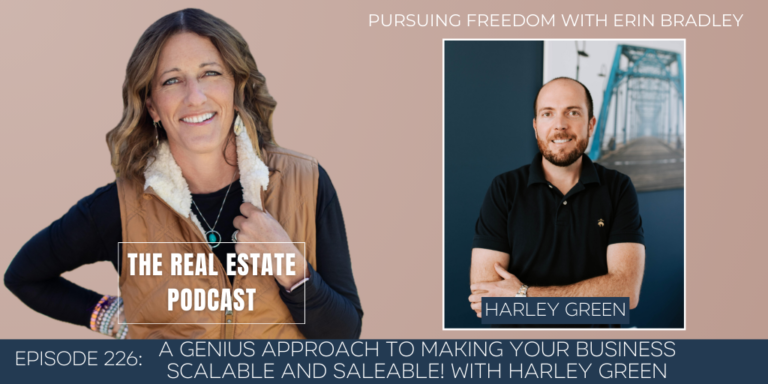
The Quiet Cost of Being the Bottleneck: Why Operator Self-Talk Determines Execution Capacity

https://youtu.be/0-VU4kXJZ9I

Every scaling operator eventually hits the same wall. The numbers look defensible. Revenue is holding. The team is staffed. Deals are moving. And yet something underneath feels off, decisions get slower, follow-through slips, and the calendar keeps compressing around the founder. The drag isn’t in the P&L. It’s in the operator’s own cognitive load.

This is the pattern Ly Smith works on. In a recent conversation on Scale Smart Grow Fast, she framed a version of this problem that most execution frameworks miss: the operator’s internal narrative is itself an operating constraint. When the person at the top is running in reactive mode, the org runs in reactive mode. No amount of hiring fixes that until the pattern above it changes.

The Hidden Constraint

Most scaling conversations focus on process, headcount, and systems. Those matter. But there’s a constraint that sits earlier in the chain, the operator’s default response to volume. Smith describes it through a simple word inversion: reactor versus creator. Same letters, different sequence. The reactor sits inside the middle of every incoming demand, emails, meetings, KPIs, escalations, absorbing and responding. The creator moves themselves to the front of the sequence and works from intent outward.

The distinction sounds abstract until you map it to actual operator behavior. Reactor mode looks like inbox-driven days, calendar collisions, and constant re-decisions on things that were already decided. Creator mode looks like protected focus blocks, delegated ownership, and decisions that hold. The output difference between these two modes over 90 days is enormous, and it has almost nothing to do with hours worked.

This is the hidden constraint. Leadership bandwidth isn’t limited by time. It’s limited by how much of that time is consumed re-processing the same categories of input.

The Operating Shift

The core principle worth pulling from Smith’s framework is this: capacity expands when the operator stops being the default node for execution decisions.

That shift requires two moves most operators resist. First, an honest audit of what actually belongs on the leader’s plate, the zone-of-genius work that only the principal can do. Second, a disciplined handoff of everything else, accepting that a competent operator executing at roughly 80% of the founder’s approach is a full success, not a compromise. Smith is direct about the number: 80% match on execution style equals 100% on outcome, because the alternative, the founder doing it themselves, carries an opportunity cost that dwarfs the delta.

This is the operational leverage argument stated cleanly. Leverage isn’t working longer. It’s removing yourself as the required checkpoint for work that doesn’t need you.

Execution in Practice

Three specific mechanics from the conversation translate directly to operator practice.

Delegate, delay, delete as a triage frame. Every task on a leader’s plate falls into one of four buckets: do (genius zone), delegate (someone else’s genius zone), delay (real but not now), or delete (looked necessary, wasn’t). Most operators run this triage implicitly and inconsistently. Making it explicit, weekly, on paper, surfaces how much of the current load belongs in the bottom three buckets. This is a decision-making framework that reduces cognitive load by eliminating re-decisions on recurring work.

Energy management over time management. Smith reframes productivity around energy allocation rather than calendar allocation. The practical version: identify the two or three windows per day where cognitive capacity is highest, and protect them for the work that actually requires the principal. Everything else, coordination, follow-up, documentation, scheduling, either gets delegated or gets pushed to lower-energy windows. This is the same logic capital allocators use with attention: deploy the scarce resource where the marginal return is highest.

Evening close-out over morning scramble. The under-discussed routine is the evening one. Setting the top three priorities the night before removes the morning decision tax and prevents the sleep disruption of open loops. It’s a small intervention with an outsized effect on next-day execution quality.

The reframe from “I have to” to “I get to” as a diagnostic. This one reads soft but functions as a hard signal. Tasks that consistently produce “have to” language are candidates for delegation. They’re not producing energy, which means they’re consuming bandwidth that could be deployed elsewhere. Smith uses the language shift as an operator flag: it tells you where to look for handoff opportunities.

Leverage Outcome

The compounding effect of these shifts is straightforward. When the operator stops absorbing every incoming demand, three things happen. Decisions get faster because they’re made in protected windows with adequate context. Execution gets more consistent because ownership sits with the person doing the work, not the person reviewing it. And leadership bandwidth expands, not because the day got longer, but because it stopped being fragmented.

For founder-led firms and capital-allocating operators, this is the actual scaling variable. The firms that plateau aren’t the ones with weak strategy or thin teams. They’re the ones where the principal remains the required node for follow-through. Removing that dependency is what separates a business that scales from a job that pays well.

Connect With the Guest

To learn more about Ly Smith and her work:
Website: rewriteyourselftalk.com
LinkedIn: Search “Ly Smith Upcycle Coaching”

The Immediate Move

Leadership bandwidth is the real constraint, not hours, not headcount, not tooling. The operators who scale cleanly are the ones who install structure earlier than feels necessary, transfer ownership fully rather than partially, and stop re-deciding work that’s already been decided. Structure beats effort. Cognitive load reduction beats grinding. The move isn’t to work harder inside the current pattern; it’s to change the pattern so the current work stops requiring you.

Watch this before you hire your next support role.

Book a discovery call to see how the right executive support helps you scale with clarity, alignment, and control without burnout or chaos. Click here to subscribe.

Full Podcast Transcript

Thank you.

Sometimes there’s a countdown and sometimes there’s not. I have like different studios and so like the different studios do different things and I don’t know why. So like I wait for the countdown and then I’m like, okay. Anyway.

Yeah…sure.

All good.

Did you ever notice how a team can hit every number on paper and they still feel like it’s falling apart underneath? There can be a quiet drain or low morale. People might just be going through the motions and it’s costing more than anyone wants to admit. Now this is Scale Smart Grow Fast, and today we’re getting into exactly and today we’re getting into exactly that with someone who fixes it from the inside out.

Now, speaking of things running smoothly behind the scenes, that’s a big part of why I built Worker Genics, a full-time ultimate executive assistance company that keeps executives and business owners consistent so that you’re not the one holding everything together by hand. Now, my exciting guest today is Lee Smith. She is the founder of Upcycle Coaching and the creator of the G3 Collective.

She built the candy method, which my youngest son would be super excited by the name. And it helps learning and development leaders shift their inner dialogue that might be driving some team dysfunction so that the results can show up where it really counts in productive in productivity, efficiency, and of course the bottom line. Let’s get into it. So, Lee, thank you so much for being here today.

Okay.

Thank you, Adrienne. Happy to be here with you in the audience.

And I love the expertise you’re bringing here. And I’m curious as you get started, as an expert, when you’re starting to work with a company, what are some of those first signs that you can spot with your wise eyes that a team might look fine on paper, but everything isn’t as great under the hood?

Yes, well, definitely there’s an energy in the room or energy, you know, the vibe that’s coming off from the team. And I also look at their body language and are they comfortable around each other? Or can I sense that they’re they’re excited and happy to be working with one another? Or is there some distance in there like, OK, you can tell.

I’m just going to be professional. I’m here because I need to be here. I’m just going to do my thing and I’m ready to leave the room. Or are they openly communicating and wanting to work with one another? And even when we see introverted and extroverted personalities, there’s still a different energy and a body language that comes off of them, whether it’s the straight.

Posture the leaning in or the really stepping back you can look at that personal space between the persons and and see that that Difference there whether they’re like, yeah this team like really enjoys being around one another or mmm, okay They’re here for the status quo, right and then I want to break that

And as you kind of list what you are how you’re sensing that, what struck me is even if you were meeting with people virtually, like in something like we’re doing here, right? Like a Zoom or a Google Meet, you could tell a lot of that even in a virtual meeting.

Definitely, definitely. It’s kind of the same thing. they are they leaning in and they’re they’re ready to go or their their body is upright? Maybe there’s there’s some movement. I talk a lot with my hands. So is there energy and movement there or are they kind of leaning back a little bit, you know, or you can see their body positions like everything is compact and they’re OK or the eyes go overt, you know. And so, yes.

Right.

Definitely, there’s different science that can happen over Zoom as well. Though most of my work hasn’t been in person.

Love that. Now, thank you for that. That helps as I I’m sure for myself and the other listeners, we’re like, okay, evaluating our own meetings and when we walk in and start something, how our team is. so that’s really helpful. And what I’d like to do is think about as we get into your method and how we can apply it, let’s start at the beginning. What were you what were you experiencing? What was that moment that made you start to build something like the candy method in the first place?

Yeah, so my my story begins definitely with my personal journey when I was experiencing what looks like an amazing life on the outside, especially on on social media. And this is back when Facebook was very more much more around connecting with one another. So we’re displaying our lives in that direction. And I was showing images of my vacation in Hawaii.

And this was no ordinary vacation. This was 23 days across the four major islands with my husband of 15 years at that point, my daughter, my young teenage daughter, and then my my stepson, who was growing it out of the house, but he was there with his girlfriend. We were all experiencing Hawaii for the very first time in our lives. So this was no ordinary vacation. So you’re seeing images of the beautiful paradise, this extended trip that I’m having.

I’m living the life, right? And 23 days met 22 sunsets. And there was this one particular sunset where my husband is out with his camera because he loves photography. So he’s got the lens like the nose of Pinocchio extending from his face and he’s trying to capture the golden hour. And my daughter is at my side and we’re having one of our tender moments. My stepson is off to the side with his his girlfriend. I’m looking out at this.

Yeah.

Golden orb setting on this dual sapphire horizon. Absolutely beautiful. The breeze is caressing our face. I’m thinking I’m in this beautiful place. I’m thinking it’s 23 days. Who does that? I’m thinking I’m here with my family, the people that I love most. I’m thinking, I’m thinking, I’m thinking. And then Adrienne, I catch myself thinking.

Where is the feeling? Because I was not feeling the moment. There wasn’t happiness. There wasn’t joy. There wasn’t peace and calm. There wasn’t even frustration or sadness or disappointment. There was literally no feeling moving through my body, which led me to think, what is happening and who am I right now? And that became my awakening to, I don’t know who I am. I have been a stay at home mom.

Mm-hmm.

Yeah.

for all these years. My daughter, like I said, is a young teenager at this point. And while this was a chapter that I desired for so long in my heart and I was living it, I lost my presence with it. And in that, I got caught up in the day to day, the never ending cycles of dishes and laundry and meals and carpools and taking care of the house and

Mm-hmm.

And then I was no longer present in that. And now I can relate that now to executives and leaders because what is their never ending cycles, right? It’s the emails, it’s the text, it’s the meetings, it’s the communication and the KPIs. And it’s like there’s this never ending cycle. And if we’re not present in what we’re meant to be doing, we can get lost in that day to day. And then I stood there on that shore.

feeling like a woman covered in what I call just. And yes, that’s that’s a play on dust particles where I was just a stay at home mom. I was just a step mom. I was just a wife. I was just a daughter, just a sister, just a friend. And I was just this shell of a woman. And so for our leaders who are listening, are you covered in just I am just this title. I am just this role. I am just this if we strip away.

your labels and titles. Who are you really? And in that moment on that shore, I did not have an answer for that. And I thought, Whoa, I am definitely not happy with this. And I made a decision that day. Hey, there’s a new year coming just a few days away right around the corner. When I get home stateside, I am going on a quest.

Mm-hmm.

For myself, I don’t care how selfish it seems to anyone else. I’m going on a quest to figure out who is Lee and who is she meant to be in the world. And through that self-reflection, I already had years of personal development under my belt at this time in my life. And I took those skills, those concepts, and that self-reflection went through to figure out who I am. And I chose a word to anchor my journey and I chose the word laugh.

Mm-hmm.

because I realized I’ve been in a depression and I’ve been in it for over two years. That’s really not cool. So how do I pull myself out of it? And I thought, well, let me use a word to carry me through. And I chose the word laugh. And then I also chose activities that would move me to laugh. And admittedly, Adrienne, it’s centered around three things. One was watching reruns of Friends because it’s my favorite sitcom.

Mm-hmm.

Two, there happened to be a local comedy troupe at this time of year that was putting on improv shows. So almost every weekend down front and center, I was getting my laughter on. I was doing some networking and I knew the people who had an amazing sense of humor. And I thought if I could just get in their space, maybe some of that would rub off on me. And being diligent and intentional 30, 60, 90 days, I found my joy again.

And interestingly, when it showed up in my heart center, it whispered in my ear, now that I’m here, what do you want to do with me? And out of that came my purpose because my little eight-year-old inner child came through and she said, remember how we love public speaking? Let’s go doing that. And then in the process of thinking, right.

Public speaking, this is something that I’ve chased again and again and again and then I would forget and I put it on the back burner because like I said, I was a stay-at-home mom at this point and I thought, well, my daughter, she’s getting ready to exit high school. She’s going to be flying the proverbial nest and doing her thing. I’m going to be that empty nester. that’s right. What do I do with this chapter now? And so I really dug deep into my personal development studies, looked at my own journey.

Right.

those pieces together and that’s how I formed the candy method. If you want to go into that next.

Right. Yeah, and it’s you know, it’s such a a common issue, Lee, and so it’s great to you know, to speak to it and and be able to help other people when they face this same dilemma where you almost feel like you are a shell of of who you could be, right? And you lose that that humanity piece, right? Where somebody who’s going through the motions like a a robot or, you know, things like that. And so you have to go, you know, it’s not uncommon that people have to go

Yeah.

Right.

rediscover. I love you mentioned, you know, your eight year old self. Rediscover what brought you joy, what brings you your humanity. And for you it was that laughing. I love that. makes a huge, huge difference. as someone with young kids in home, yeah, like laughter is a big part of of who we are at the start. And it can definitely go by the wayside as we as life gets lifing, right? So

Yeah

Yes.

Right.

let’s break down the candy method. Now we gotta start with how you came up with the name. Is it that you love candy? Is it that it was a good fit? Because I’m not a huge candy person, but my youngest most definitely is.

Yeah, when I looked at, well, if I want to speak, what do I speak about? What is the message that I’m going to be taking out into the world? And I took a step back and I looked at, well, if I’m going to use my personal journey as an example, well, how did I move from that depression and really get myself out of it? Because I was on the brink, admittedly.

for getting professional help. I wasn’t sure if I could pull myself out of it, but fortunately I did. And then when I looked back at the steps in doing that, I thought, oh, well, is it that interesting? Because number one, in asking who is Lee, I was getting clear. I was bringing that clarity to who am I, what makes me happy, what makes me…

alive. My favorite quote comes from Howard Thurman, you know, don’t ask what the world needs. Ask what makes you come alive. Then go do that because what the world needs is more people to come alive, right? We don’t want the robots. don’t want, you know, the people, you know, breathing zombies that are just waiting for the graveyard day. It’s like, no, let’s not have that in the world. Let’s have people who are alive and excited and happy doing what they love doing.

Right.

Right.

And I thought, okay, well, I got clear on that for me. Let the dream come alive again. All right, fantastic. And then what else did I do? Well, I anchored myself with an affirmative word. I personally chose the word laugh, right? And I thought, okay, well, I use that as part of my journey so that that was my focus. If nothing else coming out of the depression, I had that one focus that I could use. And I thought, okay, I used affirmation. Wonderful. And I don’t…

The way that I teach affirmation because so many people can say, well, I think positively, I use positive statements. It’s not really working for me. And I’m like, and I know why, because you are using the now based on your past. And so your brain will question you. Well, who do you think you are to be saying that? That’s not true. Or it’s not really supporting you in that direction. Well, I take affirmation from the future successful self.

When you can take that clarity, what makes you come alive and what the dream is, envision yourself into that future state where you have done all the things and you’re living that life that you truly desire. How are you showing up then? Who is that person in the mirror you are looking at then? Borrow his or her belief and then bring that into the now. And that’s what makes the affirmation so much more powerful and effective.

And I thought, okay, so I did that. and then I looked at myself. Well, I’m a stay at home mom now and I want to be this professional speaker. There is a gap that is in between those two spaces. Well, there’s a necessary set of steps to move me from that transition. Right. well, as I see those steps, that becomes the roadmap or the blueprint. I got coaches and mentors.

to help guide me, how do I make this transition? How do I become successful? Success leaves clues. All right, so through books and mentors and coaching, I created that necessary step. And I’m like, all right. And then once I had that in place, it was, I know what to do. Am I actually doing it? And it was then looking at that I disciplined my thoughts when I woke up in the morning and.

What tone did I set for my day by the way that I spoke to myself? And then when I looked at my action plan, instead of sitting there in analysis paralysis and overthinking all of it or dealing with perfectionism or my fear of, what will people think of me? was no, discipline all those thoughts and feelings and the proper habits like my morning routine that then set you up for success or best success possible and go out and do the thing.

And this is where I love to use like Yoda says there is no try, right? There is only do or do not. So we can have the can, the clarity, the affirmation and the necessity. But if we don’t actually discipline ourselves to do the thing, nothing happens. So that I was like, OK, I had to discipline myself that to create what I call my icebreakers. I’m doing something for the first time. I’m getting that first interview or I’m getting that first stage.

Right.

or that first room to speak to and share my story message. And I thought, okay. And then the last part was being able to celebrate myself. I was high-fiving myself over my head or in the mirror before Mel Robbins made a book out of it and really taught the world that concept. And it was like, we do need that moment. And especially as leaders and executives, we’re always going and we’re doing, we’re go-getters. We’ve got the high drive or we’ve got so much pressure that we don’t.

Yeah.

get that moment of pause to go, wait a minute, what have I done? Where do I acknowledge my accomplishments? And even initially as that stay-at-home mom and I was overcoming that depression, I needed to celebrate that I got out of bed that day. I needed to celebrate that I took a shower a few days later. I needed to celebrate that I got myself out of the house and now it’s celebrating, well, where’s the next place that I can show up and serve? And so when I looked back at those…

pieces right? Pun intended. Adrian is like, okay, I had the clarity, the affirmation, the necessity, the discipline and you and it wasn’t that like, I love candy so much. It was I looked at the steps and I thought, these fall into work. that forms candy. Well, isn’t that exciting? And I thought, okay, I guess what I have put together is

the candy method and it’s healthy candy. So it’s not it’s not going to put more weight on you. Right. Or it’s not going to have a bad side effect later. It’s going to give you the best results possible. And I really dial it in to that self-talk because as a self-leadership strategist, I believe that leadership begins with you and then it comes down to what is the self-talk. And I like to position it as is is the inner critic.

Right.

The one who’s telling you you’re not good enough or who do you think you are or you’re you’re not ready and and is it the inner critic that is running as the CEO of the boardroom of your mind or is it really from your heart center your authentic self where you say wait, I may not know everything but I know enough or I am resourceful enough to take on this role and give it the best version of myself and that’s where.

We really step into that candy method and celebrate you so that you are shining into the person that you were meant to be.

How Can You Scale Your Business and Make It Saleable?

Scaling your business is a crucial step, but ensuring it remains attractive to buyers is equally important. In Episode #10 of the Pursuing Freedom podcast, Harley shares expert strategies on how to achieve both goals effectively. This episode is packed with practical advice that every business owner and entrepreneur should know.

Why You Should Watch:

  • Growth Strategies: Learn actionable tactics for scaling your business efficiently.
  • Saleability Insights: Understand what makes a business appealing to potential buyers.
  • Real-World Examples: Get inspired by success stories of businesses that scaled and sold.
  • Expert Tips: Receive practical solutions for common entrepreneurial challenges.

Final Thoughts:

For any business owner looking to scale and sell their company, this episode is a goldmine of information. Tune in now to discover how Harley can help you take your business to the next level.

Looking to take your business to new heights?

πŸ”—Spotify Link

πŸ”—Apple Podcast Link

πŸš€Join our newsletter for the latest VA strategies and insights straight to your inbox every week!

The Hidden Hack to Financial Freedom: Real Estate Meets Remote Power!

πŸš€ Ready to unlock your financial freedom? 🏑🎧 Dive into my latest podcast episode on “The Chris Voss Show,” where I reveal the secrets of Real Estate Investing and how Virtual Assistants can supercharge your journey to wealth! πŸ’Έ

✨ Whether you’re just starting or looking to scale, this episode is packed with actionable insights you can’t afford to miss. Tune in now and take your first step toward financial independence! πŸ™Œ

Looking to take your business to new heights?

πŸ”—Spotify

πŸ”—Apple Podcast

πŸš€Join our newsletter for the latest VA strategies and insights in your inbox every week!

The Key to Successful Client Relations!

Dive into the latest Workergenix Mastermind with Deborah Myers of VirtuArte! She’s revealing the golden secrets to mastering client retention and appreciation.

For those eyeing unforgettable client gifts, don’t miss this chance! Connect with Deborah Myers for extraordinary, bespoke gift ideas that will leave a lasting impression. Reach out today and elevate your client appreciation strategy to new heights! πŸš€

πŸ’ΌConnect with Deborah:

πŸ“§Email: 🌐Website: VirtuArte.com

You can also listen to this episode here:

πŸ”—Spotify

πŸ”—Apple Podcast