
At a certain stage, growth stops feeling like progress.
Revenue increases. Headcount expands. The business looks stronger from the outside. But internally, decision cycles slow down, follow-ups lag, and execution starts to stack up behind the owner.
Everything still routes through one person.
This is where most founder-led businesses begin to feel heavier instead of more efficient. Not because the business lacks opportunity, but because the operating model has not evolved with the scale.
The Hidden Constraint
The constraint is not capital. It is not market demand. And in most cases, it is not even talent.
The constraint is control.
More specifically, the owner remains the central decision engine. Authority is partially delegated, but accountability is not fully transferred. Systems exist, but they are not trusted. Processes are understood, but not externalized.
From the outside, it looks like a growing company. From the inside, it is still a centralized operation.
This creates three compounding risks:
- Execution bottlenecks that slow decision-making
- Operational drag from repeated approvals and rework
- Valuation compression due to owner dependency
As discussed in the panel, many owners believe they have delegated. In reality, the team is still waiting for signals, approvals, or direction before moving forward. That gap between perceived delegation and actual authority transfer is where leverage breaks.
The Operating Shift
The core operating principle is simple:
A business becomes transferable when decisions move without the owner.
This is not about stepping away entirely. It is about designing execution systems where ownership is clear, decisions are distributed, and outcomes do not depend on the founder’s presence.
Exit readiness is not a transaction milestone. It is an operating condition.
Leaders who understand this early begin to build differently. They focus less on output and more on how decisions move through the organization.
This is where operational leverage actually begins.
Execution in Practice
1. Authority Without Decision Rights Is Not Delegation
One of the most consistent patterns discussed was the illusion of delegation.
Owners assign responsibilities, but retain final decision control. Teams execute tasks, but hesitate to move independently. Meetings become performative, where participants look for cues from the owner before committing.
This creates a hidden approval loop.
The correction is not more communication. It is clearer decision ownership.
- Who owns the outcome
- Who makes the decision
- What thresholds trigger escalation
Without this clarity, execution systems fail under scale.
2. Systems Replace Memory, Not Judgment
A second constraint is the absence of structured execution systems.
Many businesses rely on institutional knowledge that lives in the owner’s head. Processes exist, but they are undocumented or inconsistently followed. This increases cognitive load and introduces variability into execution.
As highlighted in the discussion, businesses that lack SOPs and repeatable systems are not transferable. Not because they are unprofitable, but because they are unpredictable.
Execution systems serve three purposes:
- Reduce decision fatigue
- Standardize outcomes
- Enable ownership transfer
The goal is not rigidity. It is consistency under pressure.
3. Value Is Defined by the Buyer, Not the Owner
Another key insight is the gap between perceived value and market value.
Owners often evaluate their business based on effort, history, or personal significance. Buyers evaluate based on predictability, scalability, and risk.
This creates a mismatch.
A business that generates income for the owner does not automatically translate into a transferable asset. Value is determined by:
- Stability of revenue
- Independence from the owner
- Clarity of systems and reporting
This is where capital allocation and risk management intersect. A buyer is not purchasing effort. They are acquiring a system that can continue without disruption.
If that system does not exist, value is discounted.
4. Exit Is Not Just a Transaction, It’s a Transition
A less discussed but critical point is what happens after the exit.
Many owners optimize for deal terms without considering post-exit reality. Earnouts, advisory roles, or employment agreements often look attractive financially but introduce constraints operationally and personally.
This becomes a misalignment between financial optimization and personal outcome.
Leaders who approach exit with clarity on what comes next tend to make better decisions earlier. They build businesses that give them options, not obligations.
This is a form of risk management that extends beyond the balance sheet.
Leverage Outcome
Operational leverage is not created by working longer hours or increasing output.
It is created by removing the owner as the bottleneck.
When execution systems are in place, decision-making is distributed, and ownership is clearly defined, the business gains capacity without increasing complexity.
This results in:
- Faster decision cycles
- Reduced operational friction
- Improved capital efficiency
- Higher transferability
Most importantly, it protects leadership bandwidth.
The owner is no longer required to be the center of execution. They can shift focus toward capital allocation, strategic direction, and long-term positioning.
That is where real leverage lives.
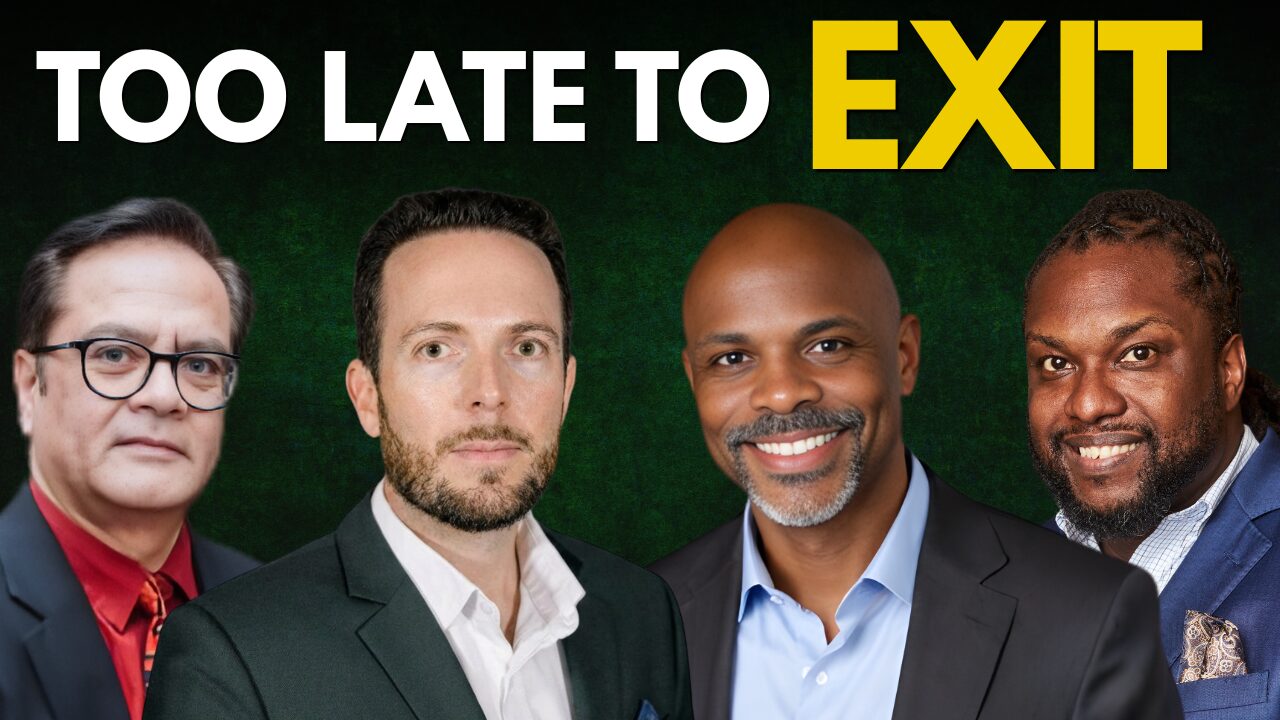
Connect With the Panelists
To learn more about the panelists and their work:
Jerome Myers
LinkedIn: https://www.linkedin.com/in/jeromemyers/
Samir Mokashi
LinkedIn: https://www.linkedin.com/in/samir-mokashi-cepa%C2%AE-m-arch-ar-a3825712/
Asa Patterson
LinkedIn: https://www.linkedin.com/in/retirementbankbuilder/
The Immediate Move
If the business still depends on you to move forward, you do not have a scaling problem. You have an execution design problem.
The priority is not adding more people or working harder. It is restructuring how decisions are made and how ownership is transferred.
Clarify decision rights. Build systems that reduce re-decisions. Remove yourself from the approval chain where it is no longer required.
Leadership bandwidth is the limiting resource.
Protect it by building structure, not by increasing effort.
Watch this before you hire your next support role.
Like what you read? Get weekly insights on scaling, efficiency, and profitability—straight to your inbox. Click here to subscribe.Full Podcast Transcript
Hey everybody, welcome back to the Scale Smart Grow Fast podcast. This is the Workergenics Executive Edge Live. I’m Harley Green, founder and CEO of Workergenics. And at Workergenics, we help high performing leaders reclaim their time and stay focused on what actually matters, supported by our ultimate executive assistance. Executive Edge Live is one way that we support the broader business community.
bringing together operators and advisors and experts to talk through what is actually working inside growing companies. Today’s conversation is from owner led to exit ready. A lot of businesses grow, but they’re still heavily dependent on the owner.
decisions bottleneck, follow up stall, the business moves, but only when the owner is pushing it. That becomes a real problem, not just for scaling, but for transition, succession, or exit. So today is really about what it takes to build a company that can run without you, grow beyond you, and eventually transfer without friction. And a quick note before we jump in, this session is going to be featured on our podcast, Scale Smart, Grow Fast. So if something resonates with you, you’ll be able to revisit it there. Let’s get into it and meet our
panelists today. We’re going to go around and give everyone a chance to introduce themselves and let’s start with you.
Hey everybody, Jerome Myers. I’m founder of Exit to Excellence. We are a full service exit planning company or exit strategy company that leads with personal planning. So our focus is on helping the founder optimize for post exit fulfillment versus optimizing for their transaction.
Thank you. Sameer.
Thanks. So my main company is the Business Millionaire Club. I recently published a book called The Millionaire Exit. And the whole point of writing the book was I found a lot of the business entrepreneurs I was mentoring did not have a good idea how to grow a business and did not know how to exit the business. So my book origin started as growing the business. And then by the time it finished, was focusing on exiting the business. I helping multiple businesses right now in different stages.
Some are taking to the acquisition right now, some are already early on, and it’s a very, very exciting part of my life right now.
Very nice, thank you. And Asa, that, make sure you’re pronouncing, I’m pronouncing your name correctly. Asa, very good.
Long A, Asa, thank you. Yes, I’m the founder CEO of the retirement bank method, and we focus on helping baby boomer business owners turn their business into a retirement bank. My background is in the financial industry, private wealth management. And we just see that a lot of baby boomer business owners. That’s why I’m so excited about the show. Harley just don’t have the systems and tools in place to exit. And there are other ways to exit a business besides selling.
So we help people through the retirement bank method build a retirement bank.
Thank you all for introducing yourselves. Let’s just go ahead and open this up to the group here. The first question I have for everyone is a lot of owners say, I’ll figure out exit later. What usually happens when they take that approach?
Yes.
I can take that question. think most commonly somebody who says I’ll figure out exit later, they don’t even know what exit means to them and how to exit. And they immediately assume that, I’ve built a business, I’m making money, so it’s valuable. People will offer money for it right away and I’ll have a lineup of that. So that’s the first thing that just like starting a business, exiting the business takes time, effort and planning.
That’s also man sitting based on my experience. A lot of times that answer comes from not really understanding the question. What I’ve learned is to slow down and just ask a lot more questions to help them understand what exit the business could mean, what that could look like. And sometimes we have to come back later and then engage with them and ask that question where they can answer it after some thought. They’ve I found that they’ve had a lot of thought processes about it, but really aren’t clear on what it means.
So it’s just amazing how what we found slowing down helps them speed up a little bit.
From my perspective, people who think about exit later set themselves up for a business that’s going to be less valuable. And if they do successfully exit, they are going to be disappointed with what happens on the backside of that transfer from business owner to exative owner.
Most people think the transaction, we call it a transaction illusion, they think that the transaction solves a bunch of problems. And while it may deliver some financial relief, it creates all types of other problems that money can’t solve.
Thank you guys. Great intro here. A lot of good things to think about. Now, moving a little bit to a trade-off question for everybody. What is one decision you see owners delay that you know would move them closer to being exit-ready?
One of the things I see consistently is I work with a lot of small to mid-sized businesses and they consistently are very owner centric businesses. They think they have delegated, but they don’t really delegate authority of making decisions. Everybody’s still waiting for the owner to make the final decision. They’re looking for visual cues in the meeting to see the owner is nodding, things like that. And that reduces the value of the company to the potential buyer.
So getting the owners ready to really hand over authority and trusting the people they have around them and coaching the people around them to really grow to take on leadership is the one blind spot I see over and over again.
Hey, Harley, could you repeat the question for me?
Yeah, absolutely. So we’re asking about delaying. what is the decision that you see owners delay that you know would move them closer to being exit ready?
For me, it’s letting the team, letting the staff know that they’re ready to exit. So many business owners in my experience attempt to sell their business or exit of their business and they don’t want anyone to know. It’s like, shh, don’t tell anyone. Well, you have to let everyone in the business know, your entire staff has to know for multiple reasons. But the main thing is, do they want to stay? Right? And are they open to working with a new owner or
do they possibly wanna buy it? So not having that question, delaying, being open and honest with that question really hurts them and hurts the entire process from being able to move forward very smoothly.
My perspective is knowing what they want to do next. I find that owners who have no idea of what they’re exiting to spend more time holding on or clinging to the business that they’re exiting from.
And if there’s something they’re excited about working on and they’re interested in, they’re more interested in that than the business they already have, they tend to not sabotage the exit. And they’re openly looking for ways to make themselves irrelevant in the business that they’re currently in.
I like to talk to Jerome, postpartum is very serious when it comes to women who had children, but it’s just as serious when it comes to business owners. This is their identity, this is their life, and that is a big challenge as well. The identity crisis that they go through as a result of the idea of moving away. I’ve talked to lot of owners that…
One owner told me that there’s a funeral company in this city is very popular. He named the company and he says, they know when they get the call on me, either to pick me up at home or pick me up here in the business. Right. So that is their identity. Right. So that’s the biggest challenge we face as well. Just not knowing that there is a life outside of what you’ve been doing for so long. They’ve convinced themselves in my opinion that they don’t want to have a life outside the business.
not worth it.
Hmm.
I’d love to take it a step deeper on this topic here and maybe from your guys’ experience, what are some practical tips that you share with people you work with to help them prepare for that? Like give them ideas of what life could be like without the business, get some inspiration. If they are in that situation where they just don’t know what they would do afterwards, then they might be self-sabotaging.
Right, right. For me, it is a longer process. Let’s say a home, a business owner calls a broker. They may have been thinking about selling their business for three, four or five years and the broker is just getting involved. So I like to have a lot of touch points and a lot of dreaming conversations to help them.
you
step outside of themselves. One of my main things I’ll say, Hey, Harley, if you had a magic wand and this magic wand can control your next two to three years, what would you, what would you do? And, that helps open them up a little bit, but I do a lot of hypothetical dreaming and forward pacing with them to help them begin to see what possibilities are.
you
I work with a lot of professional businesses. So many of them come with an idea that this is what they want to do, but it is not a fully baked idea. And their presumption, oftentimes is, okay, I will sell the business today and from tomorrow, my next career will start. And when you started the business, you were in the career building a credibility until you got to that point.
Right. So, so how are you going to do that? the, so, so connecting the dots and thinking about how to strategize, how to evolve, you need to establish your, your community before you exit. You need to let people know that this is what you’re going to do before you exit in order to, and even after exit, there is such a draining emotional drain after the exit. People don’t account for that. There’s a lot of emotional things that happen right after the exit. There’s a, there’s a gap that you feel you can’t just fill it with something else.
that you said, I’m just going to volunteer and do it. Yes, eventually, yes. But right after exit, there is a lot of emotional ups and downs, challenges, even going through the exit, just like any project. When you come to the end of the project, you have regrets like, but they charged me so much. this is so much taxes. I didn’t think we had to pay all of this planning when you do it at the last minute and you’re hurrying around trying to get to an end and then send me a beginning has to happen. It is.
very hard. And that’s the part that we help prepare. And a lot of times when I went through, I exited my business as well and did very well, but realized that the broker is there just for the transaction. Who’s there for the owner? And that’s where I come in is that’s where was my passion is I want to help other owners understand the process, get the rewards of all the hard work they’re putting in and get it because nobody tells you how to do it well.
It was says, you’re you’re an entrepreneur. You must be a millionaire. Very few actually end up becoming millionaire or managing money enough to stay millionaires. Right. So so those kind of things about how to be successful and how to be well off is is is two different things. And making that connection, helping the emotional, financial and just the intellectual need to be satisfied is a complex process. And I share a Jerome and Issa about
hits different aspects of them. This is what I come in to do, but I often rely on people like Jerome and Esa to help them post it. I stay in the more in the transaction phase, preparing them, I finding the right partners for them to identify and work with them and get a team around them as they move on. You can remain a loner, right? So you need a team as you go past it. And who is that team? What is the right team for you? Those kinds of things is what I work with quite a bit.
Since I’m the last one to go, Harley, I’m going to adjust the question just a little bit. And I’m going to answer the question of what will we encourage them, like the frame for them to look through as they’re figuring out what post-exit life looks like. I think a whole lot of people can understand this concept of it’s hard to read a label if you’re inside the jar.
And that’s exactly where the founder is. They’re inside the jar and they’re trying to figure out like, what else can these skills, relationships, abilities that I have be used for? How can I be used for or helpful? And for the people who are like, pick me up at my desk. They’ve decided that that’s all that they’re useful for. And so from our perspective, it’s probably self-serving because we’ve built a process around it. We encourage people to go through a guided.
phase of understanding themselves again. It includes assessments, includes interviews, and they end up with what we call the freedom compass, where it orients them for what life looks like post-sex, and not just how are you going to spend the day, because most people don’t know how they’re going to do that, but how do you actually show up in the world? How do you introduce yourself? Are you going to introduce yourself as the person that
exited ex company, well, you’re just like hanging on to the wreckage of the ship that crashed against the island when you exited. So like, who are you actually and what relationships are most important? And how do you actually spend that 406080 hours a week that you were working like, those are questions that show up as experience. And
You can’t fully understand the gravity of it until you exit. But if you do some planning prior to, you’re not trying to make those decisions and figure those things out in what we call the descent window.
And this is where you’ve got more resources than you’ve ever had, but you’ve got limited capacity because you’re fatigued from the journey of exiting. And we find people make really poor decisions in that window. And so we believe in planning before you actually summit so that when you’re coming down, you have an idea of what to expect. And then if you don’t like it, you can adjust off of that. But trying to figure it out with no plan, I think, is a recipe for disaster.
sure these are some great points here and Asa I wanted to ask you we talked about you know what people are preparing for in advance but what are some signals or what are the clearest signs that you see when you’re working with someone that they still just have a job with overhead versus a business as a like saleable asset?
Right. Going into the business, we have an assessment when we go in and they answer that when we’re coming in. But the main thing is who’s in charge of the process, who’s in charge of the customer, who’s in charge of billing. And those main things, those three points right there really help us understand exactly where they are. We’ve had a gentleman who opens his business and closes his business, and he’s been doing that for 40 years. And what we’ve found is that
So many entrepreneurs and business owners of multiple millions of annual revenue have drank the Kool-Aid. When I say that, mean, they have bought into the idea that you leave, become an entrepreneur, you’re a individualist, and you do this on your own. Jerome said it. It’s a team sport.
Right. And you have to surround yourself with people that are going to do the processes and do the things that you want. But the main thing we see is that they don’t have any SOPs, no systems in place, no oversight, no checks and balances. I’m a retired Marine captain. And over the years, I’ve learned to go into the business with less of a military stature. But the checks still are there. You you have to understand.
the entire process and most business owners do understand the processes, but it’s all in their head. The Marine Corps has SOPs for SOPs and SOP to understand the standard operating procedure. And it’s like that because if we have to go into a combat situation, those SOPs are there so that they become second nature.
so that it becomes a muscle memory when you go into the situation in a combat situation. So I take that same kind of idea into the business environment and really help the business owners start seeing the trees instead of being in the forest.
But we really focus on helping them understand the system and the need for the system and began walking that in place. I’m so grateful for AI and how it’s advanced. It’s really helped my process working with business owners, develop those SOPs and put them in place in a much simpler fashion where they’re not as frustrated because the process prior to AI was a long, arduous process. Yeah.
I work with businesses that are not kind of standard businesses that most brokers go after. I find those unique businesses. And those businesses are the ones that often have a challenging situation. And one is understanding the business, but two is understanding value to somebody else and helping the business owner understand what is it that you have that is valuable to somebody else.
Right.
See, that’s the challenge that they often do. This is they see their value from their eyes, but not from somebody else’s value. So oftentimes, there’s a business I’m working with, but I’m looking at it, there is no value to sell a business to somebody else. But if somebody is interested in the regular income, and they have a systematic approach, they can make a regular income for not a very big involvement or effort.
helping that client. For most clients, I’m saying, okay, you find the next team you can hand over to. In this client, I’m not helping them find the next owner, next person to buy it or run it. I’m asking them to make it a definitive systematic approach that you do X, you do Y, you do Z, and then you get this revenue per month. And then the book of clients that you have potentially becomes the value based on demonstrated consistent income.
Yeah, you’re not going to make a lot of money. And these are people who are not wanting to take a lot of risk, but they still put an effort and they can get value back out of it. So understanding from each business’s perspective, what the value to bring. Some businesses are valuable because they were valuable 20 years ago, but the time has changed. So what do you bring? And sometimes you have to sit down and give them the hard truth that your business is not valuable 10 years from today. So what you have today.
If you wait for 10 years, would be less. So you might want to change your business or sell your business or something else. So that’s the hard discussions that I come with clients just because of my background, understanding what it took to build a business, understanding what it took to build a sustainable business and what it took to build a business that is valuable to somebody else. So all these different aspects are important part of getting the owner ready to understand what is it that they have. It’s like…
When you do investments, if you just put in the bank, you get this. If you put in the mutual funds, you get this. If you invest in stock, you get this. But there is different risks, right? There’s different amount of effort you put into this. And what do you get as a guarantee at the end of two years, three years is different depending on what is it that you have and what is it somebody else wants. So that whole perspective of framing the value becomes important.
great points.
Yeah, I find most people that help with transactions see it as a marketing problem and understanding the market conditions. I watch some founders who believe that there’s going to be a line wrapped around the door for people that are interested in their business. And the fact of the matter is only two out of eight that get listed get sold successfully.
And so this expectation that there’s going to be a lot of people that are interested in a business if it’s not properly set up for exit is a notion that is inaccurate at best. And then the other thing that shows up that is a big challenge for me is people think that they get the exit on their timeline. It’s like, I’m an exit in five years or 10 or three. But the reality is like,
75 % of businesses, business exits are from death, disease, divorce, or burnout. And so if one of those four things happen, it probably wasn’t by their choice and it was probably unplanned.
And so as a general rule, having an exit ready business is just a good business strategy and not something that you should plan multiple years or say you shouldn’t worry about because it’s multiple years away because it could be unfortunately tomorrow.
Yeah.
That’s a really good point. And Asa, I appreciate how you brought up the SOPs. That’s something at Workergenics we’re just like really huge on making sure all of our EAs that get placed with clients are trained on making really crystal clear and repeatable SOPs so that they can come in and help take that burden off their clients. Because that’s one thing that most founders just really do not want to do is document what they’ve been doing. And so I always recommend people just, hey, the next time you’re doing that thing that you don’t want to do anymore, record yourself doing it.
Right.
say you can do it with so many AI tools now and then let that EA come in, watch the video and leverage AI tools to make a beautiful SOP and then they can handle it for you. So appreciate you bringing that point up. The next question I want to jump to is getting into that topic of value and money. Obviously that’s a big part of the discussion when people are selling their business. Where do you see owners leaving the most money on the table when it’s time to exit?
Hmm.
Very interesting question.
a couple areas, improper tax planning, know, taxes takes a big hit and the thought process that they weren’t going to be taxed as heavily as they were, right? So there’s so many ways of exiting the business and structuring it precisely for maximizing the code to the benefit of the seller. And I think a lot of owners,
miss that due to the time crunch of wanting to sell it and just the exhaustion of what it takes to get brought up to speed on understanding that process. know, so many business owners are just in their business, but it’s so much more to being successful at what they do. So that’s one of the main challenges that I see is just helping them understand, hey, please understand these things so that they can understand how to minimize their taxes. The other thing is,
What caused them to leave so much money on the table, in my opinion, is not having the advisors around them to help them understand what we’re doing for them. That’s just really painful in my experience is, you know, we know how to help them get from where they are to where they say they want to be, but they have to understand it and be willing, a willing participant in it. And so I’ve been, if anyone can bring up something on helping us understand how to help this seller.
have some advisors around them so that they can understand the process more, that would be great because that would help tremendously minimize the amount of money that they’re leaving on the table.
I think I would go do the same thing. I was just going through my mind. There’s so many different places that you leave money on the table. And I think the biggest mistake is not having the right advisor. And even when we were, I was a consultant and I would hire good consultants, not just the cheapest consultant. And I said a good consultant, it’s worth their money, their weight in gold, right? So a good consultant can make a big difference. And I’ll give you examples. I was thinking that
.
you have to find the buyer who has money and who thinks the business is valuable to get the right value. So and any buyer coming in is going to not offer you full price. And if you don’t know how to negotiate, you’re not going to get there. Even before you get to the point, if you don’t know how to present the value that you have in your business to the buyer, the buyer is not going to see it as clearly. So they’re going to make their decision. So there’s so many things a consultant does that is not
something an owner understands or appreciates and leaves millions on the table. So there’s even saving money in the transactions as Asa pointed out in taxes, setting it up for your children, for their taxes down the road, right? So all kinds of things are part of them leaving money on the table and somebody who knows of how all connect all the dots together and may not be an expert in all areas, but knows how to connect all the dots and has the right experts around them to connect the dots.
It is way more complex than owner thinks it is. They just think you go to the bank and you cash the check. It is not like that at all.
My thoughts on money on the table. When yeah, I’ll just go with what I initially thought. We don’t focus on money that’s left on the table because we’re not optimizing for that. We’re optimizing for post-access fulfillment. And so I watch founders over and over say, I’m a do an earn out because it’s going to give me 20 % more money.
And they agree to do something for two to five years. And six months into that agreement, they realized that they hate the company that they’re working for. They don’t like what the company is doing with the company that they sold to them. And being an employee and getting time off approved and expense reports done is not something that they ever thought that they would be doing after 30 years of running their own company.
So our conversation is very much about what do you want life to be like after you exit and making the decisions on the front end that don’t encumber that. That to me is so much more important than an extra 20 % on an earn out, because you obligate yourself to do things that you don’t want to do.
If done well, right, if you have an eight figure exit and you truly become work optional, I think the money becomes very irrelevant at that point. if you get extra two million on 10, I’m not sure that it changes what you do in your life.
some great observations and points. love the perspective, you know, all different angles here of the, not just the capital that we’re dealing with, it’s the individuals and what their values are and what they want to do with their time. Now, kind of a forward looking question here is a company is growing, let’s say, going from like a $5 million to a $20 million and beyond company. What are some changes that they need to look at to become non-negotiable as they’re planning to step away, if anything?
I would say systems, biggest changes systems, getting the right people to manage, to define the systems, getting the right people, right leaders who can know how to manage a distance. A of businesses grow and their key leaders are based on loyalty, not competence. so, so getting, and at that stage, when you’re going to a 20 million business, it has to run like a corporation and entrepreneurs struggle with that aspect.
Most entrepreneurs think that as you get bigger, you have to get more efficient. And that is actually not true. As you get bigger, you become inefficient, but you have more credibility, you have more money, you more resources, and that results in more profit and more other things. But you’re not actually running a lean operation. Your overhead starts growing up. And so that’s the aspect that most people don’t understand. Either because the overheads are fuzzy, you don’t realize they’re overheads, and you just
put it in a different bucket. But as you get bigger, you need more tools, you need more resources, you have more regulations, all of that adds up. So getting a grasp on that and getting a good CEO who can run the ship without that owner mindset. The owner mindset is a strength in the beginning and can become a liability for a lot of owners in the middle market. And so making that transition to a
a manager who’s an operational manager running the systems well, even though they are not kind of fine tuned like the owner does, but creates stability, creates repeatability. Those are the things that are unique to a business that add value and help them continue to grow without the owner trying to do everything. And so those are kind of the challenge, creating the systems that are reliable systems that work with the culture of the business, the nature of the market and getting it done right.
Okay.
I agree with Samir. It seems as if it’s going from five to 20 million. They already have all those things in place and just continue to maintain the structure that they’re working with. But it’s just important to, again, create those systems, have those tools in place and, you know, have a idea in your mind of you’re developing a franchise within your own business.
So as you asked that question and Samir was answering, I was just thinking just keep doing what you’re doing and making sure you don’t you change with what the market is doing because if you’re scaling that rapidly, you already have a lot of the systems and tools and mindsets in place and people have properly had it in their correct divisions.
It’s funny that I’m answering this question this way based on my last answer. The financial reporting becomes so important on the backside. many people have a lot of personal expenses flowing through the business and it’s really interesting when people start looking around how
Yes.
much they start to question other things when they see things in the P &L that they don’t believe should be there. And so this is probably included in systems, but the financial reporting and making sure that those reports are really clean is so important from a credibility standpoint and value transferability.
Thank
Well, these have been some great insights and very practical tips that you guys have all shared today. As we’re wrapping up here, if someone wants to reach out to you or continue the conversation, what’s the best way for them to connect you with you? Feel free to share your website or LinkedIn or wherever you prefer they connect. Asa, we’ll start with you.
Okay, so our website is yourretirementbankmethod.com as well as I’m on LinkedIn, it’s just Asa E. Patterson. They can find me there. Correction, it’s yourretirementbank. So that’s our focus since we want people to think about retirement.
and how their retirement, how can they continue to get deposits and withdrawals? So you’re a retirement bank and also Asa E. Patterson on LinkedIn.
Very nice, thank you, and Samir.
So our website is Business Millionaire Club or the Millionaire Exit book also connects you to this. And I would advise people to buy the book, The Millionaire Exit as a very good prelude to really understanding what is it that they’re wanting to do. Go to Business Millionaire Club or they can reach me directly at samir.mokashi at outlook.com.
Thank you, Samir and Jerome.
Yeah, for us, we’d love to have people take our exit readiness assessment because I think it’s good for you wherever you are in business, just so you can see what opportunities you have available. If they go to exit to excellence dot com for slash ERA, you can get opportunity to take that for free and get a report. They don’t ever have to talk to a person if they don’t want to, but they’ll have very clear understanding of where they stand as it relates to exit readiness.
Awesome, and huge thank you to all of our panelists. We really appreciate you showing up today. This was a strong conversation. And if there’s one thing to take away, becoming exit ready isn’t something you just wait for at the end. It shows up in how you run the business today. Who owns what, how decisions move, and what happens when you step away. And if you want help putting this into practice, we created the Executive Efficiency Blueprint to help you turn conversations like this into cleaner execution and better use of your time. You can get it at our website, workergenics.com.
Thanks again for joining us today. We’ll see you all next time on the next Executive Edge Live and on the Scale Smart Grow Fast podcast. Thank you all for listening.
Thanks, take care.