
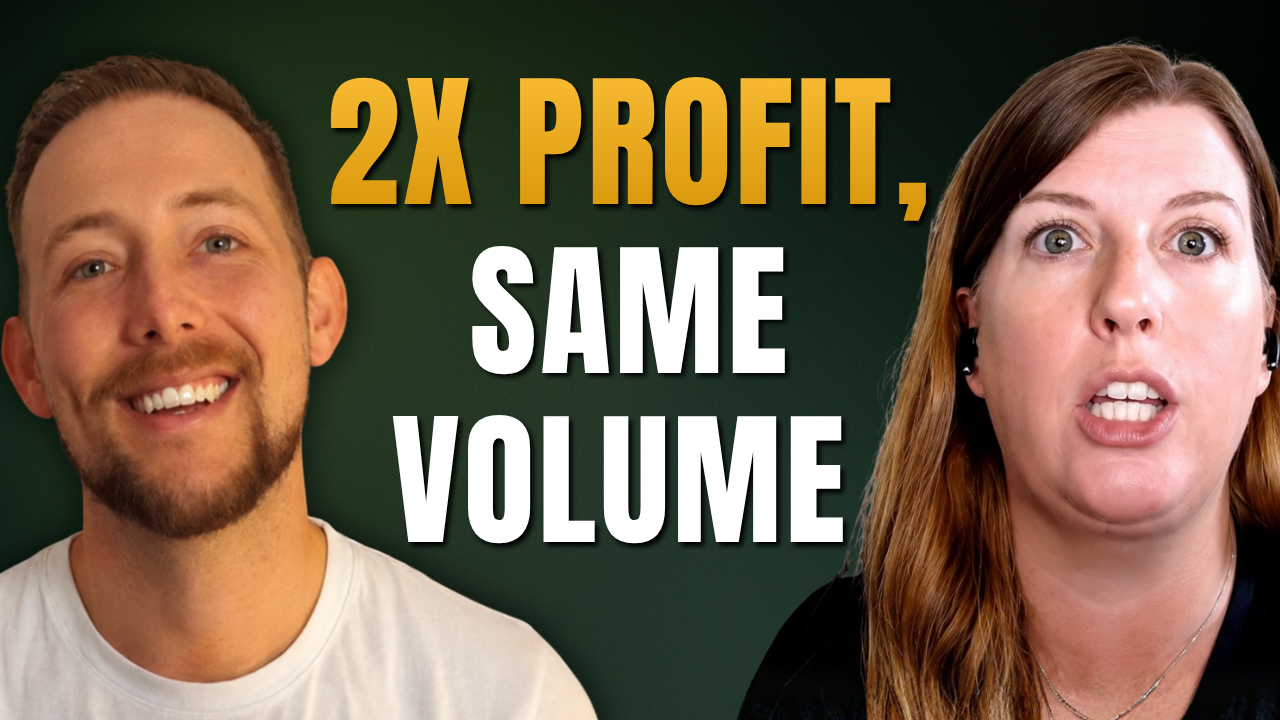
Opening Scaling Tension
Every growing business hits the same wall. Not a revenue wall. A decision wall. The volume of inputs — channels, campaigns, product lines, dashboards, reports — outpaces the operator’s ability to know which of them actually matter. Revenue keeps climbing. Confidence doesn’t. Decisions start getting made on instinct, on the loudest number in the room, or on whichever dashboard was open last. That’s not a data problem. It’s a visibility problem, and it quietly caps how far most operator-led businesses can scale.
For founder-led firms, real estate investors carrying multiple doors, and capital allocators weighing where the next dollar goes, the friction shows up the same way: too many numbers, too little clarity on which one changes what you do next.
The Hidden Constraint
Tyler Ryan, founder and CEO of Data Driven and a former NASA JPL engineer whose platform has analyzed more than $3 billion in sales data, frames the constraint plainly: most businesses don’t have a data problem, they have a which numbers actually matter problem. And the number that matters most — customer lifetime value, resolved at day 0, 30, 60, 90, and 180, across every product, funnel, traffic source, and affiliate — is one that roughly 95% of operators cannot see.
That gap isn’t cosmetic. LTV is the metric that determines what you can afford to spend to acquire a customer, which channels deserve more capital, and which product lines are quietly draining margin. Without it, half the fundamental equation of the business is invisible. Every downstream decision — ad spend, hiring, product investment, capital allocation — is being made with one eye closed.
The same principle carries into real estate and capital allocation. A blended cap rate, an average tenant tenure, or a portfolio-wide return figure tells the operator almost nothing about which assets, markets, or partners are actually generating the return. Averages kill insight. That is the hidden constraint.
The Operating Shift
The operating shift is straightforward, and it applies well beyond e-commerce: stop optimizing for more data and start optimizing for the right answer to the right question at the right time.
Ryan makes the case that the dashboard era is ending. Not because dashboards are useless, but because they push interpretive load back onto the operator. Ten dashboards, nine ignored. The dashboard shows you the numbers; it doesn’t tell you which ones changed, why they matter this week, or what decision is now on the table. For a leader whose scarcest resource is attention, that’s a broken system.
The shift is from reporting to decision surfacing. From a wall of graphs to a short list of things that require action. From averages that describe the past to segmented views that inform what to do next.
This is a decision-making framework more than a software category. It reframes what “knowing your numbers” means for an operator running a real business.
Execution in Practice
Three insights from the conversation translate directly into execution systems any operator-led business can adopt.
Segment before you decide. A single blended LTV, cap rate, or margin figure hides the decisions worth making. The move is to isolate cohorts — first-time buyers, a specific acquisition channel, a specific asset class, a specific vintage — and track how value accumulates over a defined window. Ryan’s example: pull the last twelve months of first-time-buyer transactions and measure how revenue per customer grows at day 30, 60, 90. The math is simple. The discipline is doing it. The same logic applies to a real estate portfolio measured by acquisition year, market, or property manager. Segmentation is what turns interesting numbers into actionable ones.
Replace dashboards with anomaly surfacing. Ryan describes a supplement brand whose average order value silently dropped from $200 to $50 for three days because an upsell path broke. Nobody noticed. On a business of scale, that’s a five- or six-figure leak per day. The execution system isn’t a prettier dashboard — it’s a mechanism (a person, a rule, an alert, an analyst) whose job is to tell you when something has moved outside its normal range. This is how leadership bandwidth gets protected: the operator doesn’t scan, the system flags.
Ownership transfer, not task delegation. The reason most operators can’t get to LTV segmentation, anomaly review, or cohort tracking isn’t skill. It’s that the work never gets owned by anyone. Assigning a report to “the team” produces nothing. Transferring ownership of the visibility function — pulling the data on a defined cadence, flagging what’s off, surfacing the decision — is what converts the principle into execution. This is where structured executive support earns its keep.
Underneath all three is the same operating principle: reduce the number of re-decisions leadership has to make. Every re-decision is a tax on capacity.
Leverage Outcome
Ryan’s supplement brand case makes the point sharper than any framework. A nine-figure business that couldn’t see its own LTV curve discovered that customer value declined after acquisition because of refund and fulfillment friction in the first seven days. Once they saw it, they rebuilt the customer journey. Same volume in. Roughly double the profit out.
That’s the shape of real operational leverage. Not more hours, not more headcount, not more effort at the top. The same inputs, restructured around visibility and decision speed, produce a materially different result. This is what capital efficiency looks like in practice: better decisions on the same book of business.
For operator-led firms, real estate investors managing multiple properties, and allocators weighing where capital goes next, the constraint is almost never work ethic. It’s leadership bandwidth, and the compounding cost of decisions made without clear signal. Scaling discipline is what closes that gap.
Connect With the Guest
To learn more about Tyler Ryan and their work:
Website: https://datadrivenos.com
LinkedIn: https://www.linkedin.com/in/tylerjryan/
The Immediate Move
The real constraint on a growing operator-led business is not effort, headcount, or ambition. It is leadership bandwidth, and the number of low-signal decisions that quietly consume it. Visibility into the metrics that actually drive outcomes, anomaly surfacing that eliminates silent leaks, and clean ownership transfer of the recurring analytical work are what convert a busy operator into a decisive one. The shift is structural, not motivational. Fewer re-decisions, tighter cognitive load, cleaner risk management, and capital allocated against segmented reality rather than blended averages. That is how scaling discipline compounds.
Watch this before you hire your next support role.
Like what you read? Get weekly insights on scaling, efficiency, and profitability straight to your inbox. Click here to subscribe.
Adrienne Green (00:00)
most founders don’t have a data problem. They have a which number actually matters problem. Now, welcome listeners. You’re on another episode of Scale Smart Grow Fast, where we solve problems like that for entrepreneurs. Now, Worker Genix, our full-time ultimate executive assistants, help business owners stay consistent with execution so they can focus on what matters most. And today I am joined by Tyler Ryan.
He’s the founder and CEO of Data Driven, and he’s a former NASA JPL engineer whose platform has analyzed over three billion dollars in sales data. And now he’s building Auto, an autonomous analyst, and he’ll tell you that the dashboard is dead. There’s a lot that I’m excited to speak about with Tyler here, so let’s get into it. Welcome to the show, Tyler.
Tyler Ryan (00:47)
Thank you so much. Really, really excited to be here.
Adrienne Green (00:50)
Now, Tyler, I know I want to start off with what should businesses know, what data should they be seeing that they don’t even realize they’re missing?
Tyler Ryan (00:58)
Well, it’s it’s really perfect how you set it up because you said most businesses don’t necessarily have a data problem. They have a which numbers actually matter problem. And there is one number, one metric that to me is the most fundamental decision-making metric in business, but almost ninety to ninety-five percent of businesses can’t see it. And that is customer lifetime value. Literally wearing a shirt that says LTV, because that’s just how important it is. So I’ll I’ll tell you a quick story to illustrate this and then we’ll get into to why it matters.
So about eight or so years ago, I was at an event listening to a guy get on stage give a talk titled How to Scale Your Business 10 Times Bigger, 10 Times Faster. Guy named Joel Marion started a company called Biotrust. It went from zero to 150 million in 18 months. Incredible scaling. So he gets up on the front of the stage and he goes, All right, how many of you know your average customer lifetime value? And of the room of 400 entrepreneurs, there was maybe 50 hands. And he goes, Okay, not bad. Now
How many of you know your customer lifetime value at days 0, 30, 60, 90, and 180? Look around the room, maybe 25 hands. Okay, not bad. Now, how many of you know your average customer lifetime value at days zero, thirty, sixty, ninety, and one eighty for every product, funnel, traffic source, and affiliate?
And he looks around the room and this burned into my brain. There were four hands. The room literally went from 400 down to four, one percent of the room. And he asked each of them, How big’s your business? 15 million, 25 million, 35 million, 50 million. And he just goes, I’m not surprised. And he goes on to give this whole talk, or the punchline of that talk.
Was the reason he was able to scale as fast as he did was because he knew the answer to that question, and none of his competition did. How much are my cus how much are my customers worth at day zero, thirty, sixty, ninety to one eighty for every product, funnel, traffic source, and affiliate? If you know that, it gives you the ability to make decisions that most businesses can’t, because you can see what most businesses can’t. And that right there, to me, is the single biggest leveraged metric in business, and yet the
The vast majority of companies can’t actually see it. And so they can’t actually use it.
Adrienne Green (03:06)
Right. I will say I do a lot in, you know, let’s say the entrepreneur and business space. And I can think of two times I’ve heard people speak on customer lifetime value. So that I think aligns very well with what you’re sharing here.
Tyler Ryan (03:20)
I’m not surprised by that either. Makes sense.
Adrienne Green (03:22)
So what is you’ve got a whole, you know, inequality, as the former math teacher and me would say on your shirt. So we talked about the lifetime value piece. let’s talk about the other piece and how they how they inter.
Tyler Ryan (03:34)
Okay, so the reason why lifetime value matters so much and it’s such a critical metric is it is the metric that tells you how much you can actually afford to spend to acquire a customer. And I would argue one of the most fundamental questions a business has is how much does it cost to acquire a customer and how much are those customers worth? And I’m arguing that most businesses can’t see how much they’re actually worth.
So half of that equation is invisible, right? And so if you don’t know this side, the question is how can you make intelligent decisions about the cost to acquire side?
Okay? So ultimately, customer acquisition costs, that’s just how much it’s how much you spend on ads, for example, to acquire a new customer. That number, you ultimately need to make more than that over the lifetime of the customer. Some businesses need to make it back right away. Some businesses can wait 30 days to make that money back, some can wait 90 days. Every business is different. But no matter what, one thing is always constant. If you don’t know how much the customers are worth, you don’t know how much you can afford afford to spend.
Know how much you can afford to spend, you get in this difficult decision-making challenge where you’re seeing your ads go up and down, you’re seeing your ROAS go up and down, your customer acquisition cost goes up and down, and you don’t actually know if it’s okay or not. And a lot of that comes from that limited visibility when you can’t actually see your customer lifetime value. So usually the decision making around LTV and CAC and ad spend decisions comes down to a visibility constraint on the LTV side.
If you could see LTV the way that we just talked about it earlier, LTV at every day for every product, funnel, traffic source, and affiliate, you won’t have a visibility problem, and the decisions will come very easy from that point.
Adrienne Green (05:14)
That I I’m I’m tracking. I am intrigued by what you’re saying here. I think our listeners are as well. And the next question I have based off of that, which I’m sure you have a a ready answer, because it it’s your jam here, is okay, I’ve heard of lifetime value before, and I’ve heard of it as like one discrete number, right? On average, our clients’ lifetime value is X, right? Or maybe for people who I’ve heard who are a little more advanced, maybe they do know.
You know, our coaching clients are worth X, our courses clients are worth Y, our community clients are worth Z, something like that. Kind of like you said, they might know some different people who fall in a product, how much they typically make from that product line or or leg of the business, but not to the level that you’re describing it. So how would for you know these entrepreneurs, business owners who are listening, where would you recommend they start to start to figure out these specific lifetime value figures that you’re speaking of?
Tyler Ryan (06:05)
Okay, so first I want to make the point that I I always say averages kill insights. Okay, and what that phrase is alluding to is if you just know that your LTV is, let’s say, $300, the context that you’re missing there is at what day in the journey do they reach $300? Okay. And if you have a five-year-old business and you just take all the revenue you’ve ever made and divide it by the total number of customers that you have, when you say your LTV is three hundred dollars, there are
Some customers that took five years to get to that number. So from a decision making perspective, that number is completely useless. You can’t do anything without information. It’s just interesting, but it’s not actionable, right? So averages
Adrienne Green (06:44)
Right. Mm-hmm.
Tyler Ryan (06:46)
kill insights, what’s the solution? The solution is you need to take all of your sales and transaction history. So imagine, for example, you take the last year’s worth of sales data, export it out of your shopping cart, and you know, for for example, having an executive
Executive assistant that can pull this data on a regular basis, by the way. Amazing way to start solving this visibility problem. So you get your last year’s worth of transactions, and what you need to do is isolate the customers who are first-time buyers, okay? So only the sales from first-time buyers, and then you just need to look at only their sales activity over, let’s say, the next 90 days. And what you need to do is you need to focus on how does revenue accumulate starting from the day of first purchase.
Okay, that’s your starting line. And then we look at, okay, we started with let’s say $1,000 across this handful of customers from that first purchase. By the time we hit 30 days later, how many more dollars did those same customers spend? Maybe went from a thousand to fifteen hundred. You look another 30 days later. Now we went from 1,500 to 1750. That right there is the accumulation of value. And to turn that into LTV, it’s just a matter of it of dividing it by how many customers are we talking about?
So if your total revenue goes from $1,000 to $17.50 and you had like a hundred customers, then that means your LTV went from ten dollars to seventeen dollars and fifty cents. Right? So if we can do that
Adrienne Green (08:08)
Mm-hmm. Right.
Tyler Ryan (08:09)
math, it’s not hard math.
It’s really just a matter of doing the process, right? Of getting the sales data, lining up the starting lines of all your customers, and just counting the revenue as it grows over time. Then you can start attaching value to days. And once you have an LTV at a day, like day 30 or 60 or 90, that’s a version of lifetime value you can make decisions off of. Not the my LTV is $300 just global average that is interesting, but not actionable. So that’s the distinction.
Adrienne Green (08:39)
Right. I love that. And where my mind is going, as a business owner is thinking of where people could by kind of digging into this data, also be able to say, I’m sure there’s a significant it depending on the business, but there could be a significant difference in lifetime value between what you might say is like your your A clients, right, and your C clients, right? And maybe there’s difference in lifetime value between different product lines. I know one
Doing a lot the real estate space myself. I remember one project property manager who would manage properties remotely. And when she looked at some data like this, she actually cut that entire arm of her business entirely and focused only on managing properties locally because it was so much more lucrative for her. Doing the long distance stuff was just, you know, when she actually looked at the profitability specifically, it was just not worth it because
She it just took a lot more work and a lot more cost to service those long distance clients. So I think there’s a lot of value and people can get into and subdivide the data like what you’re speaking to.
Tyler Ryan (09:37)
See, that that’s such a great point. It speaks to the average of kill insights point, right? Because when you blend all that together, you lose that level of nuance. And the same exact phenomenon
Adrienne Green (09:46)
Mm-hmm.
Tyler Ryan (09:47)
happens across different product lines, the same phenomenon will happen against different traffic sources. So you might acquire customers, let’s say, from Meta, but then you also acquire customers from Google search. It’s a very common occurrence that those customers could be 2x the value of another, right? Like a meta customer
Adrienne Green (10:04)
Right.
Tyler Ryan (10:05)
might be higher.
Or lower in LTV than a Google search customer, the real reality is you won’t know unless you actually look at it and track it. But the point that I want to really drive home here is: wouldn’t you approach Meta differently or Google search differently if you knew that those customers were worth two times as much as the rest of your customers? Right? You’d be willing to spend
Adrienne Green (10:25)
Exactly.
Tyler Ryan (10:26)
more. You’d probably spend more in terms of total ad spend budget. You would take that traffic source more seriously. And if you do this for
For
long enough, what happens is you keep honing in your efforts to stop putting effort into the lower value, lower profitability customers, the lower LTV customers, and more of it into the higher LTV customers. And if you keep doing this and you keep doubling down where do my highest LTV customers come from, which products, which funnels, which traffic sources, this is how you build a business that can be very, very profitable and also sustain high levels of scale. The businesses that struggle are the ones that
Are chasing all of the customers everywhere because they don’t have a metric to tell them where to focus. All they look at,
Adrienne Green (11:08)
Right.
Tyler Ryan (11:08)
for example, is just revenue and total number of customers, but really the relationship between LTV and customer acquisition cost is the one that’s gonna drive your decision making the most, provided that you can see it.
Adrienne Green (11:19)
Right. And as you’re as you’re explaining all this, it reminds me, and I I don’t know if you have read it, Dr. Benjamin Hardy’s book, The Science of Scaling, where he speaks to how so often business owners i think that they’re gonna do five different things. And the truth is when you set a big goal, you’re gonna realize only a couple of those five different strategies are actually gonna be able to scale to reach that goal. And so I think the challenge when people go into something like reading the science of scaling and figuring out how to apply it to their business, is they don’t have
they don’t they they can’t always know which of the potential strategies is going to be able to get to their goal. And yet with the data like you’re suggesting looking at it, it kind of allows them to maybe be like, okay, we’re gonna do the five different strategies for let’s say 90 days, one quarter, see what we’re getting there. And then we can know which one to lean into. Like with your suggesting with the different,
Tyler Ryan (12:05)
absolutely, absolutely.
Adrienne Green (12:06)
you know, meta, Google, things like that.
Tyler Ryan (12:09)
Yep. I mean i in in reality for most businesses, and this is kind of why I got into doing what I do, oftentimes visibility is their constraint more so than strategy. Because they may have a good strategy, but if they don’t have the visibility into the data to actually see what’s going on.
It becomes very difficult to make decisions. Even if you’re a great marketer, you’re a great business person, you’re you’re very much constrained by how good is your visibility into your data. And there’s no more fundamental metric to a business than LTV. Because the reality is, lifetime value represents the value of a customer over their entire relationship with you. So however you acquire customers, whatever you do to retain them, whatever you sell to them after they buy, all those things make up.
Up the customer journey, all of that is rolled up into LTV. So, in a very real way, when we’re strategizing, like what is our business, what are our products, what’s the experience that we give our customers, we’re designing the journey that is represented by LTV. And so if that’s going on and you’re putting so much time and attention into the products you sell and how you service your clients, and you want to keep them around for a long time.
Doesn’t it make sense to be able to actually see a number that gives you feedback on how good of a job you’re doing in that very particular thing, which is the core function of the business? And if you don’t have that visibility,
There are so many different areas of the business that you’re being constrained, right? You don’t know how good of a job you’re doing at
retaining
Adrienne Green (13:36)
Right.
Tyler Ryan (13:36)
your customers. You don’t know how good of a job your back-end course that you sell after you acquire a customer is actually doing. You don’t know how much you can actually afford to spend to acquire a customer. All of these things share a common root, which is visibility into lifetime value. And so that’s why I just keep coming back around to that and hammering that point home. Because LTV is as fundamental as it gets. It is like the
heart and soul of the business and yet also most businesses can’t see it. And it really is such a shame because it really holds them back from operating at a much higher level.
Adrienne Green (14:08)
Now when I start we’re talking a lot about data and often a word that comes up when we’re looking talking about like data and being able to see it is dashboard. But Tyler, you say the dashboard is dead. What do you mean by that?
Tyler Ryan (14:20)
Great question. Where this comes from is the recognition that
Every every business owner has a million different dashboards that are available to them at all times. Right? They go into their shopping cart, whole bunch of dashboards. They go into their merchant processing, whole bunch of dashboards. Inventory management, whole bunch of dashboards. Stripe, whole bunch of dashboards. There’s just like dashboard, dashboard, dashboard, dashboard. It’s dashboard overload, right? And we
Adrienne Green (14:45)
Yeah.
Tyler Ryan (14:46)
get to the point where there are so many dashboards that you don’t even really look at any of them.
And and many business owners are just like, they’re dashboard numb, right? Maybe they’ve put in the work to like really build out one that they really like. But in my experience talking to hundreds and thousands of business owners, there’s maybe one or two things that they look at. But if they have ten dashboards at their disposal, nine of them are probably never getting used.
And so, what this is really to me a symptom of is the fact that most dashboards don’t actually show you what matters. They give you a bunch of information and then place the burden on you to try and interpret, analyze, and make decisions. And so I would use the analogy of: let’s say that you hired me to come into your business and I’m a world-class analyst, okay?
You wouldn’t come to me and start telling me exactly how to do my job, what dashboards I should put together, what reports I should put together. Because you would say, hey, look, you’re the world-class analyst. You tell me what questions I should be asking. You tell me the things that I’m missing. You tell me the things that I should be looking at every day. Because you are all the way down in the weeds and you understand all those little nuances and details.
So with that in mind, the purpose that a dashboard has been historically meant to serve is making better decisions, right? Like that’s the end goal that everyone’s working towards. Better decisions. But the reality is it’s very, very bad at that.
This world-class analyst that you bring onto your team wouldn’t be showing you a bunch of dashboards. They would be like, hey, here’s the things that you need to know right now and the decisions that need to be made. Sometimes it’s gonna be a report, sometimes it’s gonna be a hey, did you realize that historically you bill $10,000 a week in recurring revenue, but last week you only billed $1,000? Something’s probably wrong there. It’s hey, you have 250 ads that are running in your ad account right now.
These 75 used to perform well and they’re not performing well anymore. You should probably kill those. Those are not things that a dashboard shows you. Dashboards cannot get down into those weeds and that level of detail unless
You have enough expertise to do all of that digging. But then it comes back around to the reality.
Adrienne Green (16:53)
Right.
Tyler Ryan (16:54)
No one has time for that. There’s too many things going on right now. So, what does all this mean? What it means is we need to start optimizing for systems that tell us what we need to know to make better decisions when we need to know it. And sometimes that can be
Adrienne Green (17:08)
Mm-hmm.
Tyler Ryan (17:09)
as simple as a message that pops up to let us know when something bad is happening or that something that we need to take action on is occurring.
That we might have otherwise missed. And I think if we optimize more for decision making and knowing the right things at the right time, that’s actually gonna accomplish far
Adrienne Green (17:26)
Right.
Tyler Ryan (17:26)
more for our decision making, which is the outcome that we want, than me having yet another dashboard to look at with yet another card on it that I have to know how to interpret, which I probably don’t, anyways.
Right, so I think it’s this new chapter we’re moving into, which is fewer dashboards, more things that drive decision making. And those might not look like dashboards at all.
Adrienne Green (17:46)
Right, right. Especially with AI and everything that we’re it’s it’s a brave new world where things are changing very quickly.
Tyler Ryan (17:52)
It is, it is. And and this to me is more of a recognition of the reality that because these new tools are emerging, what they’re gonna be really good at are things like pattern recognition, anomaly detection, finding a fire that you might have missed for three days and telling you about it sooner.
And those things are actually far higher leverage if you can build systems that optimize for those than just having more reports and graphs and tables that you need to sift through on a daily basis. Because at a certain point, you just glaze over those. You don’t really do much with that information other than go, okay, cool, then move on with your day. So we gotta move to a new style of operation that’s all about decision making and quick action, because the speed is way more possible
Adrienne Green (18:34)
That makes sense.
Tyler Ryan (18:35)
now, and dashboards are
not really conducive to speed. They’re conducive to when I get around to taking a look at it and I have three hours to deep dive. It’s just antithetical, I think, to the direction that things are moving.
Adrienne Green (18:46)
Yeah. Yeah, that makes perfect sense. And it seems like you have a pretty unique background that you’re bringing to make these observations. You didn’t come from, you know, the corporate world or being an analyst. You came from NASA and JPL and now you’re building the software for e-commerce brands. How did how did that transition happen?
Tyler Ryan (19:04)
Man, well, when I when I got to college, I always knew I wanted to be an entrepreneur and start companies. What I didn’t know is what I was gonna build, how I was gonna build it, and where I was gonna work along the way. And to me
Being able to learn and build software, this was back in like, you know, 2010, right? Being able to learn and build software really appealed to me because I wanted to be able to build things. And so I got into software engineering like a self-taught programmer, just watching YouTube videos and things like that. And I was studying physics and mechanical engineering. Ultimately was fortunate enough to get an internship at the NASA Jet Propulsion Laboratory. And long story short,
I did internships every summer while I was in college and ultimately got hired there. And what really, really hooked me about that environment was just how incredibly detail oriented and rigorous you have to be to be able to put spacecraft on Mars. It was just like, I gotta know what these people are doing to be able to pull that off because this seems impossible, right?
And so being in that environment, it really showed me, funny enough, like what it means to know your numbers. Because I want
Adrienne Green (20:11)
Mm-hmm.
Tyler Ryan (20:11)
you to just imagine for a second, how well do you think you have to know your numbers to be able to land a rover on Mars, a trip that takes seven to fourteen months of flying through space just to even get there, and then to land on Mars within like a mile of your target landing spot.
Like the degree to which you need to know your numbers is impossible for most people to comprehend. And so having seen that, having seen the Curiosity rover the size of an SUV, touchdown on the surface of Mars, see the first pictures come back, and see five thousand people in the auditorium all crying because this project took 10 years and they actually pulled it off, it just left this mark on me of man, if we can do that.
Like I think we can figure out our L T V for an e commerce store. So when I
Adrienne Green (20:59)
Right, right. Mm-hmm.
Tyler Ryan (21:00)
got into the world of of online business and trying to find my place in it, I just naturally gravitated towards analytics and data because of that background.
And once I got into enough of these companies to see that they were struggling with data problems, and their number one question was, I’m trying to figure out how much I can afford to spend to acquire a customer. Once I heard
Adrienne Green (21:19)
Mm-hmm.
Tyler Ryan (21:20)
that like four or five times, then I was at that talk and saw Joel Marion give that speech. That talk was actually the epiphany moment that led to the company that I started LTV Numbers. Because at the end of that talk, my thought was, my.
If I could have just built the software that he said he used to answer that question, he would have had everybody in the room going to sign up.
And so after
Adrienne Green (21:43)
Mm-hmm.
Tyler Ryan (21:44)
enough of those exposures, I was just committed to solving the data analytics visibility problem around LTV for online businesses. And I tried to bring that rigor of my background to do what is very hard in the business world and most businesses struggle with, and be able to lean on that background because it’s not hard for me, right? If coming from that world. So it was like this huge opportunity where I saw I could solve something that most businesses struggle with and was.
arguably one of the most fundamental things in business. So here we are eight years later. LTV numbers is now data driven and three plus billion dollars worth of data analyzed. It’s been quite a wild journey, to say the least.
Adrienne Green (22:24)
Well, and from a an entrepreneurial, you know, business standpoint, what I love is that you first went in and like found a problem that people have that you had a unique skill set to solve, right?
Tyler Ryan (22:35)
Yes.
Adrienne Green (22:36)
I see that. And then what I also see is the power of like I remember when back when I got my undergrad degree in business, we talked about like synergy, right? And when one plus one can equal three.
When you bring in somebody who has a different background, a different skill set that can complement yours, you can actually get a sum greater than the parts. And so it’s like when you can come in and bring in your unique skill set and expertise that a lot of entrepreneurs, I mean, across the board in all industries, it’s funny because entrepreneurs, you know, you’re in a business to make money, typically, money is a number, and yet a lot struggle with numbers, with data, with analyzing it, because they typically got in because they had a passion for something or
you know, unique skill in providing a certain service, not because they were good with data and numbers. so I love
Tyler Ryan (23:21)
Right.
Adrienne Green (23:21)
how you’re coming in and helping people do what they do best, because they’re able to have better numbers for it.
Tyler Ryan (23:28)
Absolutely. And just to put a fine point on that, one of the things that I noticed is there are so many cases where the let’s call it the skill of the business person is lower, but their visibility and grasp on the numbers is higher. And they end up performing better.
Than a business owner that has tremendous business skill, but very limited data visibility. So, in a very real way, like whatever your level of skill in business, up-leveling your data visibility and awareness will make you perform at a far higher level than your skill may otherwise suggest. Because that often, like I said earlier, is the constraint of most companies. Without the visibility,
Adrienne Green (24:06)
Mm-hmm.
Tyler Ryan (24:06)
no matter how good you are, you’re just gonna make bad decisions.
But if you’re not as skilled, but you can just make better decisions because you can see reality better, then you’re gonna ultimately perform at a far higher level. And I think that’s actually really empowering because for so many entrepreneurs, like when you get started, your skill may not be that high. But one of your greatest superpowers can be: I can see the things that other people can’t because I took the data seriously from the beginning. It’s just gonna give you a far higher.
Adrienne Green (24:38)
That makes a lot of sense. And I’m thinking along those lines, I’m intrigued to discuss auto, this autonomous analyst. Because I’m thinking auto is probably a part of that solution. So what does auto do that people aren’t getting from all those those dashboards that just give you a bunch of numbers?
Tyler Ryan (24:55)
So Otto, I want you to picture like an actual cute little otter character, okay? Otto
Adrienne Green (24:59)
Okay.
Tyler Ryan (25:00)
is an autonomous analyst, and what he does, he’s meant to be, going back to the earlier discussion that we had, he’s meant to be that world class analyst that you bring onto your team who proactively answers the question, Hey data, what do I need to know? Right now. And the key thing about Otto is
Just like bringing that world-class analyst onto your team, you don’t necessarily need to know what questions you must be asking. You don’t necessarily need to tell him what to do. Because he is leaning on our almost decade of experience.
On our $3 billion worth of data analyzed, on our having worked with hundreds of companies, we know the questions that you should be asking, right? And a lot of people came to us for a long time because we weren’t just like a pure analytics company, you know, faceless. You just kind of use the software and never talk to anybody.
We’ve always had a relationship with our clients where we’re helping you analyze your data, we’re in the trenches with you, we’re helping you build out reports and answer questions. So because we had built all that expertise, we wanted to take that and package it up and we put it inside of Otto’s brain, right? And so when Otto joins your team and we bring in all your data, you can essentially just kind of let him run wild.
Because he will go figure out the questions that you should be asking and proactively serve you those answers. And this is where we come full circle on the dashboards being dead thing, is that auto is not about he just builds you one dashboard and then another dashboard and then another dashboard and then another dashboard. And pretty soon you’ve got 75 dashboards that your team needs to look at. No. He’s more about giving you the right answer to the right question at the right time without you having to ask.
And that really
Adrienne Green (26:40)
Mm-hmm.
Tyler Ryan (26:41)
is the key because I I I’m just consistently stunned in business by how much waste happens because it just takes you a while to notice things. Right?
If you, if you have, for example, like all of a sudden your your average order value is normally $200. It’s been $50 for the last three days, but like nobody noticed it. It’s because all of your upsells broke, right? In those three days, depending on how big of a business you are, that can literally be a thousand to like a hundred thousand dollars, like right there. And so in a very real way, the speed to catching these things is one of the most powerful levers that a business has.
Because it’s not complicated, really, right? It’s about knowing what to look for, where to look for those things, and just being like, hey, you should know this right now, right? And not
Adrienne Green (27:29)
Right.
Tyler Ryan (27:29)
wait three days for you to discover it because you’re looking at a report, you’re like, wait, that doesn’t look right. What happened? Three-hour-long investigation, teams got their hair on fire. To come to that same conclusion, what if Otto could just tell you within a few minutes of it happening, right? Or the very next day rather than three days later.
And many teams hours and pain and suffering to get to that point, right? So that’s what auto’s
Adrienne Green (27:53)
Mm-hmm.
Tyler Ryan (27:54)
meant to do. Proactively answer the questions that you should be asking. And to do so leaning on all the experience of our team, about a decade and three billion dollars in data analyzed.
Adrienne Green (28:04)
That makes a lot of sense. I I mean, I feel like any business owner who actually has a business has had some time. They’re thinking about in their head where they’re like, yeah, I didn’t find out about something until much later and it was where I was losing money or not making as much as I could have or something like that. So I think that resonates. Now, Tyler, as we wrap up, I would love for you to tell me about a brand or a company that changed direction because of something you showed them and what did that unlock for the business?
Tyler Ryan (28:28)
Ooh, that’s a good one. We’re we’re very careful about anonymity, so I’m gonna I’ll I’ll use you know an anonymous name. But and th this is representative re representative of a pretty common trend, I would say. So there is a a supplement company we were working with and they were doing
Really, really high volume. And I I’m gonna use this high volume example not because it only applies to a high volume example, but because it can show you how big the impact can be. So they were doing well over a hundred million dollars a year in sales. Okay. Huge business. They had like 12 sub-brands underneath them, but they never could see their lifetime value. They were profitable, they were making money, but it was just one of those blind spots that 95% of businesses have.
So they came to us, they said, hey, we want to get our arms around our LTV. So we brought in all their data, we looked at their LTV, and it was one of those, my gosh, sort of moments. Because we saw their LTV curve, and what it looked like was, well, let me say this first. You want your LTV to go up and to the right. Right? That means as the customer
Adrienne Green (29:29)
Yeah.
Tyler Ryan (29:31)
journey goes on, it’s getting higher over time, right? Theirs looked like it looked like
A slide. So it was just going down and to the right.
And the reason why this was happening was because they had so many refunds that would happen within the first seven days or so of the customer journey because of order related issues, because people were getting charged for things they didn’t think they were paying for, because when the shipment arrived, it took longer than expected.
It was surfacing all these customer service and customer experience problems. And their LTV just went down, down, down and to the right. And it did come back up a little bit, but it took a very long time and it never even got back to where it started. So I want you to imagine you’re a hundred million dollar a year business and you realize that after you acquire a customer, all you do from that point on is actually lose money. When they saw that.
As you might imagine, they’re like, we have to change everything about our customer journey. Right? Because
Adrienne Green (30:30)
Right.
Tyler Ryan (30:30)
they’re bringing hundreds of thousands of customers in the door. And instead of enjoying a a growth in value, a growth in profit over time, they were actually fighting this wave of losses that they were constantly having to try to offset by acquiring more customers.
Adrienne Green (30:45)
Mm-hmm.
Tyler Ryan (30:45)
And so
that business, when they saw the realities of their LTV curve, and this is what I love about LTV, it’s just a visual representation of your customer journey. If it goes down, it means customers are refunding, and that’s not good. If it goes up just a little bit, it means some people are buying, but not a lot. If it takes a big leap up, that means that promo that you’re doing 30 days after they buy is really, really working, right? You can see
Adrienne Green (31:09)
Mm-hmm.
Tyler Ryan (31:09)
your whole marketing and customer journey strategy in an LTV curve.
And so that business completely flipped their focus around. They got really serious about their customer journey. They got really serious about their refunds. They got really serious about how they were marketing and presenting things in the funnel to eliminate confusion. And long story short, without actually changing their volume, they were able to more than double their profits. Same customers.
Adrienne Green (31:34)
Right.
Tyler Ryan (31:35)
Better LTV twice as profitable. And that outcome right there, I want to just put a point on, is very common actually. Because if a business is operating with like 8% margins or something like that, you know, kind of cutting it close, a better LTV absolutely can double your margin. 100%. And so
Adrienne Green (31:52)
Right. Right.
Tyler Ryan (31:53)
that’s why it’s one of those big levers for not just like scaling your business, but just making more profit.
Because on
Adrienne Green (32:00)
Mm-hmm.
Tyler Ryan (32:00)
the same volume coming in the front, you could actually have twice as much money going into the bank at the end of the month. There’s very few things that can provide that kind of leverage. But it all comes back to if you don’t have the visibility in the first place, you’re never gonna make those kinds of decisions because you would never have the information in front of you to prompt you to make those decisions. So that’s why sometimes you just need somebody to tell you proactively, hey data, here’s what you need to know right now.
Adrienne Green (32:26)
Right. That makes a lot of sense. Well, Tyler, I love our conversations. It’s been super helpful. Thank you for sharing what you do at Data Driven. Now, if people would like to connect with you and start getting clearer numbers in their own business, what’s the best way for them to do so?
Tyler Ryan (32:39)
Best place to go would be data drivenos.com, like data driven operating system.com. And you can find me on Instagram at Tyler underscore data driven. Always making posts there. And either place will get you to where you need to go.
Adrienne Green (32:54)
I love it. Thank you, Tyler. And for our listeners, what I love about Ta Tyler’s approach is that clarity isn’t about having more data. It’s about knowing what numbers actually matter. And once you know that, the next question is who’s gonna act on it? And that could be where things slip in your business. Big ideas are great, and follow-through is what turns them into results. So if you ever need an ultimate executive assistant to help get things moving behind the scenes and execute on that data, talk to me over at Workogenics and we’ll make it happen.
And then join me again next week for another episode of Scale Smart Grow Fast.
Tyler Ryan (33:25)
Thank you.